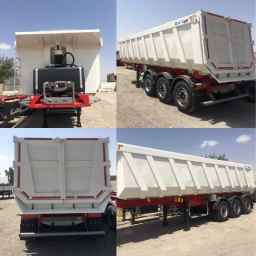


What is a Trailer Dump?
Dump trailer is called a trailer whose truck has a room and it is also called a unloading part which is done by a compressor device.
Dump trailers have many uses. More dump trailer for carrying building materials such as plaster, sand, cement, soil, etc. It is used. The characteristics of dump trucks can be mentioned as fast and high-speed unloading as well as fast loading and unloading.
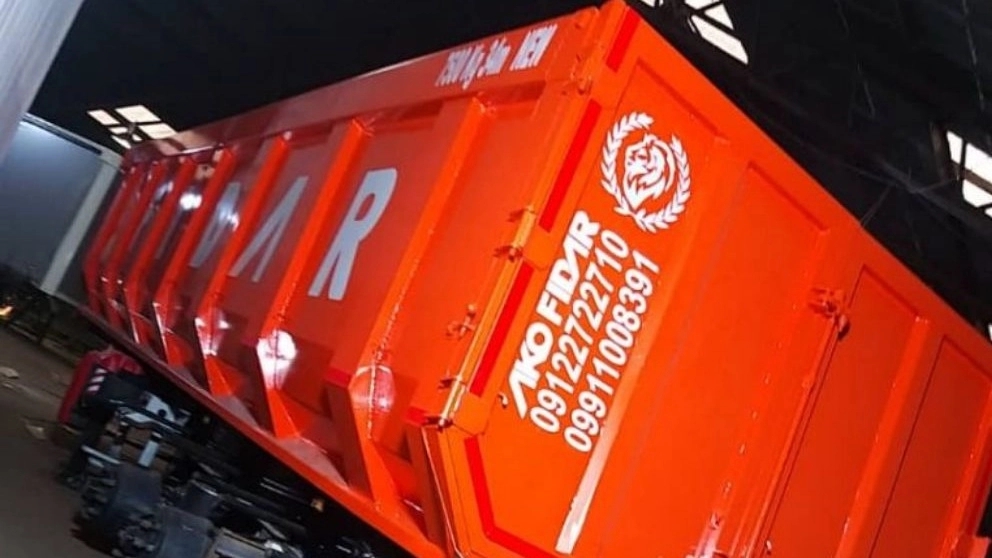
What is the specifications of the trailer compression?
Dimensions of dumping trailers: length (mm): 9,980 Width (mm): 2,570
Capacity: 24 tons (30 cubic meters)
The weight of the dump truck is equal to 8000 kg
6 high-strength steel plate floor reinforced with transverse rams
What is the dump truck wall?: 4/5 steel sheet with high strength reinforced with special diagonal bars
Front crown: 4/5 high strength steel sheet reinforced with longitudinal bars
Dump trailer rear door: dual-purpose with the ability to open upwards and hinge to the sides
What is the dump trailer axle?: Three German SAF-BPW 9 ton trucks
Substructure: Air balloon suspension system and special shock absorber for trailer elevation adjustment
Electrical system: with 7 and 15-pole switch with 24-volt power line, rear and side lights and global standard warning system
What are the features of a compression trailer?
Fast unloading
In tipper trailers, the unloading speed is much higher than other trailers, also in tipper trailers it is easier to unload and no hard work is needed to unload the load.
Read more: Home appliance repair
Easy download
Loading is also very convenient and easy in tipper trailers, and loading is easier in dumper trailers than other trailers, and this factor is one of the factors that distinguish dumper trailers from other trailers. In the rest of the article, we will explain what the dump truck is used for and what loads it is used to carry.
What is the use of a compression trailer?
from dump trucks to carry loads such as: sand, gypsum, cement raw materials, bauxite, mineral pumice, wind sand, soil Clay, coal, refractory soil, crushed furnace weld, natural bitumen, asphalt, as well as all kinds of agricultural residues such as: wheat, flour, corn, soybean, beet, oil seeds, etc.