
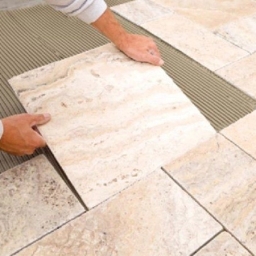

Tiling alignment is one of the important measures that must be done correctly during construction. For tiling, preparation includes cleaning the surface, puttingty and sealing it, filling the holes and most importantly leveling the surface to be tiled. Non-level cause problems in tiling. Tiles are rigid materials that do not conform to uneven wall and floor joints. Therefore, they create significant defects such as an uneven surface or cracks in the tiles
Concrete
In general, you should always make sure that the floor and walls are flat before tiling. Before doing anything, check the concrete floor. If it is smooth and flat, there is no need to level the tile. But when the concrete has defects such as holes or ridges, leveling is necessary.
There are certain areas in the house where the floor should be slightly above the ground level. For example, in the kitchen or bathroom to drain water easily. For other rooms, the level and uniform concrete floor is the best base for the desired tiling result.
Alignment lines for tiles
1. Leveling tiles using thread
For many years, using thread for grout alignment has many applications. The use of thread for tiling alignment has a long history and is considered one of the most basic methods. In this method, two ends of the thread are first fixed on the surface so that they have a certain distance from the ground. Then the tiles are installed on the floor with the same distance from the thread. Using a thread to align is the easiest and fastest method.
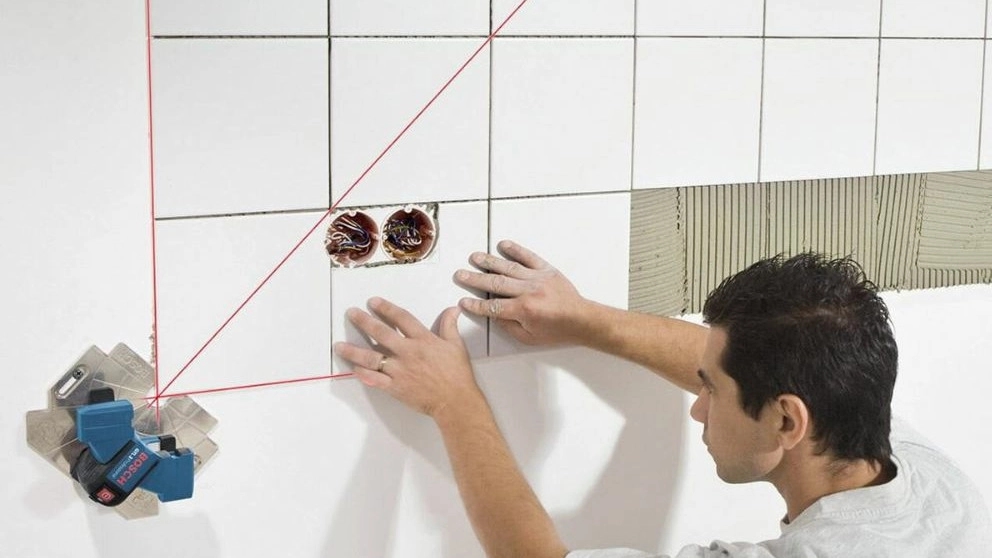
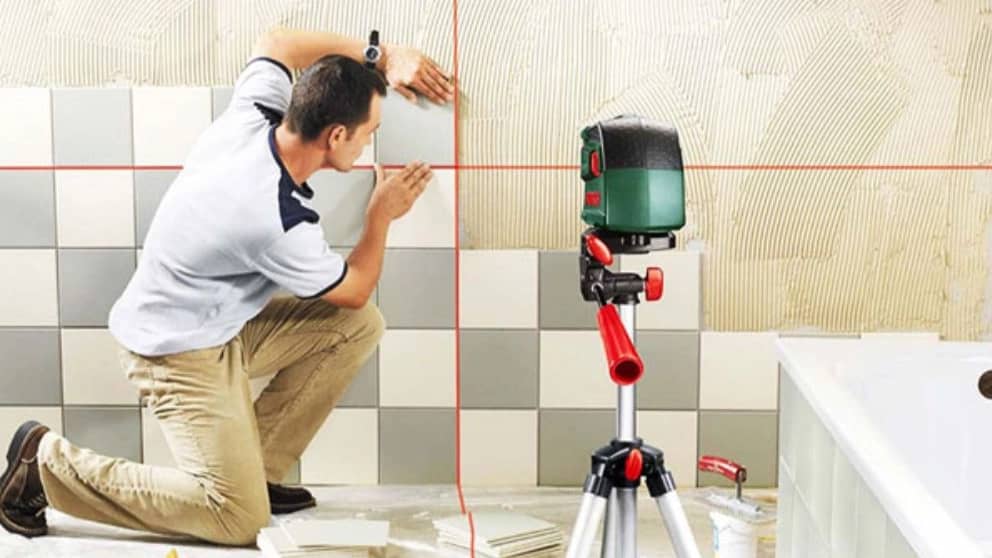
2. Alignment of tiling using laser
Tiling rooms may seem like a difficult task, but with the help of the right tools, it can be done easily. Today, the laser leveler has been introduced as the best leveler for tiling. Laser leveling by creating vertical and horizontal lines is the simplest leveling method for ceramics.