

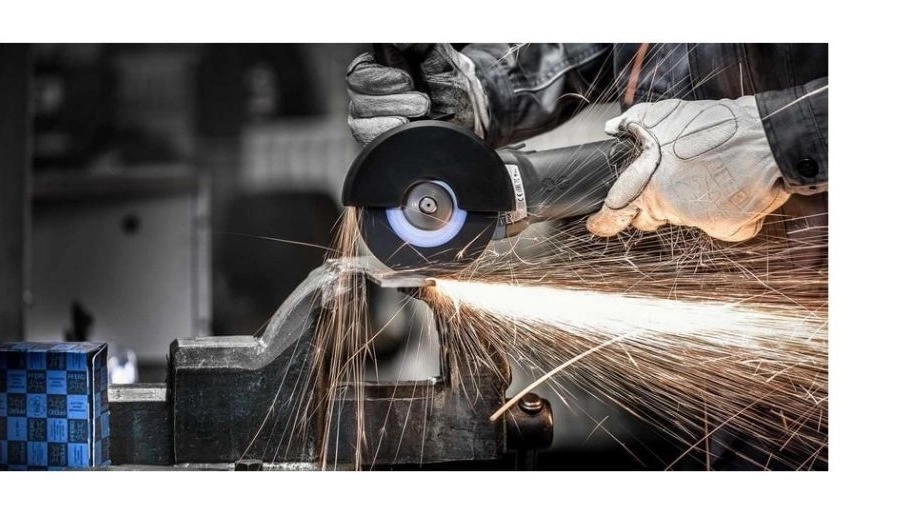
One of the best ways to cut all kinds of iron, steel, stone, ceramics, wood, etc. in a workshop and at home is to use cutting boards, cutting boards have a lot of variety.
☑️ How to perform the cutting plates
Cutting plates are composed of fine abrasive grains that collide with the workpiece when the plate rotates and perform cutting operations by creating wear and friction. After slowing down, the abrasive grains are separated from the plate and New sharp seeds will be replaced. Cutting boards can be installed on all types of milling machines, mini milling machines, profile machines, etc.
☑️ Materials of cutting plates
Usually cutting boards are produced from a combination of glue and resin and abrasive grains, the type and size of abrasive grains, the type of glue and resin used in cutting boards determine their main application, usually the grains Cutting plates are made of aluminum oxide, aluminum oxide and zirconium, aluminum oxide ceramic, silicon carbide, etc.
Aluminum oxide grain: suitable for cutting and peeling iron and steel
Aluminum and zirconium oxide grains: suitable for cutting and peeling hard steels
Silicon carbide grain: suitable for peeling hard steel and cutting rubber, plastic, stone and non-ferrous materials.
Aluminum oxide ceramic: it is the strongest abrasive grain and is suitable for peeling and cutting very hard metals.
☑️ Stainless steel pages
Steel plates have the lowest thickness among cutting plates, the maximum thickness of steel plates in certain models is 2 mm, the steel plate can be used for cutting and peeling hard steel such as steel (thickness Kam) used, one of the important signs in steel plates is the smoothness of the entire cutting surface. (other cutting boards have a bulge in the center)
☑️ Iron plate on
They are suitable for cutting all kinds of iron pipes and profiles with low thickness and are usually produced in diameters of 115, 180, 210 and 230, the thickness of the iron cutting plates is usually between 1 and 2 mm.