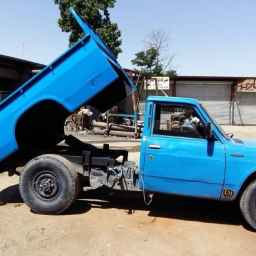

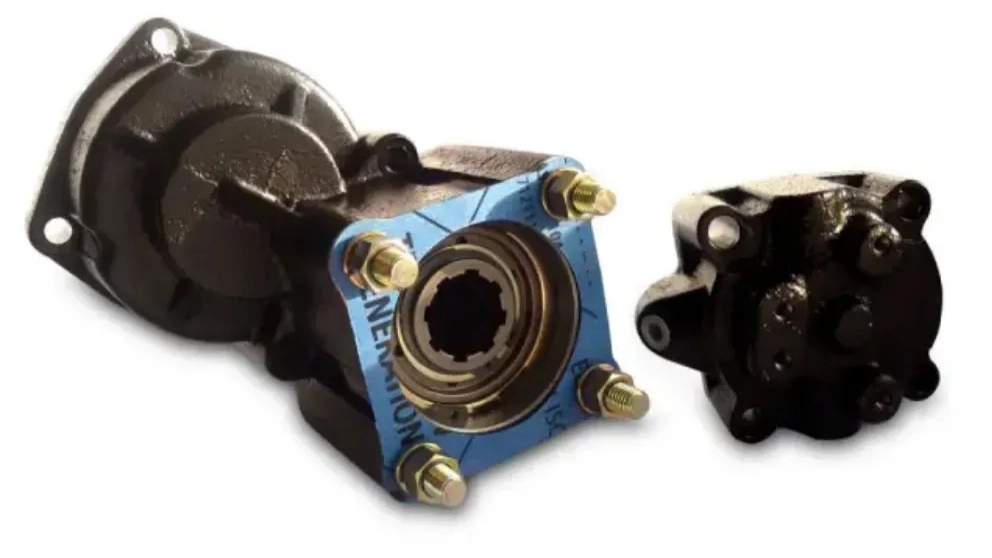
Gearbox or PTO is a device that transfers the movement from the gearbox to its outside, and in order to achieve a complete movement, 2 other parts called hydraulic pump and hydraulic motor must be used, so that in the end it can be Have a rotary or linear movement to start a device. The PTO is connected to the side or back of the gearbox, and the gearboxes that have this capability have a door in their side to connect this device, and by opening that door and closing this part, the work of receiving power is completed.
Motion connection with gearbox is done through gears. The PTO has a lever to engage or release it, and in its final part, there is a power transmission shaft like a gear to give power to the hydraulic pump, and it is even possible to directly benefit from the rotational movement created without using the hydraulic system. The mechanical winches of Japanese SUVs such as Toyota and Nissan are of this kind. When the PTO is engaged, the motion is taken from the gears inside the gearbox and the output shaft of this device has a rotational movement. Now, by connecting this power transmission axis to a hydraulic pump, we have to take advantage of the fluid power to start this cycle.
When the hydraulic pump is connected to the PTO, the rotational movement of the power transmission shaft causes the hydraulic pump to rotate, and as a result, the fluid is taken from its tank and pumped out with greater intensity. This fluid movement in the cycle must be converted into rotational or linear movement by a hydraulic motor. A hydraulic motor is a device that creates rotational or linear movement from fluid movement, and since hydraulic force is one of the strongest forces. River, from the weakest jacks used in cars to the strongest cranes and tools use hydraulic power to start.
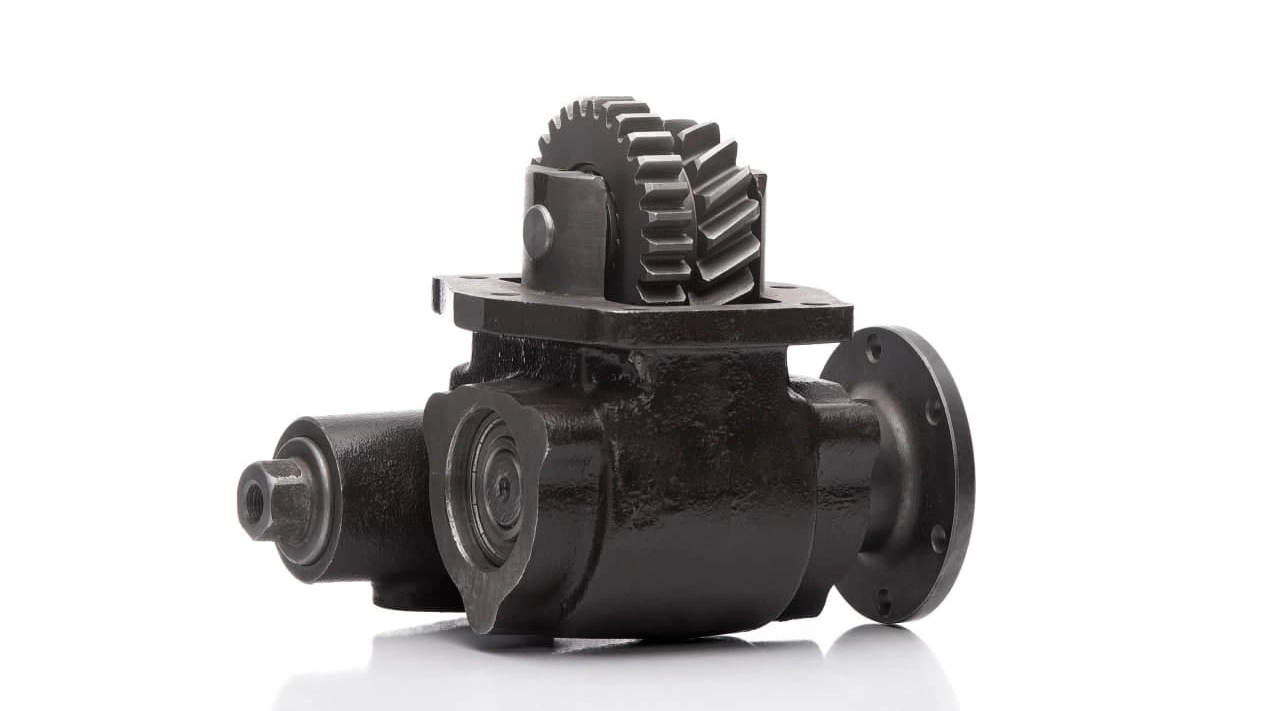
When the high-pressure fluid inside this cycle enters the hydromotor, this device starts moving linearly, which will be the last part of this cycle. Rotational or linear movement can be used in applications such as hydraulic jacks or hydraulic winches, and even today in some European all-wheel drive trucks, the front axle also receives the necessary power for its movement from this method and other news. It will not be from Gardan and differential.
“Gearbox pump”
The main application of the side pump of the gearbox becomes clear when when the PTO is engaged, the movement is taken from the gears inside the gearbox and the output shaft has a rotational movement. Now, by connecting this power transmission axis to a hydraulic pump, we have to use the fluid power to start this cycle. When the hydraulic pump is connected to the PTO, the rotational movement of the power transmission shaft causes the hydraulic pump to rotate, and as a result, the fluid is taken from its tank and pumped out with greater intensity. This fluid movement in the cycle must be converted into rotary or linear movement by a hydromotor.
Gearbox side pump or in other words hydromotor is a device that creates rotary or linear movement from fluid movement and since hydraulic force is one of the strongest forces, it is one of the weakest jacks used in the car. Even the most powerful cranes and tools use hydraulic power to start.
With the high-pressure fluid inside this cycle entering the hydraulic motor, this device starts to move linearly or linearly, which is the last part of this It will be a cycle. Rotational or linear movement can be used in applications such as hydraulic jacks or hydraulic winches, and even today in some European all-wheel drive trucks, the front axle also receives the necessary power for its movement from this method and other news. It will not be from Gardan and differential.
Since hydraulic oil is an integral part of the system and also the hydraulic system moves powerful equipment, so the presence of a leak in the system can be a great risk. Hydraulic oil leakage also means there is a great risk of fire, so it is wise to choose a good quality gearbox side pump and pay enough attention in maintenance.