
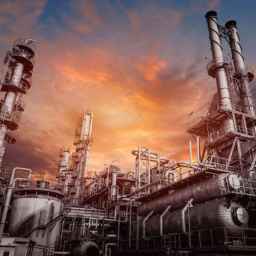

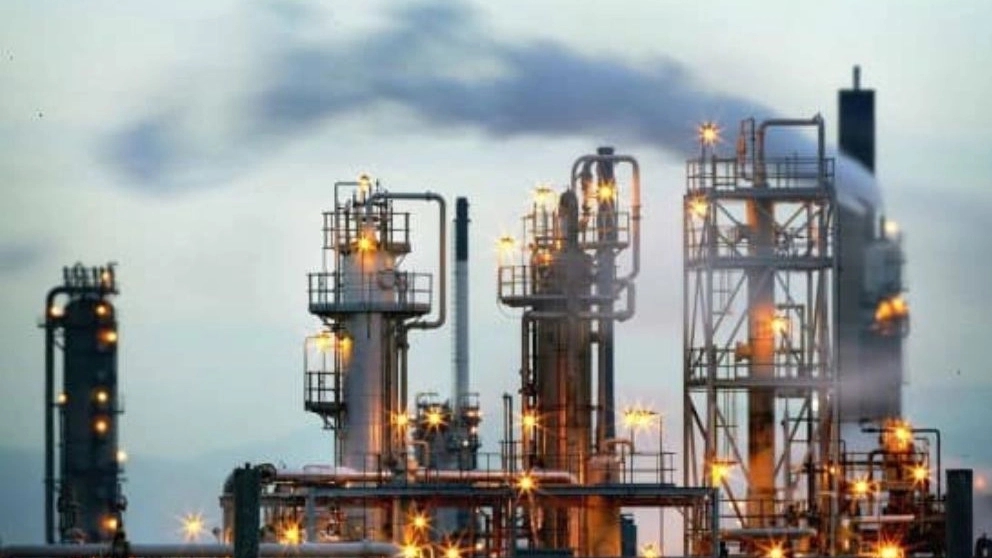
The processing of crude oil includes various stages, some of which were mentioned in the previous sections, now the other stages that are considered in the processing of crude oil and gas are briefly stated.
API Separator
is a concrete tank equipped with an agitator with a metal cover, walls are built into it, and the oil in the effluent is separated from it by a rivet-shaped paddle.
Effluent filter
The effluent from the API separator is sent to the filter by the pump. The filters in the National Company of Oil-bearing Zones are all of the sand type (Nutshell), they are composed of several layers of anthracite, garnet and sand with a certain particle size, and every hour, the flow is transferred from the filter to its spare part, the filter is washed by the flow of fresh water. (Back Wash). The size of solid particles in the filter outlet is smaller than 10 microns. The effluent from the filter is collected in the effluent tank, by the pump in the injection well, and in emergency situations when it is not possible to inject the effluent into the well, the effluent is sent to the evaporation pit. Gas production well.
These wells are dug to extract gas from gas tanks and with the purpose of processing it in refineries, industrial and urban consumption or injection in the oil field.
installed on gas wells
1- Sub surface safety valve
2- Side valves
3- Bottom main valve
4- Top main valves 5- Surface safety valve 6- Side outlet valve 7- Dipping valve br>
8- Bend tube (Swept bend)
The Gas Injection Process
It has been less than a hundred years since the discovery of oil in the oil-rich areas of the south, and most of the company's oil tanks are in the second half of their life. For this reason, maintaining the production capacity and increasing the recycling rate, taking into account the safety standards, is considered the most important concern of the National Company of Southern Oil-bearing Regions. Based on laboratory studies and research conducted in the field of suitable methods to increase the recovery of oil reserves in the carbonate reservoirs of southwestern Iran, gas injection has been identified as the most appropriate method. tank oil takes place and this is while the implementation of gas injection projects, in addition to increasing the recovery of oil from tanks, according to the aforementioned goals, is also considered the main factor in reducing the operational problems of well exploitation.
Gas injection operations in The oil-rich areas of the south have been started since 1355 and now gas is injected in 9 reservoirs of Haftkal Square, Gachsaran, Lab Sefid, Maron, Karanj, Bibi Hakimeh, Parsi, Kopal and Ramshir.
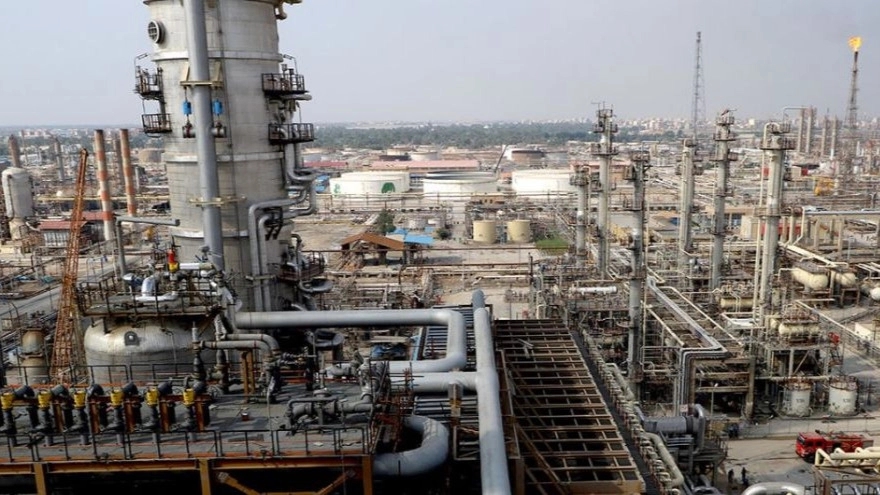
process of liquefied gas and gas factories
The rich gases separated from crude oil (combined gas) in the exploitation units are transported by pipelines to gas and liquefied gas plants. The rich gases first pass through the liquid separator tank and gas filters to separate the oil compounds or solid materials along with the gases. These gases then enter the heated gas heat exchanger and are heated and cooled while passing through the pipes of this exchanger with the light gas coming out of the exchange plant. As the gas cools, a significant amount of water vapor turns into liquid. After this stage, the gas enters the water separator and the resulting liquids are separated and discharged. After the water separator tank, the rich gas enters the cold gas heat exchanger and exchanges heat with the light gas produced by the factory and cools down further.
After passing through this converter, the gas enters the chiller and exchanges heat with liquid propane. By evaporating, propane reduces the temperature of the gas passing through the converter tubes to below zero. (about 29 to 30 C) by cooling the gas in these converters, not only some of the gas becomes liquid, but most of the water vapor in the gas also condenses. To prevent the formation of hydrates in these converters, before each step of gas cooling, antifreeze liquid (monoethylene glycol solution) is injected into the gas entering the converters. After leaving the chiller, the mixture of gas, gaseous liquids, and glycol solution that has absorbed the condensed water enters the three-phase separation tank of gaseous liquids, where light gases, gaseous liquids, and glycol solution are separated from each other.
< p> Light gas is sent to the sources of consumption (National Gas Company or one of the petrochemical complexes) or injected into oil tanks after transferring the cold in the heat exchangers of cold and hot gases. Gas liquids and ethylene glycol solution are also separated based on the difference in specific gravity. The ethylene glycol solution is sent to the glycol regeneration unit for re-concentration, and the gas liquids enter the methanizer tower for stabilization; In this tower, light components of gaseous liquids (most of which is methane) are separated from it.