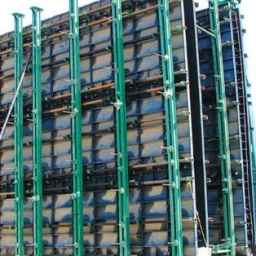


⚫️ What is modular concrete mold?
Modular mold is one of the functional parts in civil and construction industries. The simplest definition of a formwork is a framework or frame in which unhardened concrete is poured to form the desired shape after hardening. These forms are used temporarily during the construction of a structure and can be removed after concreting and hardening. If you want to get to know the types of concrete molds and their applications,
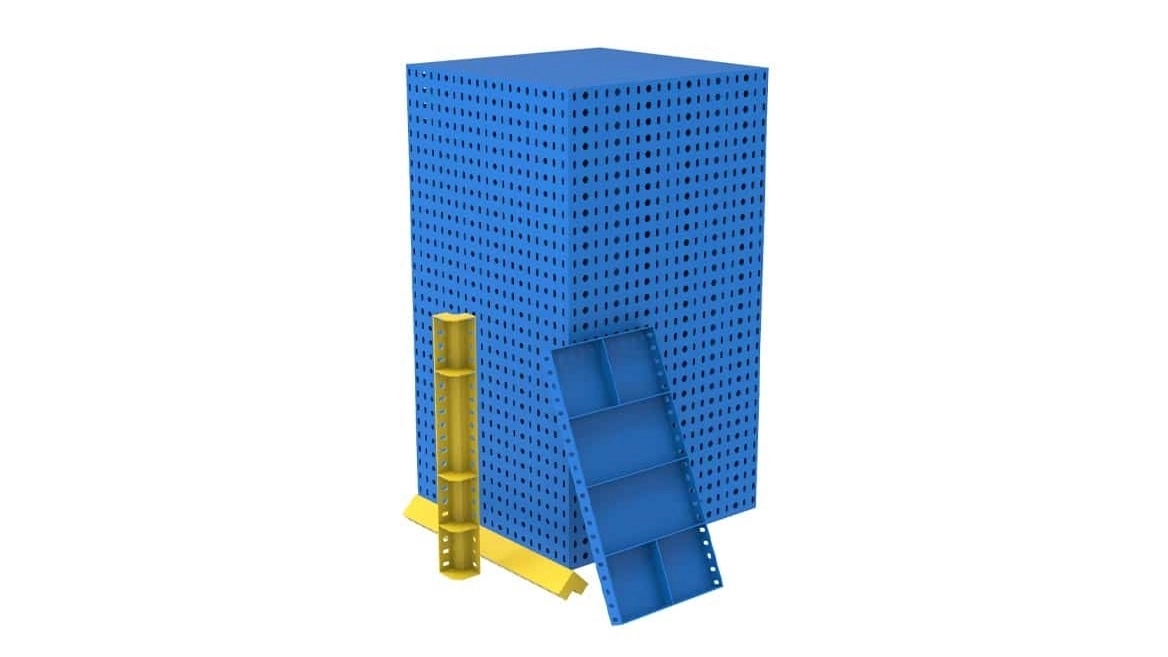
⚫️ Modular molds of different genres for different applications
Concrete molds are often classified according to where they are used and how they are used. Choosing the best formwork for a particular project is a function of the amount of concrete required and the amount of pressure or weight applied to its various parts. For example, typical concrete forms for flat structures (such as driveways and roads) or flat parts of buildings (such as patios and entrances) are usually 3 to 12 inches high.
Since most of the weight of the concrete is placed on the flat parts of the building, the weight on the formwork is reduced in construction works, and these forms are often wooden. These molds are also mainly used for the construction of large roads and shear walls. For example, using a metal formwork to build a bridge footing or the foundation of a tall building can save hundreds to thousands of square feet of concrete. Due to the heavy weight and pressure, these molds are made of high-quality steel and may weigh hundreds of kilograms.
In recent years, progress has been made in the field of making concrete molds made of plastic, fiberglass and composite materials, but the cost and resistance of these materials cannot be preferred over metal or wooden molds.
⚫️ Importance of concrete molds in construction projects
Using high-quality concrete forms significantly reduces the construction time of a project, and reducing time is a key factor in reducing the total costs of a project. The quality of the final surface of the concrete structure has a direct relationship with the quality of the mold used in a project. Correcting the defective surface of concrete and its final treatment to create a quality surface is a very expensive task, and for this reason, the use of high-quality formwork is one of the key factors in advancing construction projects.
Also, the use of concrete forms is very important in terms of increasing the safety of workers in the construction industry, and the use of forms provides suitable working conditions and access that ensures the safety of workers during construction.
⚫️ Specifications of a quality and standard template
A good template should have the following conditions:
It must be strong enough to withstand the pressure or weight of fresh concrete and loads on the formwork caused by the weight of construction equipment and workers. This requires careful design of the mold, because considering the extra weight for the mold affects the economic aspects of a construction project, and on the contrary, the lack of strength of the mold may cause it to break.
It must be rigid enough to support the weight of the concrete without causing deformation.
It should have sealed joints so that the paste concrete cannot leak from its joints.
It should not bend, bend or sink during concreting.
In order to create a good final quality for the concrete surface, the inner surface of the mold should be smooth and polished. To achieve this goal, the inner surface of the concrete mold is usually impregnated with crude oil or soap solution. This will make the subsequent removal of the concrete form easier.
The concrete form should be made in such a way that it can be easily removed without the least damage to the surface or edges of the concrete.
⚫️ Frequently Molding Materials
Concrete molds are made with different materials from the past to today, and the common types of materials used in making molds are:
Wood or timber
Plywood
Steel
aluminum
Plastic
Composite