
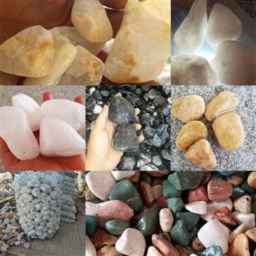

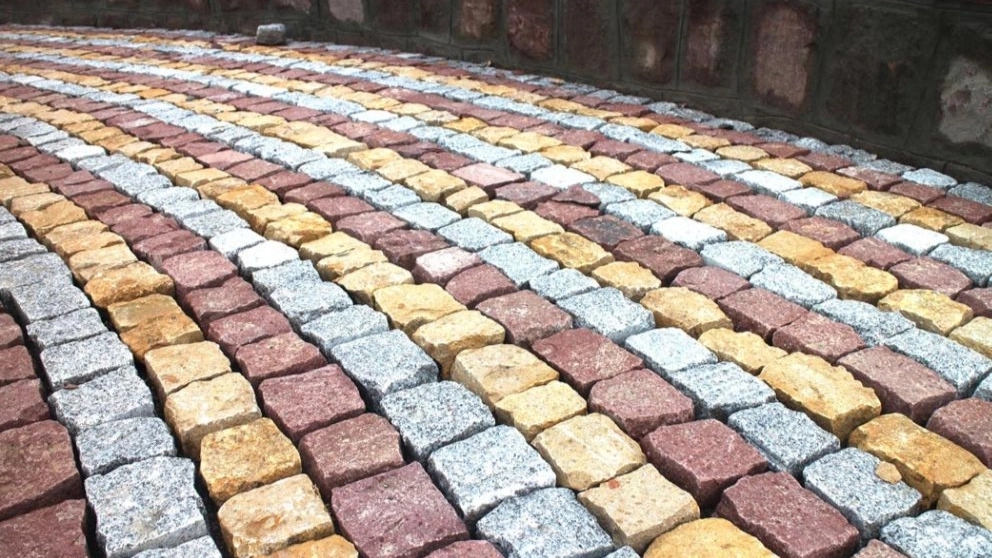
Cubic stone is a type of cube-shaped stone that is often used outdoors and on floors and walls. Cubic stone has no processed surfaces, that is, in general, none of its surfaces are polished by the sub-polishing device, and no chemicals, including putty and resin, are added to it. Cubic stone is the most similar type of stone to natural stone extracted from the mine. Cubic stone can be produced with a variety of stone materials such as granite, travertine and marble, which can be selected depending on the consumer's taste and intended use.
Another variable of cubic stone is its cutting type, which is in It is generally divided into three types of cuts. Regular cubic, irregular cubic and six-sided cubic. Cubic stone has a smooth and polished surface, so it prevents slipping in different weather conditions, especially in the rainy season. Also, because of the grooves that this stone has, water penetrates the surface of the ground and does not collect on the surface of the pavement.
Cubic stone dimensions and colors
Cubic stone is mostly produced in standard dimensions of 10*10*10, 10*10*5 and 10*10*3. It should be noted that as much as the dimensions are the same, the level of strength and resistance to brittleness of the surface will be higher. p>
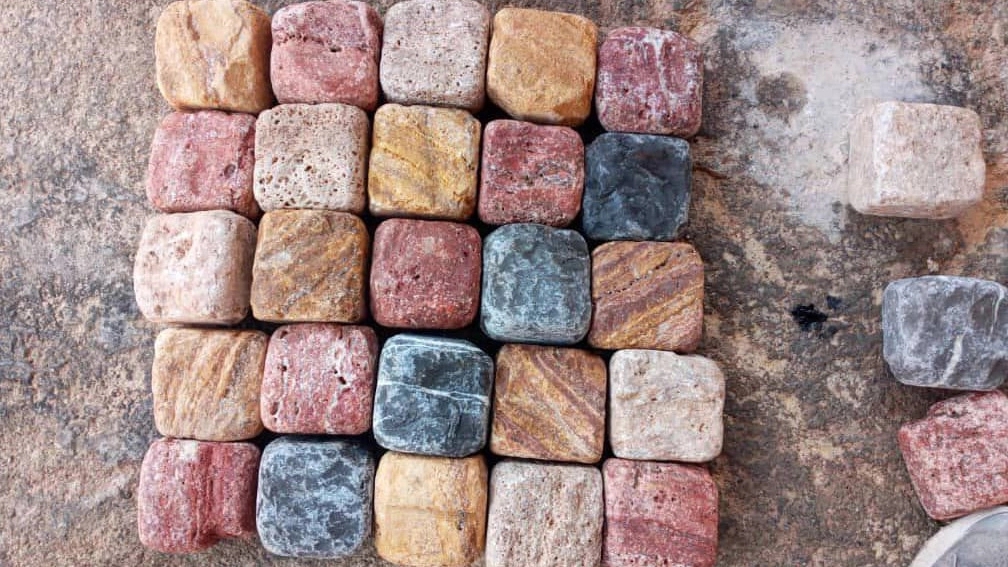
Types of Cubic Stone
Granite cubic stone:
Granite cubic stone is a type of cubic stone produced from granite stone. In places where there is a lot of traffic, and this traffic includes pedestrians and light and heavy vehicles, it is recommended to use cubic granite, which has a very high hardness. Also, in cold regions that have a large temperature drop during the cold season, using cubic granite is a very suitable option because the structure of the granite stone is compressed in such a way that it is not possible to absorb much water for the granite, and for this reason, it may collapse due to the expansion of the water. It does not exist in the stone after freezing, and secondly, due to the high density and uniformity of the granite structure, it is completely resistant to temperature drop.
Travertine cubic stone:
Travertine cubic stone, as its name suggests, is produced from travertine stone. Our suggestion is to use cubic travertine stone for tropical areas that have strong sun and long exposure time. Travertine stone has a lot of pores, and this structure creates a kind of thermal insulation due to trapping air in the stone cavities, and compared to granite stone, it keeps less heat on its surface in front of the sun. In other words, in a simple comparison, if there is a granite cube and a travertine cube in one place, the place with the travertine cover has a significantly lower temperature than the place with the granite cover.
Marble cube:
Marble cube which is made from marble stone is another type of cube which is produced in three types of regular, irregular and six cut cubes. Marble stone is similar to travertine stone in terms of structure, with the difference that after the formation of the formation, the stone is placed in the vicinity of high temperatures caused by the natural activities of the earth. Of course, this heat is not to the extent that the structure of the stone like granite becomes molten, but only to the extent that a slight change in the structure occurs and the sedimentary areas of the stone (stone particles) become closer to each other. In simpler words, this has made the marble stone structurally experience something between the formation process of travertine and granite.