
The natural compounds that produce magnesium mainly exist in nature in two forms, one is a series of soluble magnesium salts, such as magnesium chloride, magnesium sulfate, etc., which are found in sea water, salt water and There are inland salt lakes. Another is insoluble magnesium compounds. Such as magnesium hydroxide, magnesium carbonate, etc. are found in brucite, magnesite, asbestos, dolomite, forsterite and other minerals. The method of purifying magnesium compounds in soluble magnesium salts is mainly based on chemical methods such as soda ash method, ammonium bicarbonate method, lime method, ammonia method and many other methods.
1. Distribution, reserves and the original chemical composition of magnesium
According to the relevant information, by the end of 1993, the proven amount of magnesite in the world was about 128 × 108 tons, mainly in China, North Korea, the former Soviet Union, New Zealand, the Czech Republic, India, Austria, the United States, and Canada. Was. , Brazil, more than ten countries including Greece, former Yugoslavia and Australia. China is one of the countries that has the largest reserves of magnesite. The proven reserves of magnesite ore are 30.09 × 10⁸, which is about a quarter of the world's proven reserves. They are mainly distributed in Liaoning and Shandong provinces, followed by Tibet, Xinjiang, Gansu, Hebei, Sichuan, Anhui, Qinghai and other provinces. The chemical composition and main content of magnesite in my country are: I · L 28% ~ 51.66%, SiO2 0.3% ~ 6.5%, Fe2O3 0.2% ~ 2.17%, Al2O3 0.02% ~ 0.54%, CaO44.19% ~ 67.34%. , MgO40.02% ~ 47.53%, when I · L=0, MgO88.48% ~ 97.5%
2. Magnesium shapes and impurities found in magnesium ore
The main component of magnesite ore is MgO, and the main impurity components are CaO, SiO2, Fe2O3, Al2O3. Trace elements include more than 20 types of P, Ma, Zr, Ti, Cr, K and Na. The forms of presence of calcium, iron and silicon in magnesite ore have the following characteristics. Calcium exists in three forms: a. This material exists as a basic component of dolomite. B. It is present in magnesite crystals as microscopic components of dolomite. C is distributed in magnesite as a dispersed form of calcium ions. Limited solid solution. Calcium in the form of limited solid solution and microscopic components cannot be removed by mechanical methods. In magnesite ore, iron is present in isoforms in magnesite crystals. In magnesite and magnesite dolomite crystals, iron exists in an isomorphic form or as a microscopic form of FeCO3. The iron in magnesite is difficult to remove as an isomorphous mixture, and the FeCO3 in magnetite, limonite, and chlorite is embedded in magnesite with fine particles in the grinding stage. - Can be separated in 180 mesh.
3. Traditional magnesium purification
Increasing the content of MgO in the ore and reducing the content of harmful impurities such as SiO2, CaO, Al2O3, Fe2O3, etc. is the only way to improve and increase the performance of magnesium refractories, in this way, refractories can reach high purity, precision and Density In order to produce high-grade magnesium refractories, the magnesium oxide content in the raw materials must be increased to more than 98-99%. Therefore, in recent years, countries around the world are trying to improve the purity of magnesite. There are two ways to improve magnesite purity: one is a chemical method, and the other is a physical method. Chemical methods include hydrochloric acid method, bicarbonate method and ammonium salt hydrolysis of magnesium chloride. Magnesia obtained from the chemical treatment of chalcedony is technically possible. The purity of magnesium can reach more than 99, and the quality can fully meet the requirements of advanced magnesium refractories. The disadvantage is that the treatment cost is relatively high. Currently, the refractory industry is not economically viable. The physical method adopts methods such as hand selection, thermal separation, flotation, photoelectric separation and magnetic separation according to the type of ore impurities. The main magnesite purification methods currently used in my country are thermal separation, flotation and manual separation. The principle of magnesite thermal separation and purification is to use magnesite ore after a little burn, the main minerals and impurity minerals. They are different in their ability to be crushed and the purpose of using them in grinding and good classification is achieved according to the size of the particles. 1100 ℃) its resistance decreases and becomes a loose material that is easy to grind, while the resistance of impurity minerals such as talc increases and becomes difficult to grind and form coarse particles. Through fine grinding and air separation, high silicon coarse material can be removed. The separation of magnesite flotation materials has been developed in recent years, and its theoretical basis is the wetness of minerals. Talc is not easy to be wetted by water, it is a hydrophobic mineral, its wetting angle is 69 degrees, its wetness level is low, and it floats easily. Magnesite surface has strong ionic bond energy, easy to wet and not easy to float. This property can be used for separation.
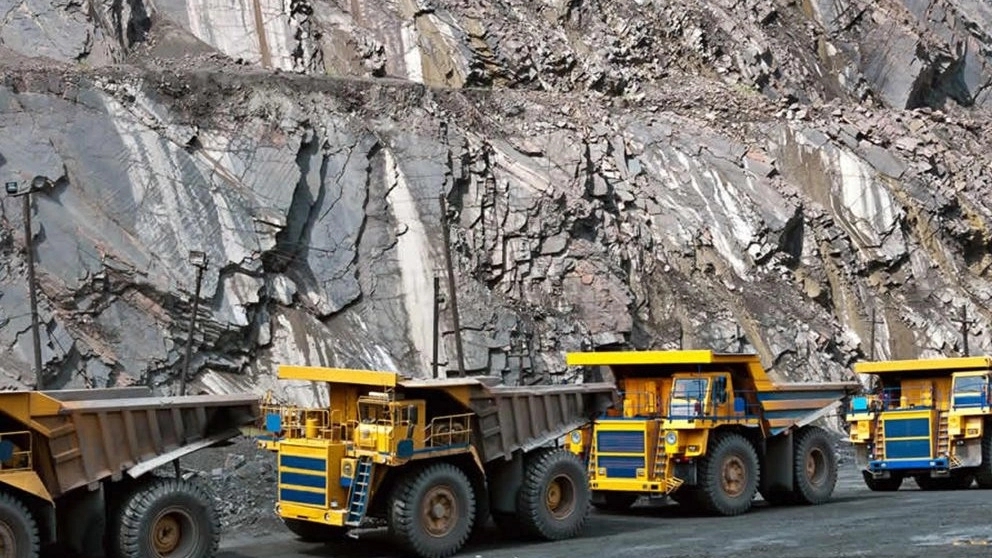
For some sections of LMTI-47 and LMT-47 grade magnesite containing gangue minerals, due to the mixing of gangue minerals in the mining process, the chemical composition of the ore is difficult to meet the requirements of high-quality ore. At this time, it is necessary to conduct preliminary studies on lump ore. It is hand-picked to clear veins of dolomite and various ores containing talc that can be detected by the naked eye. It basically stabilizes the quality of the ore and meets the requirements of sintering the quality of the stone. However, due to the low efficiency of hand-picking and the limited scale, the ore processed by hand-picking is only a very small part, and most magnesite purification is still carried out by thermal separation and flotation methods. In addition to the above purification methods, There are also chemical treatments: such as the acid solution method and the ammonium chloride method, which produces magnesium oxide with high chemical purity by processing, filtering, hydrolysis, washing with water and burning it a little. But due to the high cost, it is not easy to accept it in the refractory industry. In short, it is difficult to achieve MgO ≥ 98, SiO2 ≤ 0.1 Ca and CaO ≤ 0.4 to achieve physical purification of magnesite. The cost of chemical treatment is very high and the cost of raw materials for refractory industries cannot be provided. According to the above situation, my country has recently developed a new method for refining magnesite: the mixed refining method. Magnesium hydroxide and magnesium oxide that are purified by this method can reach chemical purity. Purity can reach more than 99, silicon dioxide can be reduced to less than 0.1, calcium oxide can be reduced to less than 0.3, the specific volume of magnesium oxide is more than 7 cubic centimeters per gram, and the activity More than 200mgI2/gMgO. The production cost is less than 50% of the chemical method.
4. Magnesis purification by mixed method
Put the magnesite (preferably LMT1-47, LMT-47, LM-46 or LM-45) in the resonant furnace, fluidized bed furnace, multilayer furnace, suspension furnace and rotary furnace at 700~1000℃ to The temperature of the air is obtained to obtain the light of burnt magnesia, and then it is processed by the grinding machine into a powder with a particle size of less than 100μm, that is, magnesia powder with light. Magnesia powder, which has a light burn, has a loose texture, high chemical activity, and a special specific surface, which is easy to react with water. Add burnt magnesia powder and special antiseptic and disinfectant in the water in a certain ratio, stir according to the intensity of the special stirrer, heat to 100 95 95, keep for 6 8 hours, and then use physical methods to Calcium and silicon removal, washing, filtering and drying to obtain high purity magnesium hydroxide powder. The basic particle size of the powder is about 0.3μm and its main components: Mg (OH)2≥99%, CaO≤0.3%, SiO2≤0.1% and the production cost is less than 30% of the cost of chemical production. Magnesium hydroxide is the ideal raw material for producing high-purity magnesia, high-purity fused magnesia and high-purity magnesia-aluminum spinel. Burnt magnesia powder has a strong exothermic reaction due to its high activity. Due to the intense disintegration of the hydration process, the specific surface of the Mg (OH) 2 product increases, the crystal grains become smaller, and the illusion of carbonate in the burned oxide disappears. Observed by a scanning electron microscope, the material lacks a rhombohedral carbonate structure and the crystal grain of magnesium (OH) 2 is about 0.3μm. The production test proves that the specific surface of magnesium (OH) 2 produced above is 2-3 times larger than that of the original MgO light-burned powder after a little burning and dehydration at 800 °C. We know that powder has small particle size, high specific surface area and high surface energy. The magnesium hydroxide powder produced by the above process, under different temperature conditions, produces different magnesium oxide powders with different physical and chemical characteristics, and the activity can reach more than 300mgI2/gMgO. This material is not only a high-quality raw material for advanced refractories. , and it is a good chemical raw material in petrochemical, rubber and cable fields. At the same time, the purity of chemically pure magnesium oxide produced by pure chemical method is higher, the impurities are less and the cost is lower.