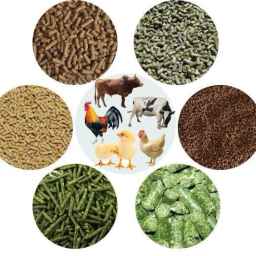

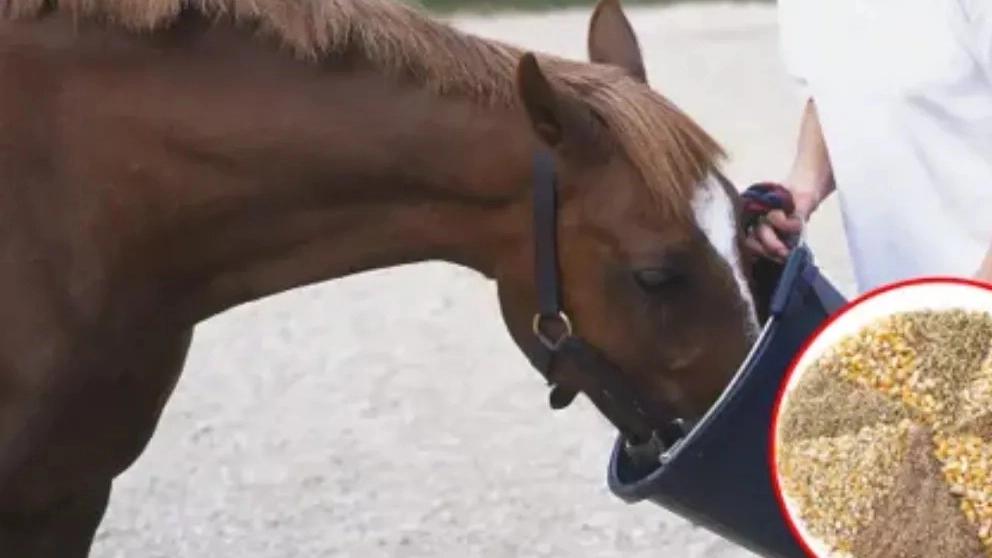
☑️ Resources of livestock and poultry feed
Feeds used in feeding livestock and poultry account for the main part of breeding costs. Choosing a quality and economic feed that is able to meet the needs of livestock and poultry is one of the main factors of proper efficiency and production health.
What is the feed?
One or more sources of nutrients that can be digested, absorbed and metabolized by livestock and poultry are called feed. Types of food sources are divided as follows.
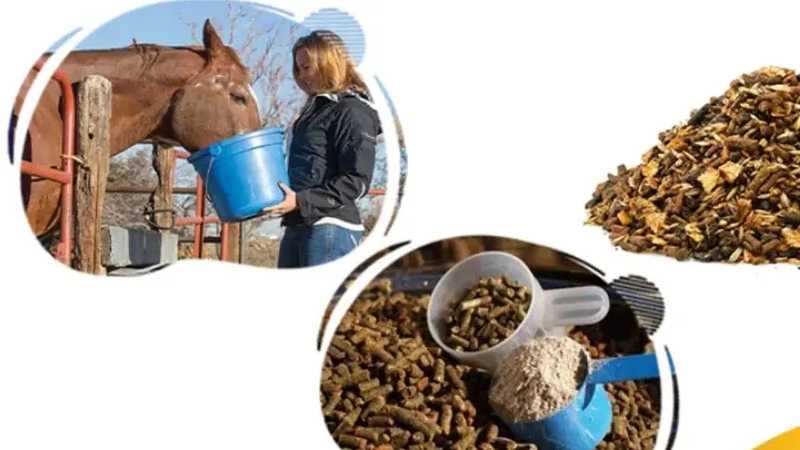
☑️ Energy sources of energy
Carbohydrates:
Cereals: It belongs to the Gramine family, which includes corn, wheat, barley, oats, rice, rye, and sorghum, which are used as animal and poultry feed sources.
Starch is the main food storage of grains. Cereals are poor in amino acids, especially lysine, extremely poor in calcium and average in phosphorus.
Maize: Maize is one of the most energy-generating food grains used in livestock and poultry, because it has more energy than barley and wheat, and it is digested very quickly, and it is very cheap from an economic point of view.
Also, corn is very tasty for chickens, but due to the lack of fiber, protein, calcium and phosphorus in corn, it is generally used to combine protein sources containing these foods with corn in feeding to somehow compensate for the lack of these substances. .
There are types of white, yellow, purple, pointed and horse-tooth corn, and yellow corn is used to feed livestock and poultry.
Barley: Barley is one of the most energy-rich grains that has an average level of protein. There are limitations in the consumption of barley, which is due to some enzymes present in it, so we should use beta-glucanase enzyme to solve such problems when consuming a lot of barley, so as not to face problems in the diet.
Among the compounds that are present in this energy-generating food, we can mention phosphorus, calcium, fat, minerals, cellulose, nitrogen and dry matter, each of which is present in different percentages in the atmosphere and has very good effects on growth. Lays.
Nitrogen content in barley is very low, and for this reason, the combination of barley and corn is used together to somehow compensate for the lack of these ingredients.
Wheat: Wheat is considered to be one of the most expensive grains as a source of energy, which is used for livestock and poultry due to its high percentage of energy. Harder wheats have more energy and the nutritional value of wheat is usually measured by the hardness or softness of the wheat.
Wheat has more protein than corn and is richer in protein than corn. By combining wheat and corn, growers get the best energy-generating feed that has the best nutritional formula.
The chemical composition of wheat is the same as that of the previous energy-generating material, i.e. barley, all of which are found in this material in different amounts. Basically, wheat that cannot be converted into flour and unusable waste from silos are used to feed livestock and poultry, which have the same properties.
Rice: It has a shell called paddy, after separating it, brown rice is obtained, which contains bran, and by separating the bran, the white kernel of the grain is obtained.
☑️ Other energy sources in livestock and poultry feed:
Milo: The amount of energy of this source is less than corn, but more than wheat and barley. The consumption of milo should be in the form of crushed or flour, otherwise the percentage of its absorption will be reduced. Sorghum: It is a plant from the cereal family, which is called corn on the cob. In terms of importance, sorghum is placed after wheat, barley, and corn. This plant is one year, but sometimes it is cultivated for several years. This plant is cultivated for use in food, animal fodder and ethanol production. Rye: It is a plant from the wheat family and is resistant to cold. This plant grows to a height of two meters. Ammonia nitrogen is the most desirable form of nitrogen in rye. Its palatable amount is less than all grains and its high consumption causes digestive disorders. Rye is sometimes contaminated with ergot, which causes poisoning and abortion in becomes a cow Rye has laxative properties for poultry and makes feces sticky and creates health and management problems. It is more like wheat, but it has higher growth and resistance. The purpose of its creation is to combine the characteristics of seed quality, production power and resistance to disease and heat. Planting it early makes it fuller and more fertile. Its protein content is higher than wheat and there is no sticky and watery waste problem. Oats: It is suitable for feeding horses and ruminants, but due to its high fiber content and low energy content, it is not used in poultry feeding. Oat seeds have an aromatic substance called avenin, which has a vanilla-like aroma and is appetizing.
☑️ Fat sources in livestock and poultry feed
Cotton seed oil: This oil has limited use because due to the presence of gossypol, it causes iron deficiency and lysine is removed during processing and the Maillard reaction occurs. When a large amount of this fatty acid is used, it causes the production of a red yolk and increases the fatty acid in the yolk and reduces the yield of the chicken.
Rapeseed oil: its erucic acid is less than 2%, which has complications in growth, feed consumption and fat digestion in birds. Due to long chain fatty acids, it creates a higher growth rate.
Sunflower oil: Due to its unsaturated fatty acids, this oil reduces fat deposition and increases carcass protein. The energy obtained from unsaturated fatty acids is spent on body metabolism, creating a balance between fats, synthesis and catabolism of fats.
Linseed oil: its consumption in poultry causes the accumulation of omega-3 in the stomach and breast tissue because it is rich in omega-3 and affects the quality of the meat. This oil is high in linoleic acid and arachidonic acid.
Soybean oil: contains impurities that are removed by filtration, dewatering and gumming processes. Phospholipids, gums, free fatty acids, metallic substances, peroxides and pigments are among the remaining substances of this process.
Corn oil: It is rich in unsaturated fatty acids, including linoleic acid.
☑️ Animal Fat Resources in Animal and Poultry Food:
These fats are saturated in young chickens and are not digested well.
Poultry fat: Due to its high digestibility, palatability and good quality, these fats are among the best sources of animal and poultry feed fat, especially for poultry. Fats used in poultry feed are produced by killing birds with older weight and age.
Beef tallow: Poultry fed with tallow have a higher concentration of saturated fatty acids than unsaturated fatty acids. The type of fatty acid added to the diet is very important and affects the fatty acids of the abdominal area.
Fish oil: It is a rich source of omega-3 fatty acid and is weak in terms of having linoleic acid. This oil has long-chain unsaturated fatty acids, which create a fishy taste in meat and eggs through oxidative reactions.
☑️ Protein sources in livestock and poultry feed
Proteins of plant origin:
Soybean meal: It is one of the best sources of protein for feeding animals, which is low in methionine and cysteine amino acids. Soy has many toxins for poultry, the most important of which is trypsin inhibitor. This agent stops the breakdown of proteins and causes the pancreas to enlarge.