
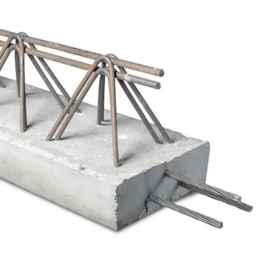

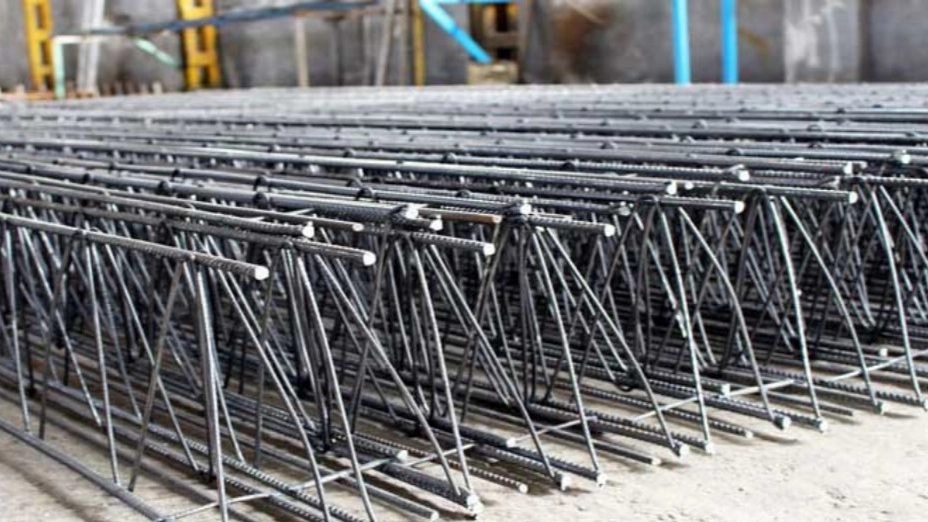
The beams are prefabricated parts that are used in the roof of the building. These parts are responsible for bearing the live and dead loads of the roof. Beam consists of steel and concrete and has different types based on application. One type of beam that has many advantages and we will discuss it further is the industrial beam. The industrial beam is a three-sided or four-sided structure that does not have curves and its components are connected with the help of a hinge. The industrial beam is formed by means of truss point welding, and this type of connection creates an advantage in the use of industrial beams. The industrial beam is used in the roof of the building to create strength and is finally shaped like a T.
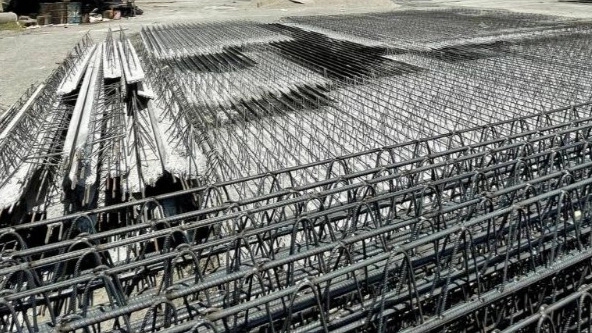
benefits of using industrial joists
One of the advantages of using an industrial beam is its easy transportation and light weight. Also, the use of industrial beams is economically very affordable and in terms of quality control, it has processes in every stage of production. These reasons have caused the industrial beam to be very popular among builders.
As it was said, the beams are placed in the roof of the building and are considered one of its most important components and are produced in two industrial and traditional or manual ways. In the following, we will discuss some of the differences between these two beams. One of the most important differences between industrial and traditional beams is the type of connection used in the production of beams. The connection of the industrial beam is by means of spot welding, which reduces the fracture in this beam; But in the traditional beam, the electric arc welding method is used, which makes the beam brittle due to the carbon present in the reinforcements. On the other hand, traditional or manual beams are produced by humans, but industrial beams have a completely mechanized process and are produced automatically. This causes the error to be reduced to a minimum in the production and construction of industrial beams.
Using an industrial beam saves costs due to its lightness; Because the consumption of concrete will be reduced to a significant extent and will ultimately reduce the costs of building construction. Another advantage of the industrial beam is its production speed; Because it is produced by a mechanized method and by a machine, which, of course, the speed of production also depends on the type of machine, but the manual method is no longer used in production.
One of the other differences between traditional and industrial joists is the creation of continuity. In traditional beams, if they want to increase the length of the beam, they must connect the remaining zigzags with butt welding, and this problem will cause the lack of continuity in the length of the beam. But in the industrial beam, the continuity can be maintained in any length and size by means of transverse coil rebar. In addition, we will see a reduction in the consumption of rebar in the industrial beam. We mentioned this issue that quality control is considered in the production processes of industrial beams. In structure production workshops, the presence of a person for quality control is actually mandatory and he performs daily controls on raw materials, beam production, final product and sampling; But in the production of traditional or manual beams, there is no responsible person.