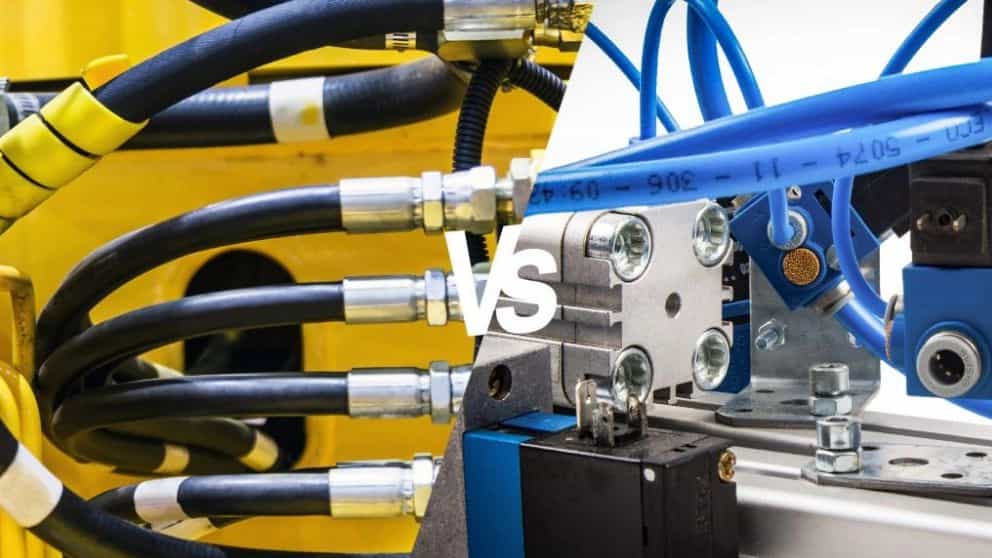
1- Difference in the element of the agent or the mainstream of the actuator
Hydraulic oil is an active element in hydraulic systems. This oil is incompressible. It is available in different types that are used for different applications. But in pneumatic systems, the operating element is compressed air, which is a type of gas that is compressible.
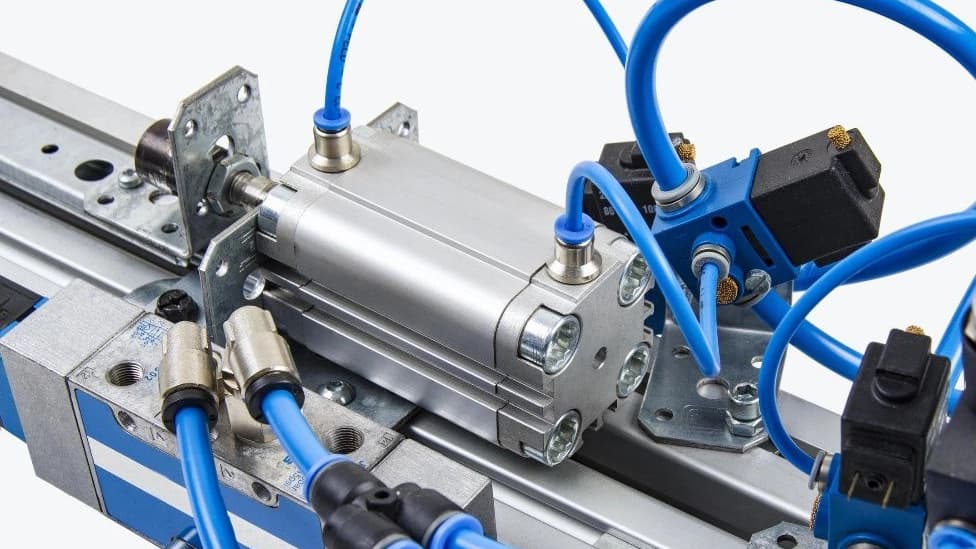
2- The difference between hydraulic and pneumatic systems in working pressure
Hydraulic systems have a higher working pressure. Basically, working pressure up to 16 bar is more suitable for pneumatic systems. But in hydraulic systems, this pressure varies from 50 bar to 300 bar. Of course, in special conditions, a working pressure of 400 bar to 700 bar or more is also used.
3. The difference between hydraulic and pneumatic systems in open or closed circuit
Circuits in the hydraulic system will work in the form of a cycle or closed circuit. In this way, there is a tank in these systems where a certain amount of hydraulic oil is stored. This oil is pumped into the system by hydraulic pumps from inside the tank, after the work is finished, it returns to the tank through the return paths, and it works in a closed circuit.
On the other hand, pneumatic systems work in a different way. In these systems, through the existing compressors, by sucking the ambient air, it is condensed and compressed and directed into the system. After the work is finished, this air does not return to the system and is discharged into the environment. As a result, pneumatic systems are open cycle or open circuit. For this reason, in pneumatic systems, there are no tanks that hold a certain amount of air.
4- Getting the exact position of operators
Hydraulic and pneumatic cylinders and motors are known as final actuators in hydraulic and pneumatic systems. With the help of pneumatic and hydraulic power, these actuators perform work in the system. For example, in a hydraulic lifting device, the hydraulic cylinder is the system actuator that moves it. Consider a container press machine that will operate with a pneumatic system, where pneumatic cylinders act as the system's actuators, moving the mandrel up and down to press and shape the containers.
In the elevator, as we said, its moving system is hydraulic. Due to the fact that hydraulic oil is incompressible, in different situations, the movement of the cylinder can be determined with great accuracy. For example, if the height of the hydraulic lifting course is 5 meters, you will be able to set a stop point for it at different heights such as 2 and 3 meters.
But pneumatic cylinders will not be able to do this. Due to the compressibility of air, the movement in pneumatic cylinders is choppy and associated with oscillation. There will also be a slight delay in stopping. For this reason, if we use a pneumatic cylinder instead of a hydraulic cylinder in the lift, we cannot determine the exact stop point, it may even pass the point determined by us. The reason for this difference is in hydraulic oil and compressed air.
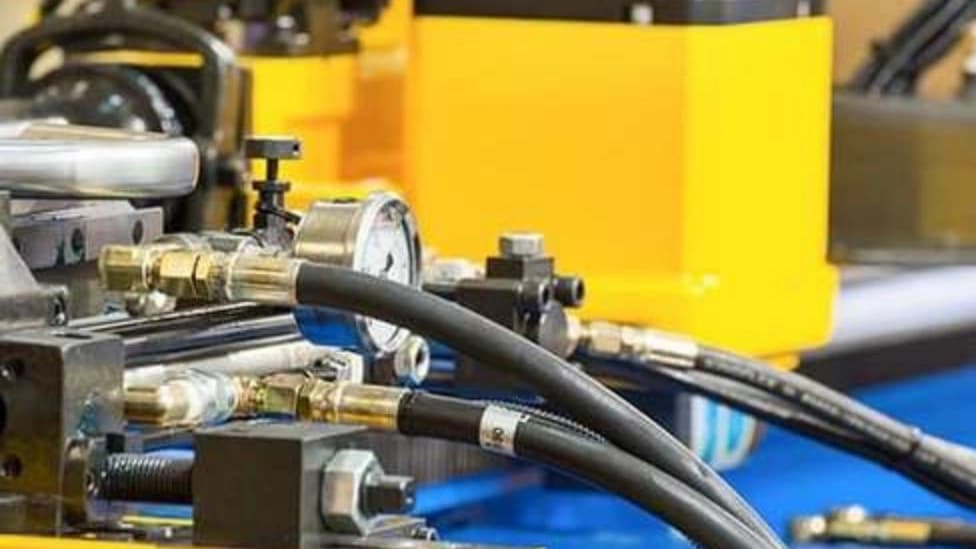
5. Difference in the amount of environmental pollution
Due to the fact that oil is used in hydraulic systems, the possibility of contamination in the environment is very high. In the case of pneumatic systems, due to the fact that air is the main factor in them, there is no possibility of pollution in the environment. Pneumatic systems are mainly used in the health and pharmaceutical industries as well as the food industry, where hygiene is the main pillar.
6. Safety of hydraulic and pneumatic systems
Another thing that can be mentioned about the difference between hydraulic and pneumatic systems is safety. In sensitive areas such as petrochemical industries and military environments due to the fact that there should not be a risk of explosion there, the pneumatic system will be a more suitable choice, due to the fact that electricity can be removed by using parts in the set and from pneumatic valves. He used a special one that receives the command in them through the wind.