
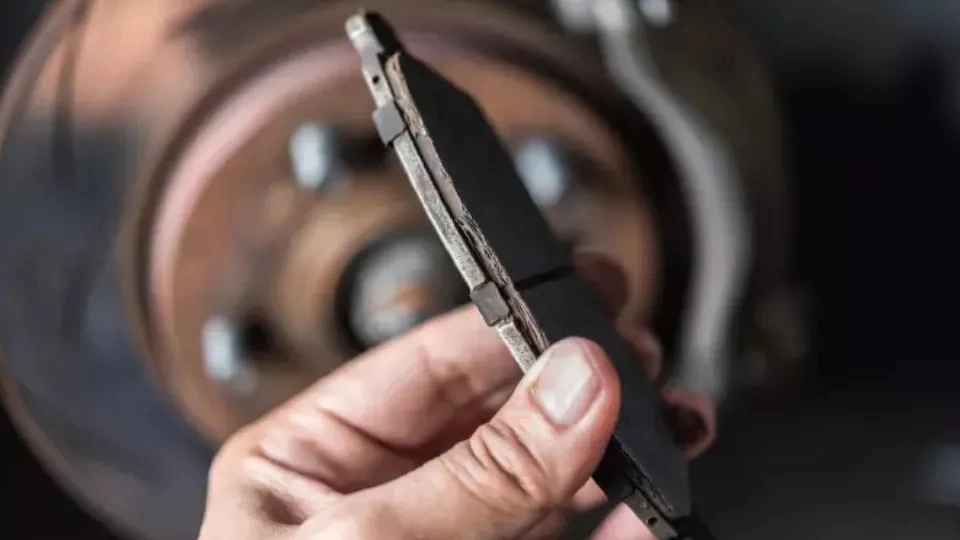
What is the brake pad?
Brake pads were first invented in 1902 by Frederick Lancaster. During this period, not only the shape and appearance of the brake pad did not change, but even its raw materials remained unchanged.
Manufacturers of brake pads have been using asbestos for almost a century to make this piece, which is considered one of the industrial carcinogens. However, the use of this material has been banned for several years, and component makers use other compounds to make pads.
This part is one of the most important components of the brake system, which starts working when you press the brake pedal. As you can see and know, the wheels of the car rotate at a strangely high speed and a strong pressure is needed to stop all four wheels and stop the car. Brake pads are exposed to friction and heat more than any other part. The amount of friction of this part with the brake bowl and disc is so high that it stops the car in a few seconds.
However, brake pads wear out much faster than other car parts, and their timely replacement is very necessary and vital. Of course, the speed of pad wear depends on the number of times you drive and your driving style.
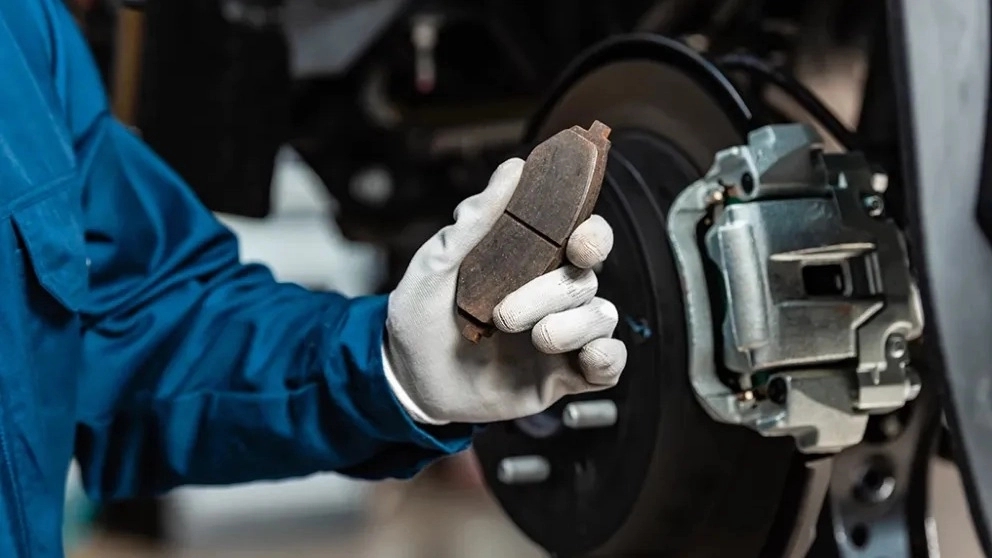
As you have noticed, this part is an important part of the brake system, which causes the acceleration of the vehicle to decrease and disappear by creating friction. The performance of the pad is that by creating the necessary and appropriate frictional force, the kinetic energy of the car is converted into thermal energy, and this action turns the car from the state of motion to the state of rest. The brake pad is the part that comes into contact with the rotor and puts pressure on it while creating friction. The rotor is the flat and shiny disk that you can see behind the wheel of some cars. The pressure and friction applied to the rotor will slow down the car and eventually stop it. In the following sections, we will review and discuss the types of brake pads in order to increase the safety of the car and its passengers with a better understanding of the efficiency and replacement time.
The best time to replace the brake pad
As it was said, this part is one of the car consumables that should be replaced every once in a while. To get a better answer to this question, it is better to refer to your car's manual first, because you can find the best answer there. The thickness of the pad will tell if it is time to replace the pad or not. Of course, it was said in the above section that the time to replace the brake pads depends on the type and style of your driving. If you are in heavy traffic every day and you constantly use the brake clutch, you should think about changing the brake pads more often than people who drive in normal road conditions, or mainly rural roads, or drive a little. Pads can be worn to the end, or worn out, or greasy and broken. Each of these events has specific signs that every driver should be familiar with.
Symptoms of padding
1- When the pads are sanded to the end: regardless of the quality, every pad has a useful life and will be sanded over time. In addition to the quality of consumables, this period also depends on the amount of use and the way you drive. Pad wear occurs with the following symptoms:
A screeching sound when braking
Approaching the brake pedal to the floor of the car when braking
Significant reduction in braking power
Pulling the brake to one side when braking
Reducing the level of brake oil in the tank
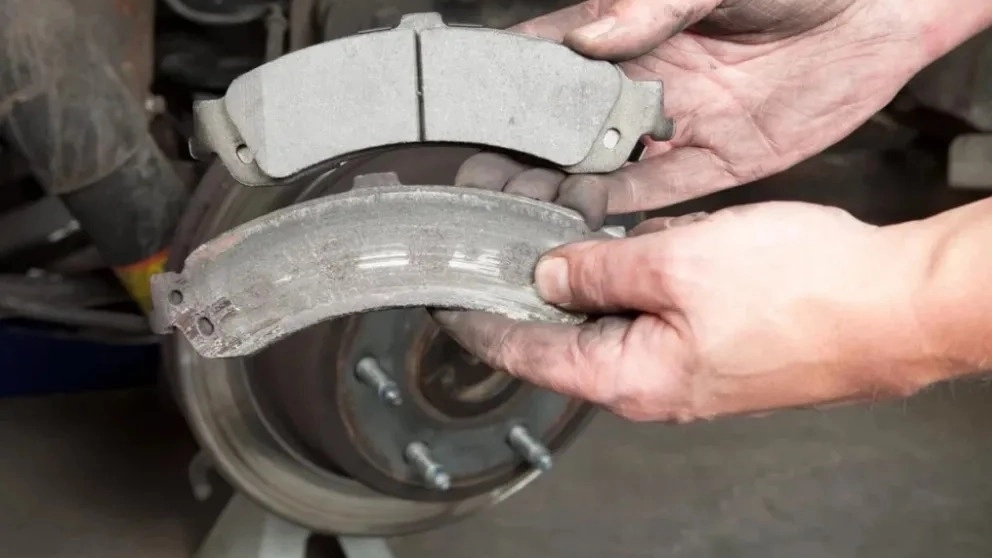
2- When the brake pad gets greasy: sometimes oil leakage from the tank and its transmission pipes cause the pads to get greasy. If the amount of oil is low, washing them with less strong solvents will probably solve the problem.
But when the pads are covered with a lot of oil, it is better to replace them in order to maintain your health and that of the passengers. Oily brake pads appear with the following symptoms:
Reduction of braking power and excessive pulling of the car
Smoke and the smell of burning oil coming out of the wheels
3- When the brake pads break: The brake pads may break due to reasons such as low quality, excessive heat produced during braking, or physical shocks. The breaking of the pads is characterized by the following signs:
Too close to the brake pedal to the floor of the car when braking
A sharp drop in braking power due to a reduction in the friction level of the pads
The locking of the brake pads on the disc, which causes disruption in the movement of the wheels.
The sagging line on the brake disc due to the appendages caused by broken pads.
Types of brake pads
Organic (organic non -asbestos)
Nowadays, asbestos is no longer used in brake pads, because despite being a good absorber for heat, they produced a lot of dust during braking due to high wear, which was very dangerous for health. Today, brake pads and other components of the brake system are made of harmless organic materials such as glass, rubber and resin, as well as Kevlar. These materials can withstand high temperatures. In fact, the high temperature helps the components of the pad stick together more. Kevlar is an important element in organic brake pads. These pads are softer than other pads currently available. As a result, they produce less noise and on the other hand, they wear out sooner. When they are rubbed, they produce more dust than other types. With these things in mind, organic brake pads are not a good choice for heavy duty trucks or racing cars. Organic and Kolari brake pads are more suitable for small and lightweight cars that are not usually driven aggressively.
Metallic
Nowadays, most cars use metal pads. Contrary to popular belief, these pads are not just a piece of metal, but consist of metal chips combined with resin. Some of the most common are copper, brass, steel, iron, and graphite.
These materials are all mixed together and attached with resins to take the shape of the pad.
The reason why metal pads are common is clear: they are cheap and durable, perform well, and transfer and dissipate heat from friction with the rotor surface.
The only disadvantage of metal pads is that they are heavy and have a negative effect on the car's fuel consumption. Also, due to the heavy weight of these pads, they are not used in racing cars.
Because these pads are made of metal, they cause rotor corrosion more than other types of pads. It should be noted that metal pads work better when they are hot. When a car with metal brake pads is moving on a cold day, it will take a longer distance to stop after applying the brakes.
Ceramic
Ceramic brake pads have great stopping power, slow wear and are very light. Ceramic pads are made of ceramic fibers, fillers and adhesives. A small amount of copper fibers are also used in them. Ceramic disperses and repels heat well, and because more ceramic has been used in making these types of pads, it makes the braking performance high even after heavy and frequent braking. Ceramic pads don't wear down as much with repeated use, which means they produce less dust than other types of pads. The dust produced by these pads has a lighter color and does not stick to the wheel. With all these interpretations, ceramic pads are less commonly used in conventional vehicles due to their high cost. This feature, as well as the light weight of this type of brake pad, has led to the use of ceramic pads in special racing cars that are usually driven at high speeds.
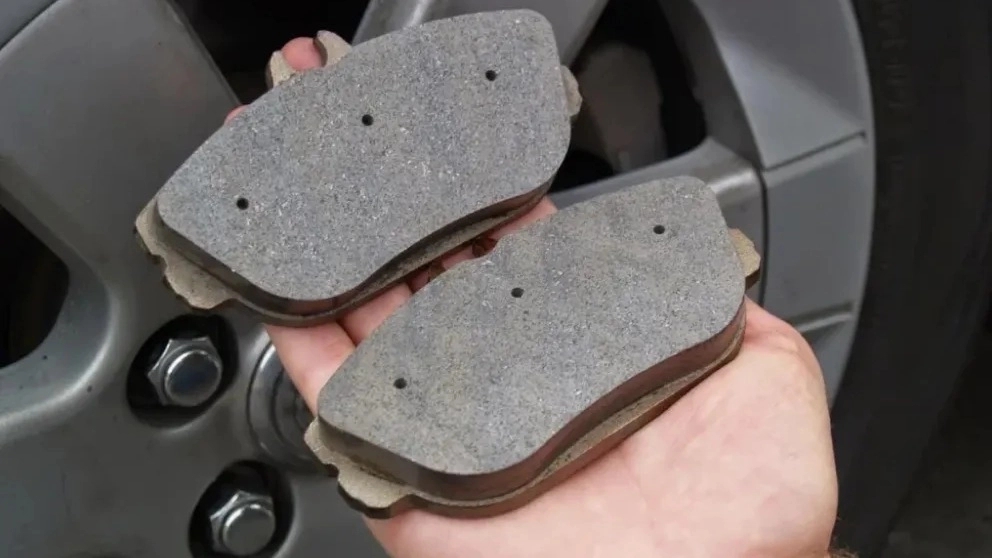
What is asbestos in the brake pad?
Asbestos is a dangerous and carcinogenic substance that was used in the manufacture and production of pads in recent years. This refractory material, which is found from the mineral compounds of magnesium and silica, has absorbed heat well and has shown a very good performance. When asbestos is rubbed, toxic dust is produced, which inhaling it over time endangers human health. Currently, asbestos has been removed in the production of pads.
How many brake pads have any wheels?
Each wheel has two brake pads:
Internal pad
External pad
It means that a car has 8 pads in total.