

For what purpose is the channel of cooler?
According to what we have seen and heard, cooler ducting is one of the most important parts of a building's design. This issue is so important that in case of inappropriate and non-standard channeling; You will have to destroy the building. And redo the cooler channeling. Otherwise, the efficiency of the cooler will be greatly reduced and it will be practically useless. So, to install the cooler channel, you should get help from an expert at the same time as the building is being built. We have also witnessed the damage of the air conditioner ducting and the lack of cooling of the environment.
What is the feature of the Cooler Channel?
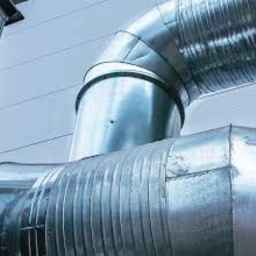
Cooler channel is a channel that is used to transport air in many air conditioning systems, cooling systems and heating devices. This channel is designed and produced in two types, round and square. Galvanized or aluminum sheets are used to make suitable channels. To have a high resistance to atmospheric conditions and pressure. Also, insulated and plastic panels are also used to make the cooler more efficient.
The size of the channels is another important feature that is made in different dimensions and sizes depending on the required space. For example, for the ventilation system of restaurants, coffee shops, hotels; Industrial sheds, laboratories, etc. They use large channels. so that the aeration level increases and accordingly the environment is conditioned in the best possible way.
Cooler Channel Steps In Summary:
Cooler channel design
A channel cacher must first design the channels based on the building architecture and check the installation location of the cooler valve. Because if the cooler valve is not coordinated and disproportionate and the cooler channel is installed improperly, enough air will not enter the interior space. > In the second stage, the channel maker must prepare suitable materials for the cooler channel sheet. It is recommended to use high-quality material for channel sheets. Because poor-quality sheets are perforated over time, in which case warm air enters the channel.
Insulation of the cooler channel
in the third stage of channeling. Cooler, all channels must be insulated. If there is no insulation in the connection of channels, elbows, where the valves are installed, etc., the cooling rate of the air cooler will definitely decrease. Check the number of elbows required. br> At this stage, the channelizer must check the number of knees required. Because the path of the cooler channel is not straight and smooth, it must be as many knees as possible to create a suitable and standard path; It is needed.
Wind Flow Check
In the last step, the specialist should do the ducting of the cooler based on the amount of wind flow. Because the speed and air pressure of the air cooler are different in different water cooler brands.
Types of Cooler Channels in terms of appearance
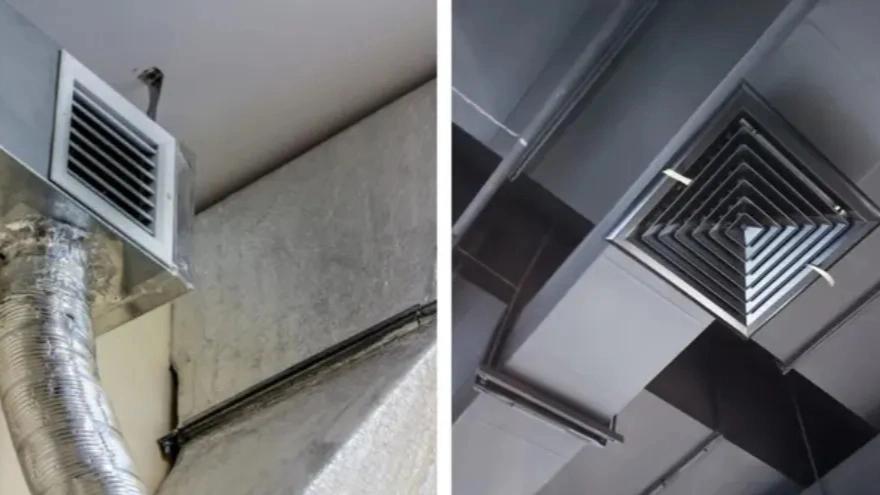
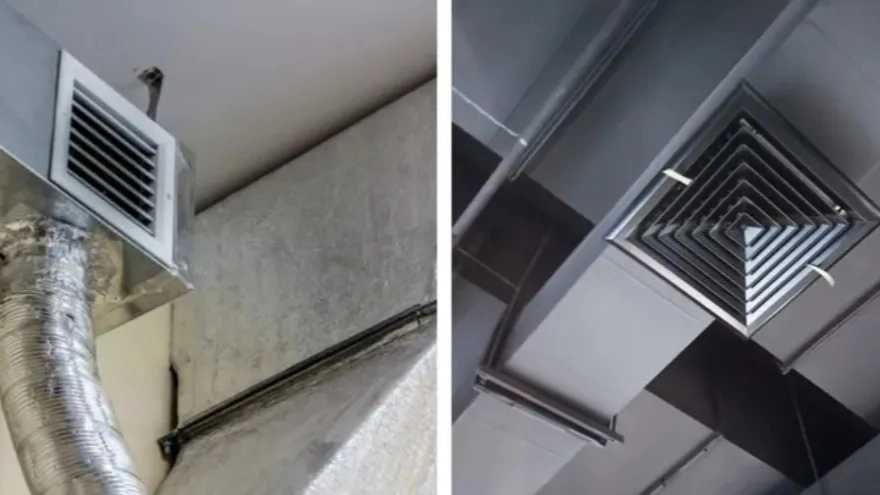
In terms of appearance, two types of cooler channels are produced. These two types include round channels and square channels. Round channels are more efficient than square channels. And so that we will definitely see the replacement of the round model with a square one in the coming years. In addition to the high efficiency of round channels, other advantages such as noise reduction, high air transfer speed, and low volume have made it popular. Of course, in addition to these advantages, the cost of setting up and maintaining it is higher than the square model channels.
Apart from the round channel, the square channel also has its own advantages. Among the advantages of the quadrangular cooler channel, we can mention the low and cheap price, quick implementation. Also, high noise pollution, high weight, accumulation of dust, occupying a lot of space are among its disadvantages.
Cooler Channel Types
It is time to check the types of cooler channels based on the type of cooler. In general, the channels in the cooling, heating and air conditioning system; They are produced in different materials and with different thicknesses. Based on the type, we can refer to galvanized channel, flexible channel, plastic channel and cloth channel.