
Tyler
One of the most important agricultural tools is the tiller. You can do many things with this light device. The tiller is used for primary tillage; In this way, the tiller provides a suitable substrate for plant growth by breaking the hard layers of the soil. If you have been to the paddy fields, you have seen different types of tillers. In general, there are various tillers, each of which will have its own application according to the type of need, soil conditions and the nature of the product. Engine tillers have two types of heavy gear and light gear, the heavy gear is mostly used in farms, but the models with light gear are for driving on the road.
The method of working with tiller types is also very easy; In the Tiller engine, instead of using a starter, a handle is used, and you can see the fuel level using the pipe that is installed. One of the most famous types of tillers is the rotivator, which is used for plowing and pruning agricultural lands; The rotivator gradually replaces the plow and saves the underground soil and plowing with high quality. Some of the benefits of using a tiller include:
Reducing the cost of irrigation due to the improvement of water penetration
Low volatility
Increasing the activity of beneficial microbes
Low maintenance cost
Eliminate weeds
Reducing damages by eliminating pests, insects and mice
No formation of a hard layer after plowing
Tyler application
One of the most important uses of a tiller is to control weeds. Also, the tiller is used to plow large agricultural fields, but it cannot replace the tractor; Of course, to maintain a small garden, it is enough to use a small or medium tiller that has several teeth. They also use tillers for pulverizing, tilling and keeping plants moist. Below are some of the things you can do with Tiller. softening the soil plowing stirring the surface of the soil breaking the basket harvest loading power transmission prune Snow removal
Toxic
A sprayer is a device that sprays various types of poisons in different applications and scales, in order to increase the speed of spraying, to help spread the poison completely and also to save its use. Basically, poisons have a plant origin and are used in several ways. Some of the most important uses of sprayers include fertilizer care, pest and disease control, and weed control. Also, sprayers are made in different sizes and shapes, which use manual and non-motorized sprayers for small soils such as house flowers, while for agricultural lands and gardens, they use all kinds of motorized sprayers such as atomizers and lances, as well as tractor and wheeled sprayers. >
Types of spraying
As mentioned, there are different types of sprayers, each of which is used according to the type of application they have. Below we mention some of the most important of these sprayers.
Manual sprayer: This type of sprayer has a structure similar to a suction pump, which is used in very small greenhouses and gardens.
Backpack sprayer without motor: this sprayer model is placed on the shoulders of the person spraying by two backpack straps and there are two types of intermittent pressure and constant pressure; In the first type, the sprayer pumps with one hand and sprays with the other hand, but in the constant pressure type, the pressure of the sprayer is provided by a simple piston pump.
Motorized back sprayers: In this sprayer, the poison does not have pressure and it turns into small particles when it hits the air flow.
Motorized wheeled sprayer: This type of sprayer has a gasoline engine, and their poison tanks are also large, and the pressure generating pump for spraying poison is also a motorized piston pump.
Tractor sprayer: This sprayer model is made to connect to three points of the tractor, which is made of plastic or stainless metal.
Sprayer trailers: It is in the form of a trailer where the tank containing the poison is pulled by a tractor on two wheels.
The benefits of using sprinkle
Using a sprayer has its own advantages depending on the type of work you want to do. Some of the general benefits of using a sprayer are as follows.
Reduce product losses
Increasing the speed of spraying
Increase product quality
Increase efficiency and profit
Save on the consumption of poison
Reducing the costs of spraying
Seed
Many factors such as planted seeds, seed disinfection, planting depth and planting type are effective in seed germination and plant emergence from the soil. Planting seeds using a machine has long been the preoccupation of most farmers. Seeding machines include various types such as linear work and row work; Working row means a device that sows seeds in a row in the soil. In order for these operations to be done well, it is necessary to take the following steps:
First, he should open a groove in the soil so that the seeds can be placed under the soil.
Determine the amount of seed planted per unit area correctly
Place the seeds in the soil correctly, because the distance between the seeds, as well as the depth in which the seeds are placed, will greatly affect the yield.
Cover the seeds with a variety of cardi and plate covers.
At the end, the seeding machine must compress the bed in which the seed is placed with the right pressure.
Seeds
There are different types of seed drills. The types of seed drills include row drills, linear drills and air drills, seed spreaders and finally special drills (such as potato drills and planters).
Rowers:
Linearies:
Linear seeders are used to plant crops that have a high yield. Line cultivators plant seeds more regularly and at a more uniform depth than seeders, while to use seeders, the soil bed must be prepared in advance by a cultivator.
Naqrifar
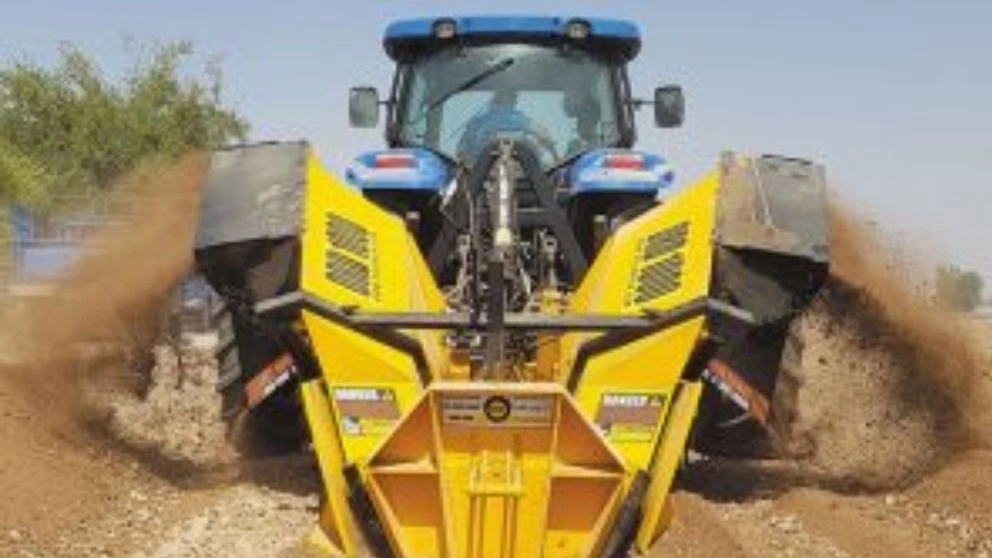
The ditch is another important agricultural tool that is used to create a ditch in the fields. In the past, many farmers used to dig streams and holes with shovels and picks, but with the invention of ditchers and ditchers, these old activities became obsolete. The structure of this device is a combination of two blades that are connected at the front, which rotate the soil to the right and left at the same time and create a stream in the ground. The stream can be used to create main and side streams to irrigate fields. A ditch has a chassis, a leg and a tiller (consisting of two turning plowshares).
Types of neutrals
Nispromatic application
The most important feature of streams in agriculture is the transfer of water from streams and streams. In agriculture, gutters are usually attached to the back of a tractor or tiller. A ditch can also be used to re-plow cloddy soil. Other uses of the canal include the following:
Paving cutting
Create drainage
cutting the roots
Speeding up the creek digging operation