
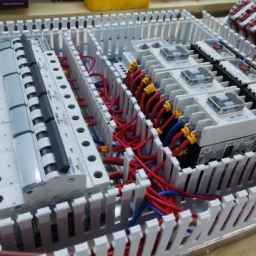

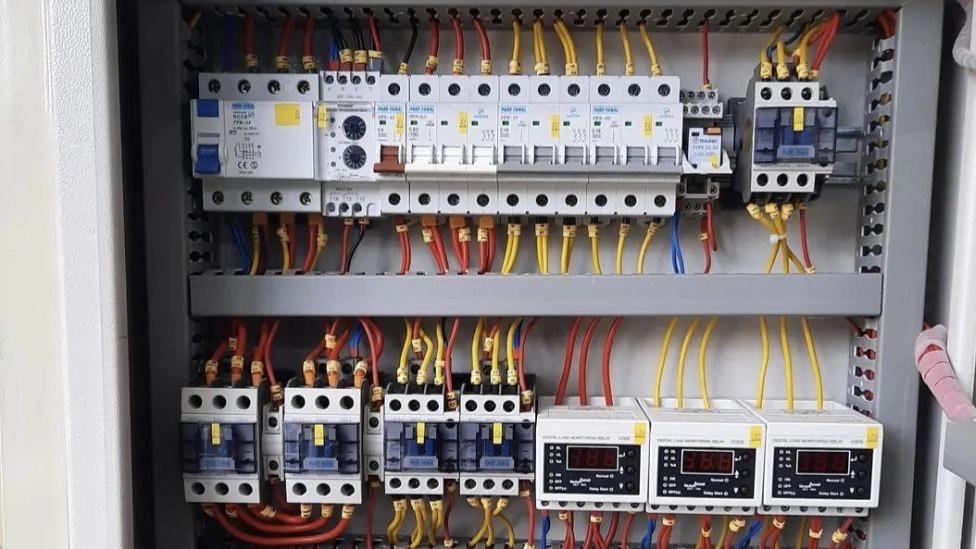
Industrial switchboards have become the main part of industry and construction due to the advancement of technology in recent decades. In the past, these boards were made with purely mechanical parts, but today, along with the use of these parts, the use of PLC and Inverter has also become common. In this article, we will get to know the types of industrial switchboards.
Electrical panel is a set of fuses, switches, relays and electrical energy protection and control devices. In simple language, the switchboard is a place where the input power source is applied to various circuits, each of these circuits is protected and controlled by fuses, switchgear and other equipment.
Switchgear It is called a set of insulating and protective equipment such as fuses, circuit breakers and circuit breakers. Each electrical panel includes different operational units, each of these parts to perform a specific purpose of mechanical components and A different electric is formed. As a result, a switchboard must be designed according to its specific purpose and application, in accordance with the standards.
Panel Panel Division in terms of the performance of the panel
Programmable panels: LOGO or PLC are commonly used in these panels and are used for advanced and large industrial purposes.
Motor control boards or lighting control boards: Common contactor circuits are commonly used in these boards.
Capacitive boards : In these panels, a capacitor is used to correct the power factor.
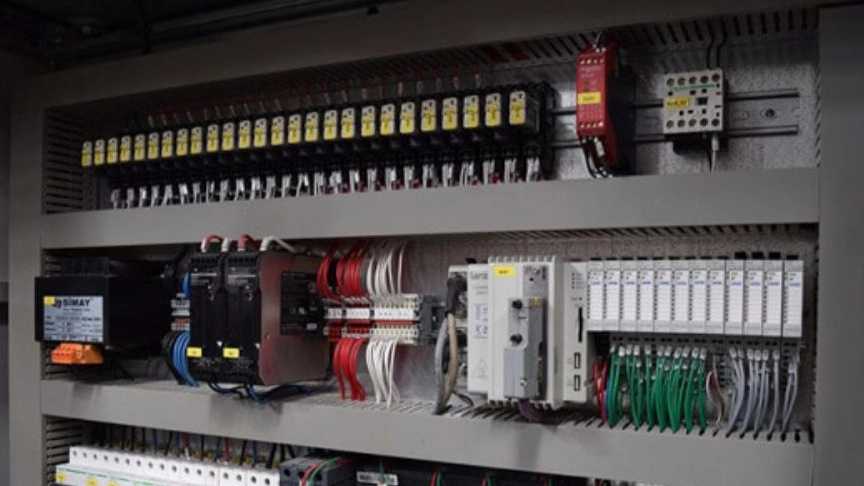
Types of electrical panels in terms of installation location
Electrical panels are divided into two categories, internal electrical panels and external electrical panels, according to their installation location:
Outdoor exterior electrical panel
Due to the location of this electrical panel in the open space, the material of the electrical panel must be resistant to different atmospheric conditions, have high temperature tolerance and be sealed against moisture penetration.
For this purpose, special design and construction standards must be observed. The ceiling of these panels should be 5 cm larger than their body on each side and extend from each side. Its door should be opened from the front and its body should be sealed and sealed, the thickness of its body should be at least 2 mm.