

- Main diode placement< /li>
- Installing a heat sink (to prevent heat from increasing in the lamp)
- LED driver placement (to adjust the amount of input and output voltage from wires)
- The reflector is placed behind the main diode so that the produced light is distributed properly
- Also, a lens is placed on each diode to prevent dust from entering and to increase the concentration of the produced light
- All the items mentioned above together with a board and wire connections are connected to each other and It is then connected to an electrical current to establish current.
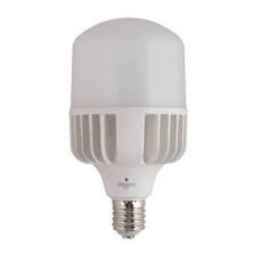
Undoubtedly, how to produce a variety of LED lamps is different and one cannot be used to produce them all. But in general, in a LED lamp there are the following:
What is a low -power lamp and what are the benefits of?
The first fluorescent lamp was invented in 1890 by Peter Cooper Hewitt, which was used in photography studios and some other industries. After that, in 1927, Frederick Meyer and Hans Spener invented the high-pressure heater lamp. Over the years, finally, in 1938, General Electric improved the production of moonlight lamps with proper efficiency. Low consumption lamp is a type of light source from the family of fluorescent lamps. This lamp entered the market to replace incandescent and high-consumption lamps. The operation of this lamp is based on mercury vapor, and when the electric current is established, electrons flow from one electrode to another through the gas inside the glass tube. This flow of electrons affects the mercury vapor and the mercury vapor emits extra energy in the form of ultraviolet light. Then the ultraviolet light shines on the phosphor layer inside the glass and the phosphor converts it into visible light.
Benefits
The advantages of energy-saving lamps compared to incandescent lamps are as follows:
The life of energy-saving lamps is 8 times longer than that of incandescent lamps. compared to incandescent lamps, but the life of the lamp and its electricity consumption have made the use of energy-efficient lamps cost-effective in the long term. .
reducing the ambient heat
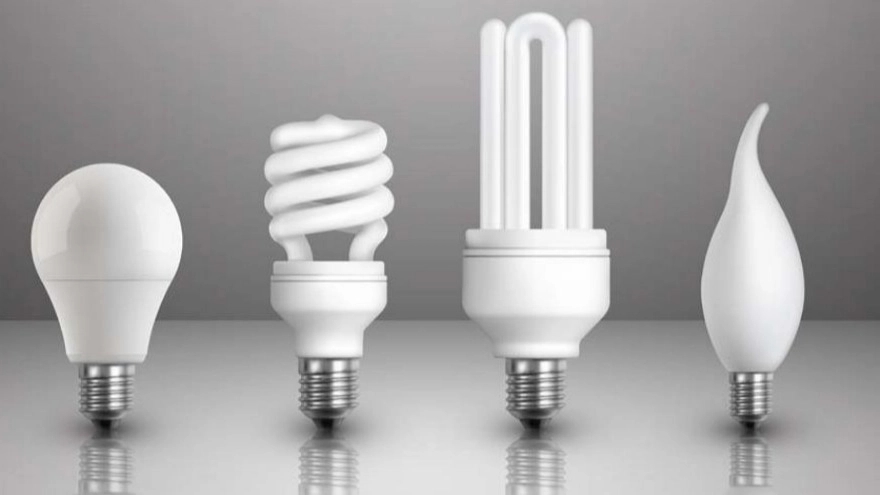
Types of low -power lamps
In a general classification, energy-saving lamps can be divided into two categories:
self-ballast energy-saving lamp
in self-ballast energy-saving lamp, the electronic circuit that is used to start the lamp is completely inside the lamp itself and the lamp It is provided to the consumer with a normal cap. These lamps can be directly replaced with incandescent lamps. Among the advantages of this lamp, we can mention a very long life and lighting without flickering.
Low-consumption lamp without ballast
Low-consumption lamp without ballast is produced in different shapes and sizes and with two types of two-pin and four-pin clocks. The four-pin type requires a starter and choke, while the two-pin type lights up without the need for a starter and their starter is inside the lamp head. A four-pin lamp can be operated with an electronic ballast or a magnet, but a two-pin lamp can be operated with a magnetic circuit.
Priya Ramzanzadeh
Post Author
1267
common:article
Contents of this post
Undoubtedly, how to produce a variety of LED lamps is different and one cannot be used to produce them all. But in general, in a LED lamp there are the following:
What is a low -power lamp and what are the benefits of?
Benefits
Types of low -power lamps