
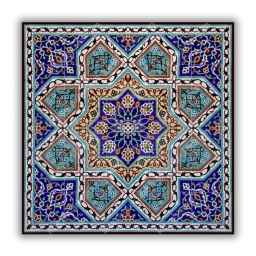

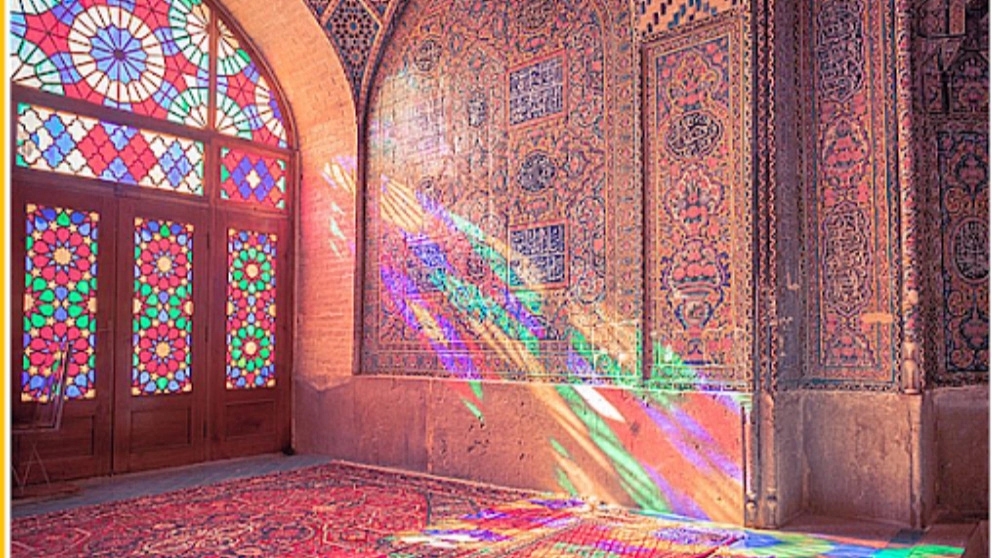


Seven -color tile history
Seven-color tiles are a type of tiles that are derived from square clay tiles. The use of these tiles became popular in the late Timurian period and early Safavid period, and examples of it can be seen in Iranian tiling of mosques, places of worship, tombs and some private homes.
The dimensions of seven color tiles are usually 15x15 and 20x20 cm. But the tiles used in minarets and domes were 15x7.5 or 10x20. To paint a seven-color tile, these pieces were put together and then the original design drawn on the sand paper was copied on it. The copied design was painted with manganese oxide and painted with paint. Finally, the tile was baked in the oven and ready to be installed.
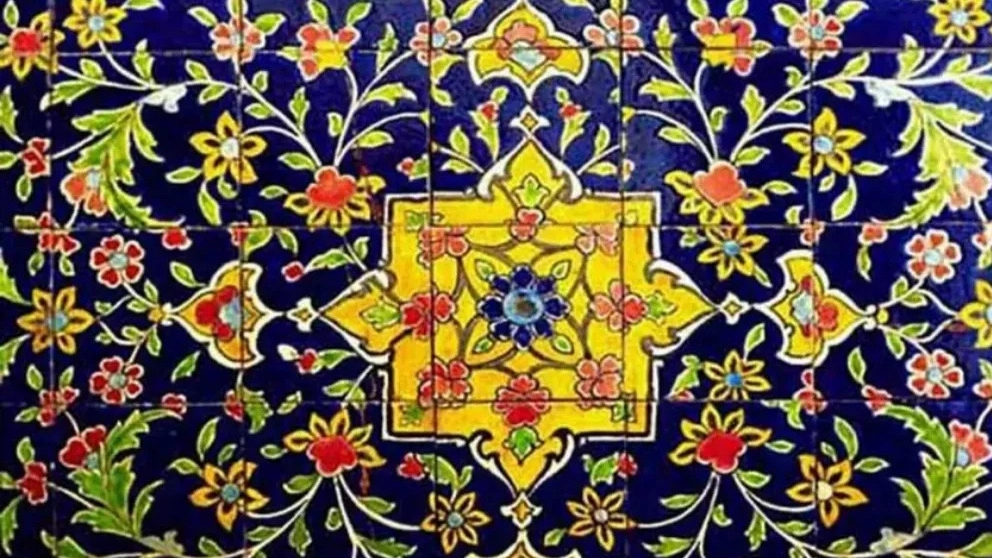
According to the evidence obtained from ancient works, tile work in Iran has a long history. But the use of glazed tiles originally dates back to the Achaemenid period; Of course, the use of these tiles was not so popular in that period. With the arrival of the Seljuk period, the use of colored tiles in buildings became more visible.
Until that time, the glaze of the tiles was alkaline and they were used to decorate the interior and exterior of the buildings. But it was during the Seljuk dynasty that the style of tiles changed. Colored tiles were first used as inscriptions of Quranic verses, but gradually their style and use changed and they became seven-colored tiles and they were used in other buildings.
It was during the Seljuk period that The use of colored glazed tiles began to spread. But after the Mongols attacked Iran, many of these works were destroyed and the art of tiling stopped. But with the appointment of Mughal Ilkhan to rule over Iran, the reconstruction of the buildings started and the art of tiling was resumed. During the Seljuq period, most of the tiles were in the mosaic style, and the seven-color tile known today was not so common. Until, with the construction of Imamzadeh Jafar Isfahan, seven-color tiles were used and made great progress until the Safavid era.