

Foam concrete is one of the types of sponge concrete that consists of cement slurry and foam (at least 20% by volume). Foam is a substance consisting of air bubbles. Encapsulating these bubbles in a cement mortar or grout allows for the creation of very low density concrete. Foam concrete is also known by other names such as sponge concrete, light concrete, light sponge concrete, aerated concrete, porous concrete and floor concrete. In some cases, foam concrete is confused with gas concrete. Aerated concrete is another type of sponge concrete.
how is the concrete foam making?
The process of making concrete foam will not be complicated. It is even possible to prepare foam concrete by providing a foam concrete machine at the project site. The steps of foam concrete or its production are as follows:- First, soft cement or sand is mixed with water in a mixer. They dilute it with a little water.
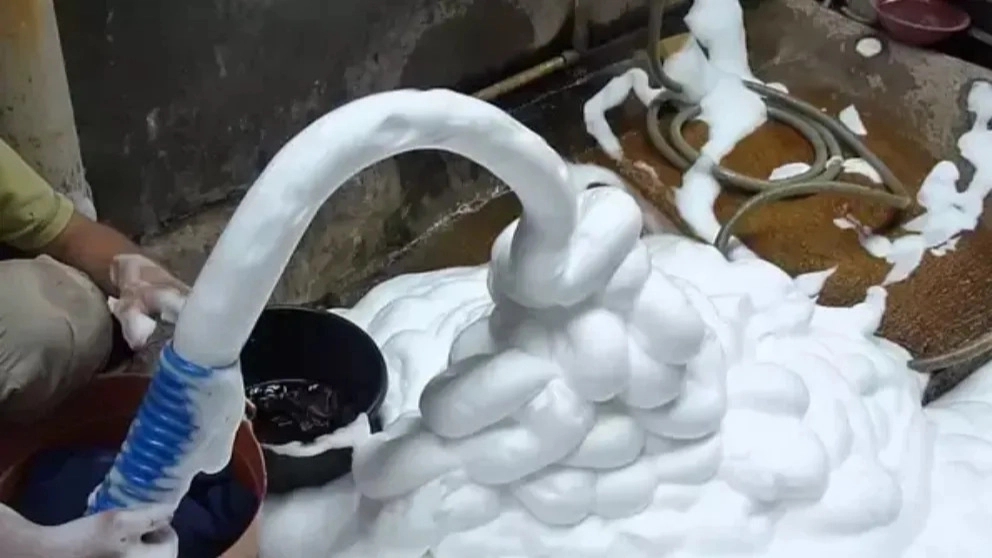
- After that, using an air pump device from pipes that have small holes. They produce tiny bubbles.
- Finally, the obtained foam is transferred to the mixer mixture. At this stage, small bubbles appear in the mortar. which indicates the formation of concrete foam.
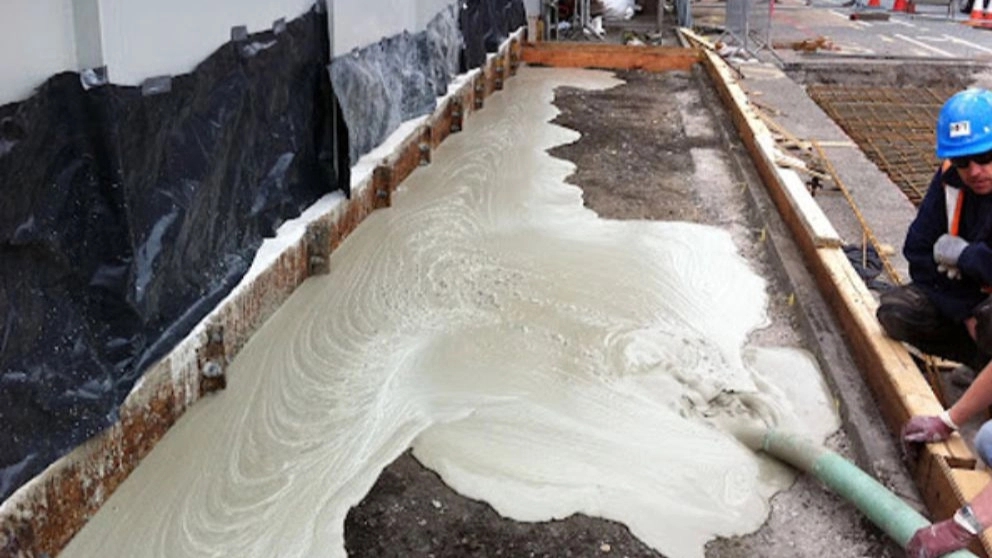
- The obtained material is spread on the desired surface using pumping devices with a width of 10 cm.
What features of the concrete foam?
Knowing what foam concrete is and what its features are, determines the use of this product. In the following, you will read more about the features of this product:
Light weight: Reducing the weight of the building is very important in construction. Foam concrete is very light and can be easily carried and installed. In this case, you can control the format. In general, by installing foam concrete on the building, the dead load of the structure is reduced. This feature will increase the speed of the execution of your project and increase its safety several times. And it is also highly resistant to fire. Buildings made using foam concrete transmit less noise and have lower energy consumption. Also, during a fire, it will not contribute to the spread of fire.
Environmental effects: Fly ash is one of the most important items in foam concrete. This material is one of the by-products of industrial waste. For this reason, fly ash will reduce the negative effects of concrete on nature.
Resistant to all kinds of weather conditions: Another important advantage and feature of foam concrete is the high resistance of this product to all kinds of conditions. It is the weather. In this case, you can use concrete foam for your construction without any restrictions in any geographical area.
Use of Concrete Foam
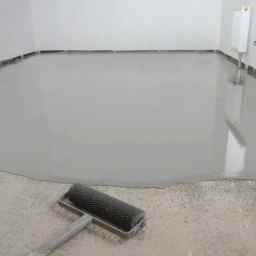
The most common use of foam concrete is in the construction of ceiling and wall light blocks, as well as building floors and slopes. In addition, this light concrete can be used to fill sewage wells and tunnel cavities. According to the specific characteristics of foam concrete, its various uses are separated according to its specific weight and compressive strength: Flooring of floors: one of the most important applications of foam concrete is flooring of floors. Since this material has light weight and high execution speed, the floor of all floors of the building can be covered with it after the completion of the installation works.
* Roof slope: Foam concrete due to its high resistance, impermeability. Thermal and humidity, as well as light weight, is the best method for roof slope, because it can be insulated or isogamed directly without any additional operations after the implementation of concrete foam on the roof.
* Integrated walls: In order to build the walls of cold storages, greenhouses and sound proof halls, foam concrete can be poured vertically on site with molding, or prefabricated panel walls can be produced using special molds. Due to the insulating nature of this type of concrete, it is especially useful for insulating cold stores, greenhouses, covering thermal and refrigeration pipes, etc. Also, due to its sound insulation, this type of concrete is widely used in the construction of engine rooms and acoustic rooms. Filling holes and stabilizing them is used on all kinds of pipes, tunnels, tanks and places that need light filler as a soil substitute.
* Use in covering beams and columns: Another use of this concrete is as a protective layer against fire for covering beams and columns of steel structures.
* Road infrastructure A: Foam concrete is used as a non-settled material to fill the excavations done in the streets and instead of granular materials. This advantage guarantees the performance of foam concrete when used in the lower layers of the road, especially in areas inaccessible to sources of suitable granular materials. In addition to the mentioned advantages, due to the high resistance of this concrete against fire, it can be used as a fireproof material.