
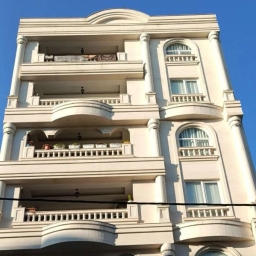

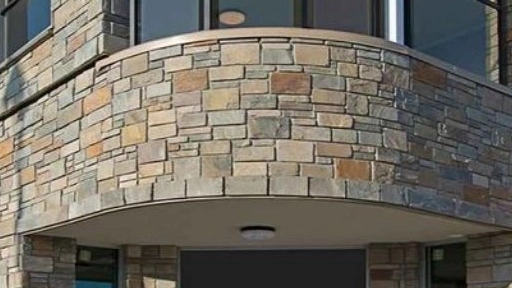
In today's age, with the advancement of science and technology, stone extraction has become easier and its use in the construction industry has increased significantly. Stones have unique capabilities that cannot be compared with other building materials, perhaps its most important features can be seen in very high durability and resistance, favorable polishability, high abrasion and impact resistance, cutting and polishing ability, Washability, color stability, resistance to heat and humidity, appropriate tensile and bending resistance, impermeability, resistance to weather changes, hardness and high compressive strength, stability against acid and alkaline substances and many other things. . In general, the application and use of stones is also in the direction of covering the inner wall of the building, facade, road infrastructure, street floor and sidewalk and various decorations. Now, according to this introduction, we request you to come along with Parshin Sazeh to learn more about the types of building stones and their wide applications. This article is a comprehensive guide on the types of building stones and their uses.
The characteristics of a proper building stone
Stone texture
The stone should have a healthy structure, so that it does not have grooves, cracks, and loose veins, and it should be uniform and uniform.< br>
Water absorption
Building stone should not have the ability to absorb a lot of water, so it should not disintegrate and dissolve in water.
Cleanliness
Building stone should not be contaminated with natural and artificial materials, in fact it should be available completely clean.
Stone stability against environmental factors
Natural stone must withstand the physical and chemical conditions of the environment, so it must resist wind, frost, temperature changes and in the presence of water flow and all erosion factors.
Mechanical stability
The compressive stress for load-bearing parts should not be less than 150 kg/cm2.
Types of building stone
. Marble
Marble is a kind of white and transparent calcareous metamorphic stone that is resistant to weather conditions to a good extent, but due to the possibility of weathering against weather conditions and the possibility of becoming cloudy It is mainly used inside the building under the light radiation. Usually, this stone is cut parallel and perpendicular to the layers, which creates an eye-catching beauty. Also, the variety of colors, the ability to cut and polish is one of the unique features of this stone, which has classified it as one of the expensive stones.
Granite stone
Granite is one of the igneous rocks of volcanic origin, which has considerable hardness and strength. It is interesting to know that this stone is known as one of the best floor coverings for buildings, and at the same time, it can be used inside the exterior of buildings, especially in very cold areas, as a durable stone with low water penetration and Expansion and contraction are used sparingly. On the other hand, due to the very reasonable price of this stone, its durability and the stability of its color, it can be considered as a very ideal facade stone.
Travertine stone
Travertine stone is one of the stones that is known as one of the best examples used both in the exterior of the building and in the interior decoration of the building. The application of travertine stone is usually in building facades, flooring, stairs, toilets and other cases. Among the most famous travertine stones is Haji Abad travertine, which is known all over the world. This stone has a cloudy, windy and wavy design and has excellent cutting ability. Haji Abad stone is a very ideal option for use in facades of buildings and hotel lobbies. Regarding the features of this product, it can be said that due to the high porosity of this type of stone, it can be used as a natural insulator. Compared to granite, travertine has a more reasonable price, so its use is more common.
The reasons for travertine acceptance
- High resistance
- Beauty and reasonable price
- Ideal cutting and polishing
- The presence of porosity Sticking to mortar