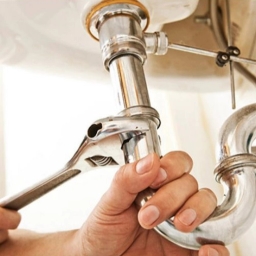

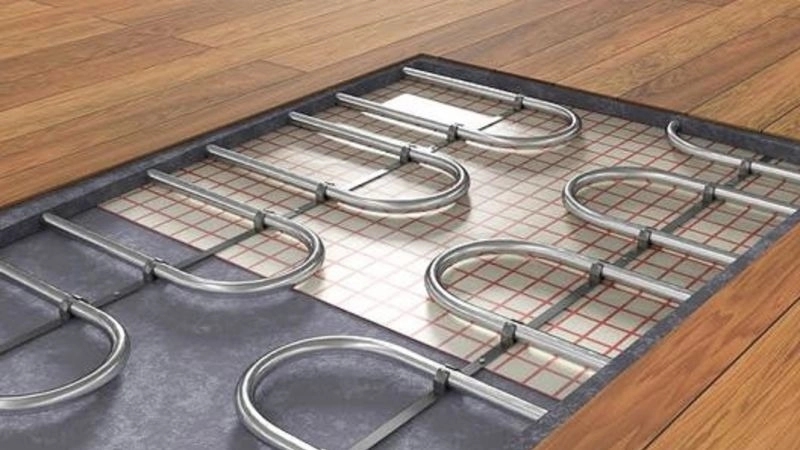
What is the floor heating system?
The floor heating system is a unique way to heat the building space, the way it works is completely different from other methods. In this method, as its name suggests, a heating system is installed on the floor, and therefore walking in a building equipped with an underfloor heating system has a completely different feeling compared to other heating systems such as fan coil radiators and air conditioners. It is interesting to know that the underfloor heating system was first invented by the ancient Romans. The Romans used to heat their living environment by installing channels under the ground and on the floor of the bathroom. After that, the use of this method was used in Korea and Japan, and over time this method was completed and turned into today's method.
The benefits of the floor heating system
The floor heating system has many advantages over the size of various heating systems, which you can learn about the most important advantages below.
• One of the most important advantages of using the underfloor heating system is reducing energy consumption. When the heating system is installed on the floor, the temperature of all parts of the building will be heated uniformly.
• On the other hand, you feel the heat by walking on the floor that is equipped with a floor heating system; While there is no such situation in other heating systems.
• On the other hand, when this system is used to heat the building, the ceramics or the parquet floor will not get wet in any way, and on the other hand, the use of this heating system also prevents the floors from sweating.
• The use of floor heating system prevents waste of thermal energy. As much as the heating system heats the air at higher levels, the amount of heat exchange with the cold air increases and more energy is wasted. Since the heating in the floor heating system is created right from the lowest part of the building, the waste of energy and heat also reaches its lowest level.
The types of floor heating systems
1- Heating system from electric floor
The electric floor heating system, as its name suggests, provides heating of the building using electric power. For this purpose, in the electric underfloor heating system, elements with high electrical resistance are installed on the surface of the ground, and the heating of these elements causes the heating of the building space. One of the most important advantages of underfloor heating is that it is quick and easy to install. It doesn't need a special package and plumbing, and since it works with electricity, no leakage happens in it. But on the other hand, this method also has disadvantages. Since the electric floor heating method uses electricity to heat the house, the cost of electricity is usually high, and therefore, especially in Iran, where the cost of electricity is higher than water and gas, it is not very economical. br>
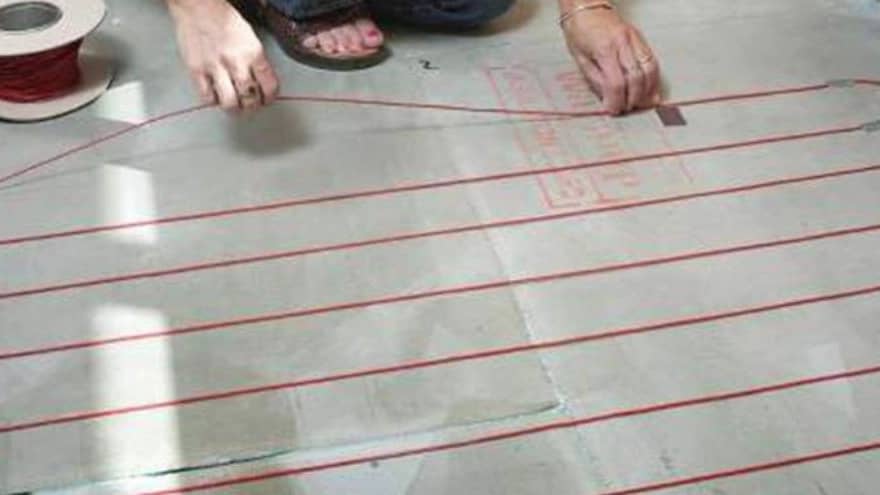
2- Blue floor heating system
Water floor heating system is implemented by installing water pipes in the floor. Normally, the pipes used in this heating system are made of copper and PVC, and the passage of hot water through these pipes creates heat in the building.
But you should also keep in mind that a package and a radiator are needed to heat the water flowing in the pipes. Normally, setting up a water floor heating system usually requires more money and time, and on the other hand, this method must be done in a professional and principled way, and if the smallest problem occurs, the pipes may leak.
Since this system is installed under the floor coverings and covered with cement, the entire floor must be demolished if a problem occurs. However, this method of underfloor heating consumes less energy and is therefore more affordable, and if it is connected properly, it will work for years without any problems.
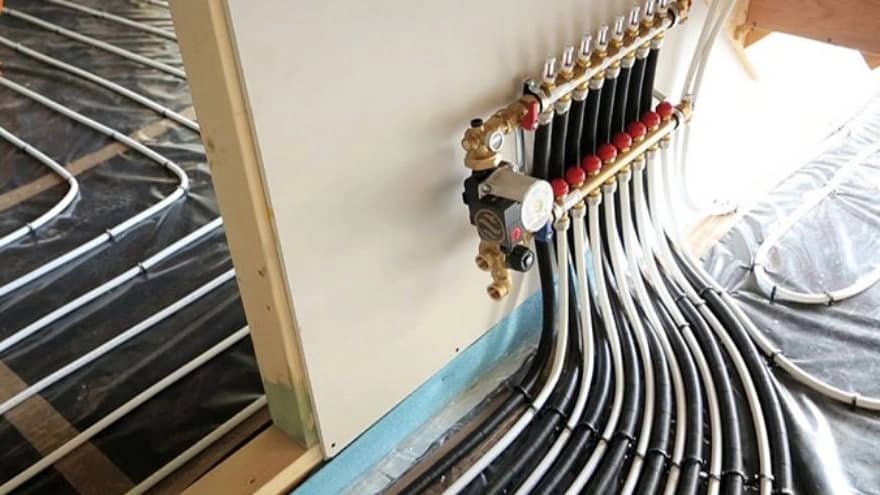
Method
The first step to start the underfloor heating system is to execute the heating plan by an expert. In general, the floor heating plan is implemented in 4 different ways. Spiral map, two-sided map or L, three-sided map or U and four-sided map.
The features of the floor heating systems
In the floor heating system, all the floor surfaces of the building are covered by pipes. Usually, in both water and electric floor heating methods, the heat is spread evenly throughout the building by heating the pipes and elements. In order to cover the empty space between the pipes, a special glue is also used. Usually, the pipes used in the underfloor heating system have a diameter of about 16 to 32 mm, and according to the area of the environment and the desired amount of heat, a pipe with the appropriate diameter is used for this heating method.
The floor heating system is used in both closed and open spaces. Today, this modern heating system is used in many advanced countries to heat roads, sports fields and stadiums, greenhouses, and airports. On the other hand, in many places, to prevent freezing in the cold winter seasons and to melt snow. This heating technology is used.
The heating system is better than the foam
In response to the question whether floor heating or radiator is better, you should know that there are many differences between these two heating methods. When radiators are used to heat the building, most of the air near the radiators is heated. There may be places in your home where you feel cold. Usually, the temperature difference is fully felt in the spaces that are far from the radiators. But when the underfloor heating system is used to heat the building, the bedroom space is heated uniformly and on the other hand, energy consumption is saved to a great extent.
In addition, the use of this heating system and the air quality of the building is also very effective. Almost most heating methods reduce oxygen in the air; But in this heating system, your air will always be fresh and rich in oxygen. In heating methods, usually the air pressure created from the side of the heating device moves from the bottom to the top and returns again. This causes the dust to move around the house. But this does not happen in floor heating systems.