

Use of traffic equipment
The use of traffic equipment is very wide and it is used not only in roads and passages, but also in private facilities. The use of traffic equipment is necessary to create a safe environment while moving the roads efficiently. The effectiveness of any piece of traffic control equipment depends on various factors including visibility, price, installation time, suitability for different road conditions, as well as other important considerations such as OSHA safety standards.
What is traffic equipment?
Traffic equipment can guide, guide and inform drivers by providing visual or tactile indicators. Traffic equipment is divided into four main categories: signs; signals; Road design and marking; and barriers or channel builders.
Familiarity with the basics of traffic equipment
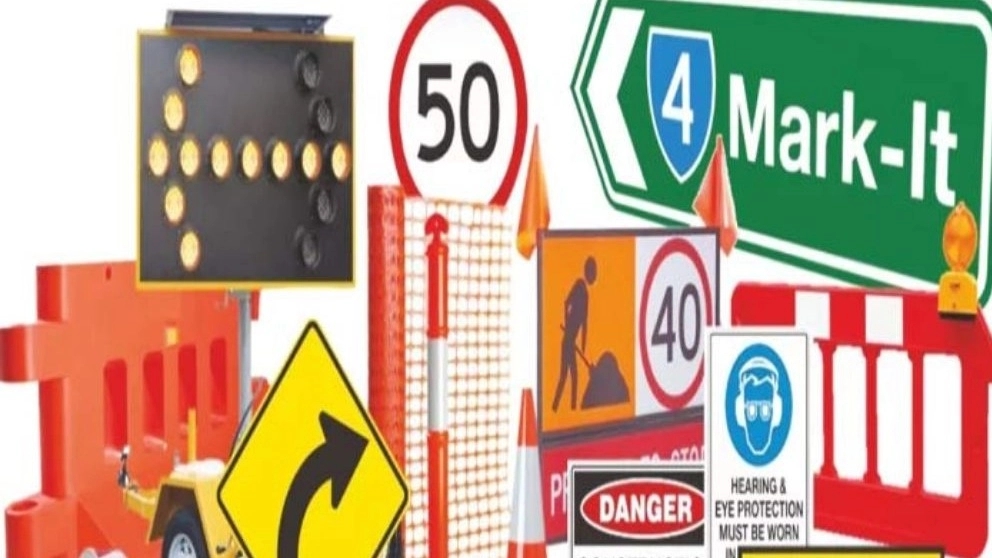
Traffic equipment includes various types of barriers, signs, danger signs, stop signs, etc. designed to convey messages to drivers, pedestrians, and other nearby road users. There are many types of signs with distinct shapes and sizes, including regulatory, warning, directional and informational signs.
Regulatory signs are used to control and enforce traffic laws, such as stop signs, pedestrian crossing signs, and speed limit signs.
Warning signs are used to warn drivers of potential hazards or upcoming construction, such as a sign that warns the driver of an upcoming work zone.
Directional signs are used to guide road users, such as a sign that shows the distance to the next exit.
Types of traffic equipment
Public roads use a wide variety of traffic control tools that can be adapted to smaller facilities. However, on public roads, the driver's focus is on signs and signs. In smaller facilities, such as factories or industrial centers, pavement markings and barriers may account for a larger share of the load.
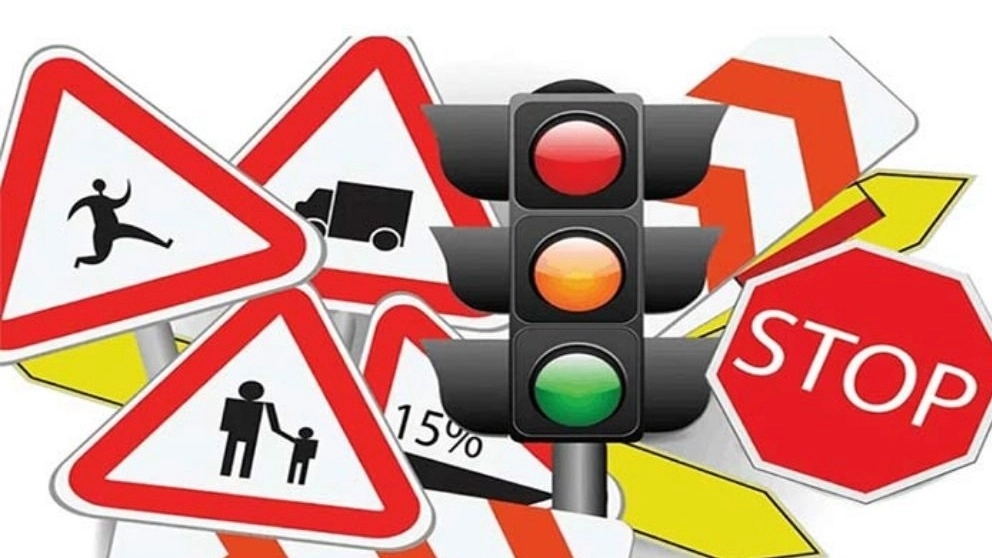
Traffic equipment groups include:
Signs include (surveillance signs - warning signs - guidance or information signs - traffic signs)
Road marking and road construction including (road marking - road warning signs)
Barriers and channel builders include (cones - highway barriers or New Jersey - channel builders or traffic cylinders)
The use of all kinds of traffic equipment
Warning signs
Warning signs allow drivers to be aware of driving hazards such as crossing animals or twisting roads and paths. They are installed for maximum safety.
Guidance or information boards
Directional or informational signs provide route information and amenities to help drivers find their destination. Route and exit information, as well as those identifying rest stops, gas and food, and tourist attractions, all fall into this category.
Using traffic equipment for private installations
In most regions of the world, public traffic control signs in private spaces such as parking lots must also be observed. For example, failure to obey a known sign, such as a stop sign on campus, could result in a confrontation with the local police.
However, the use of traffic equipment in parking lots can prevent many accidents. Therefore, a facility manager can use standard road markings and signs to communicate the way he wishes to use his space. Traffic control in private facilities or locations is often heavily dependent on barriers, traffic cylinders, and design. The road is dependent.
speed bumps
Speed bumps and bumps are a very common form of traffic control in parking lots. Speed bumps are also very useful in driveways in residential or commercial complexes, or in large commercial or educational campuses. Speed bumps provide proper speed control. Also, speed bumps help to prevent cars from passing through empty and possibly unsafe spots.
What is the use of traffic tools and tools?
Boards
The most common signs in parking lots and private facilities are traffic signs printed on columns and lane dividers. Stop signs are important in large lots and garages where there are intersections that may cause driver conflict. One-way signs may also be useful in some situations, especially garages and complexes, although the direction of traffic can be Also be marked with road markings.
Road markings
Road markings may be important for passageways in a residential or commercial complex to control traffic between buildings. Parking lots can also use road markings.
Directional arrows, such as those found in one-way parking lanes, are often used more frequently in parking lots than one-way signs. Crosswalks create designated pedestrian zones to guide both pedestrians and motorists safely to their cars.
Traffic cone and cylinder
Traffic cylinders and New Jersey barriers are useful in garages. The flexible traffic cylinder is useful as both a stop guide and a position guide as parking stops on back stalls.
Use of traffic supplies
The use of traffic equipment is very wide. Traffic equipment is used in places where there is a possibility of an accident, to ensure that it controls the opposite traffic well and creates safety.
Commonly used items include brightly colored or reflective traffic cones, flashing lights, New Jersey and hazard tape.
A traffic control barrier can also include demarcation posts or a series of interlocking plastic NJs that can block an entire lane or indicate that a road is closed to traffic. The traffic cylinder can also be used to protect sensitive facilities such as airports and confined buildings.
Traffic cylinders are often used to secure buildings against intentional or accidental vehicle impact.
Traffic equipment is used to manage normal, daily traffic on roads and highway systems. Convex traffic mirrors also include this type of traffic equipment.
The benefits of using traffic equipment
Maintain vision
Visibility is key to effective traffic management. The visibility of traffic control equipment can be improved by placing it in a location that is well lit by sunlight. You can also add reflective tape to your devices to further improve visibility.
Avoids distractions on the road
Distractions such as noise, vibration, or even nearby construction workers can cause accidents. Signs should be placed in areas that are free of potential distractions and do not interfere with the normal flow of traffic, such as at the top of a hill or on a bridge. Therefore, signs should only be installed on the side of the road that is against the flow of traffic. This allows for the greatest level of visibility.
Ensuring safe road conditions
In rainy or snowy weather, traffic equipment can be used to keep the road away from water and snow and extend from the shoulder to the edge of the road line. It can also be used to temporarily block a lane so workers can detour without having to run into cars stopping around the barrier.
Traffic congestion management
Traffic signs are commonly used to manage traffic congestion. For example, when an accident causes a road closure, signs should be posted far enough ahead to give drivers enough time to react to changing traffic conditions.
Ensuring the safety of road users
Barriers can be used to direct traffic away from areas temporarily blocked for construction or other types of work. They can also be used to temporarily close a road or an area of the road when there are issues that make the area unsafe for traffic. Signs can be used to close a section of road, or to warn road users that an area is temporarily closed for construction.
Maintaining the efficiency and flow of the road
When used properly, traffic equipment can help control traffic flow and prevent slowdowns and backups. It can also be used to direct drivers around areas where workers are temporarily blocking lanes or performing maintenance work.