


Thickness
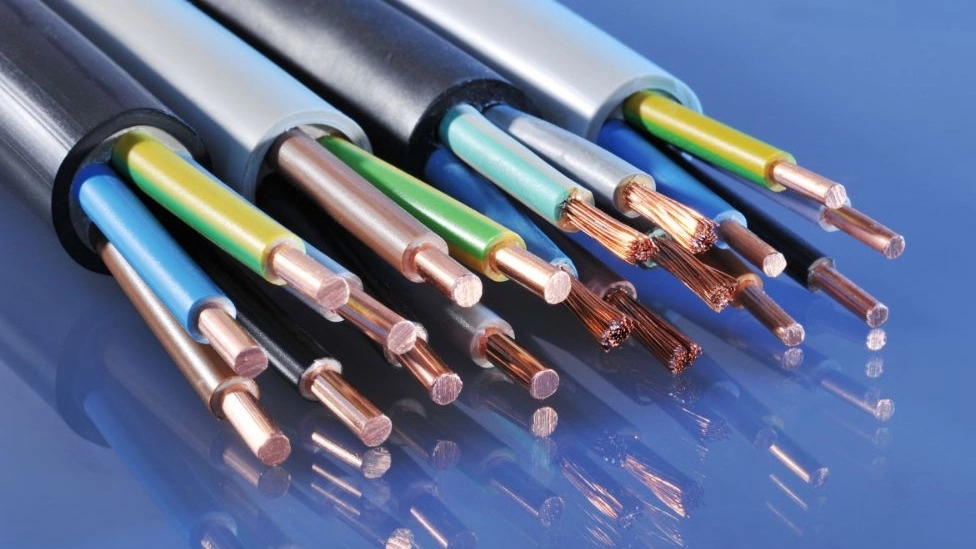
One of the differences between wire and cable is their thickness. Cables are usually thicker than wires due to having more insulation and coating. In fact, as mentioned above, the cable consists of a number of wires, so its upper thickness is completely predictable.
Weight
Voltage Tolerance
Voltage tolerance in electric cables is at a higher level than electric wires. Usually, electric wires cannot withstand heavy voltages and in this case they work weaker than cables. For this reason, cables are used to transmit electricity over long distances.
string number
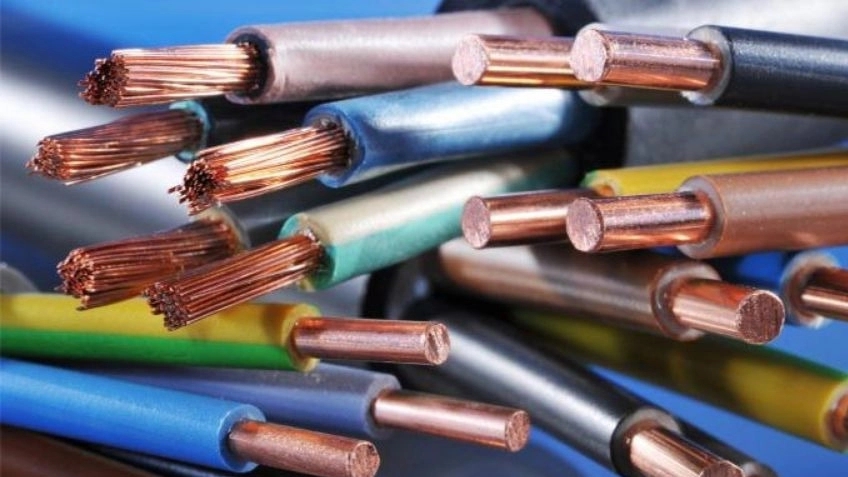
One of the obvious differences between wire and cable is the number of strands; Electric wires are usually single-stranded with various cross-sections, while cables are made of one or more strands.
cross -section
In terms of cross-sectional area, cables have more variety and the cross-sectional area of some types may reach 240 square mm and more. Compared to cables, wires have a lower cross-sectional area and are the only earth wires, which in some cases can have a larger cross-sectional area up to about 150 mm square.
resistance
Due to the fact that cables are usually equipped with jacket, armor, armor and additional shield in their structure, for this reason they have higher resistance and durability than electric wires.
Insulation
One of the main differences between wire and electrical cable is the number of insulation. In the wire, there is no separate insulation for each current-carrying core, while in the cable, each current-carrying conductor has its own insulation.