
A device may look small in the exhibition, but once installed, it will block the traffic flow of the club. This is one of the real concerns when equipping the training space in areas like Tehran's Aqdasiye; Where every meter of space should be used properly. The root of the problem is usually choosing the device based on appearance or price, before considering the direction of movement, dimensions of the training space and maintenance cost. To buy the right gym equipment, you should start with a workout plan and space map, not a list of best-selling machines.
Where to start to equip the gym?
First, determine the training needs of the audience and the usable space; Then, choose the most suitable tool for each movement. A club that prioritizes the coverage of the main movements, the safe commuting route and the ability to maintain the equipment, stays away from buying repetitive and underused equipment.
Before asking the price, answer these four questions on paper:
- Who is training? Beginners, experienced athletes, private training clients, or a combination?
- What movements should be covered? See squats, presses, pull-ups, leg presses, and cardio as a movement pattern, not just a machine name.
- What is the actual space? Dimensions of the machine, including space to enter, set up, use, and service it. Consider.
- Who will maintain the devices? Access to consumable parts, service instructions and post-installation responsiveness are part of the purchase decision.
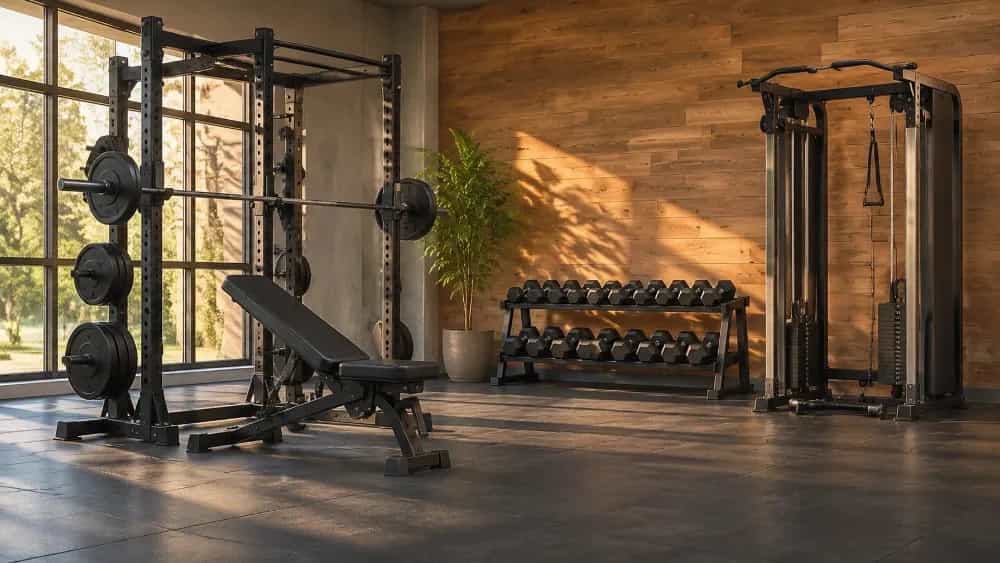
For a general gym, a combination of a barbell rack or bench, adjustable bench, dumbbells, plates and barbells, cable machine, and a few select leg machines can be a starting point for consideration; Not a fixed version for all spaces. The final choice depends on the capacity of the club, the supervision of the trainer and the composition of the clients. The ACSM Fitness Center Standards Guide also identifies space design, equipment, and maintenance programs as relevant components of the safe operation of a facility.
What variables determine the quality of purchasing equipment?
The value of a device is not only its apparent strength; The fit with the user, the quality of movement and the possibility of service are also important. A device that is difficult to adjust in practice or is constantly out of use, even with a reasonable purchase price, is not a good economic choice.
Covering the movements and fit of the device with the users
Instead of counting devices, see what movements the equipment makes possible for which people. If two devices do a similar job but another commonly used movement is not covered, reconsider purchasing priority.
In reviewing men's gym equipment, it should not be assumed that one fixed size is suitable for everyone. The seat and handle adjustment range, the starting position of the movement, and the possibility of use by people of different height and strength are more practical criteria of the "men's" or "professional" label. For a public space, a combination of free weights and adjustable machines usually provides the trainer with more varied exercise choices; Of course, each device should be selected according to the level of users and the method of monitoring the collection.
Safety, dimensions and cost of maintenance
The dimensions listed in the catalog do not show all the space required by the device. When placing, also check the user's range of motion, weight transfer, access for adjustment and evacuation or commuting route.
In the technical visit, don't be satisfied only with the color of the body and the apparent thickness of the profile. Also check the stability of the device on the ground, the health of the connections, the smoothness of the movement, the condition of the cable and reel, the readability of the labels, and the access to the service points. The ISO 20957-1:2024 standard defines general safety requirements and test methods for stationary indoor exercise equipment; The ISO 20957-2:2024 standard also covers specific requirements for stationary strength training equipment. Match the seller's reference to "standard" with verifiable specifications and documentation, not just a promotional phrase.
Option | Main Advantage | Important Limitation | Check before purchase Do |
Free weight and bench | High variety of movement and exercise variability | More need for training and supervision | Quality Connections, stability, declared load bearing |
Multipurpose wiring device | Covering multiple movements within a specified range | Dependence on cable and reel health | Route smoothness, parts replacement, adjustment range |
Single motion device | Easier setup of a specific motion | Space occupation for more limited use | Anticipated usage, suitability for users |
Used device | Possibility to reduce initial cost | Probability of wear and tear or repair cost hidden | Practice test, service history, parts and shipping cost |
This table is for prioritization, not to declare absolute superiority of a category. For example, a multi-functional machine is more valuable when it covers the movements required by the gym without creating queues or interfering with the training space.
My field experience: Which mistakes increase the purchase cost?
In my experience, the most expensive mistake is often buying the wrong device, not buying a more expensive one. When the device doesn't match the space map, users, or service capacity of the complex, the true cost becomes apparent after installation.
I, Berzin, when looking at gym equipment options, prefer to map out the route of use for each piece of equipment before comparing prices. This approach for the activity space of Barzin Sports Store in Aqdasiyeh, Tehran is also a reasonable basis for a discussion about the selection of equipment: can the user move the weight, adjust the device and train without interfering with the person next to him?
A few points that I suggest are left out of the initial review:
- Test the device through the entire range of motion. Abnormal noise, movement jamming, or resistance change in part of the track may not be visible at first glance.
- Determine the cost of shipping and installation separately. A device that does not go through a door or a staircase is not a good buy at a reasonable price.
- Have a plan for consumable parts. Cables, covers, and moving parts must be can be identified and tracked.
- Photos are not enough when buying second-hand. In advertisements for the sale of second-hand gym equipment, the healthy appearance of the body cannot take the place of testing the connections and movement of the device.
The ACSM Guide for Sports Centers also addresses preventive maintenance and related checklists in addition to facility design and equipment. For this reason, I consider the service plan to be part of the purchase decision, not something to start after the failure.
What is the roadmap for buying gym equipment?
Proceed the purchase in five steps: assessment of needs, placement, prioritization, technical testing and registration of delivery conditions. This arrangement helps to compare the offers of a gym equipment sales center with the real needs of the club, not just with the sum of the invoice price.
- Write down the list of movements. Convert the expected training program into basic movements and determine how many needs each piece of equipment meets.
- Make a real-size map of the space. On the same map, mark the location of equipment, user space, weight-carrying path and access for service.
- Divide the purchase into essential and supplementary. First, choose the equipment that will be used the most. have and cover the main movements; Leave the more specialized options to the next step.
- Evaluate the sample device in person or with adequate technical documentation. Check the settings, stability, fluidity of movement, technical specifications and the possibility of supplying parts. For fixed equipment, ask the seller about the relevant ISO 20957 series standards and the documents that can be provided.
- Write down the terms of delivery.Clarify the model and specifications of each device, accompanying items, shipping, installation, initial training, warranty and the problem handling process before final payment.
In Barzin Sports Store, the value of a technical discussion about buying gym equipment can start from this list: place the space map and training needs next to the device specifications and see which option is really suitable. This method makes the decision explainable and reviewable for the buyer.
summary
To choose fitness club equipment, first measure the range of movement, fit with the space and safety; Then go for the price. A purchase that is clear about the possibility of testing, service and daily use is a more defensible decision than hastily completing the list of devices.
From my point of view, Mr. Berzin, the best starting point is a specific conversation: "For whom is this space equipped and what kind of training?" If you have prepared a club map and a list of your needs, we can check the options in Barzin Sports Store based on these criteria; Without confusing the number of devices with the quality of the decision.
همین حالا تماس بگیرید!
پاسخ فوری و مشاوره رایگان در انتظار شماست.