


What is crankshaft?
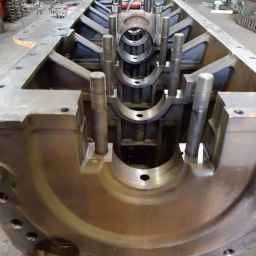
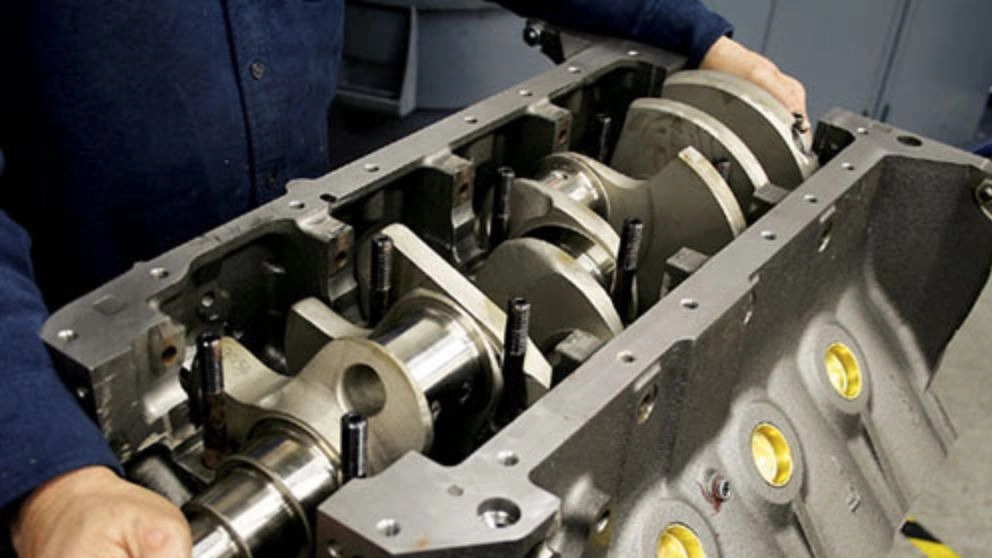
The crankshaft is a mechanical part that converts the reciprocating movement of the pistons into rotational movement. The car's crankshaft is usually made of hard steel and consists of a series of cranks or journals, or so-called moving cranks, which are separate from each other.
The crankshaft is located in the engine block, under the cylinders and pistons, and is connected to the pistons through connecting rods that are attached to the crankshaft journals. As the pistons move up and down, they push or pull on the connecting rods, which in turn turn the crankshaft. This rotational movement is then transferred to the gearbox and finally to the wheels and drives the car forward.
Crankshaft components
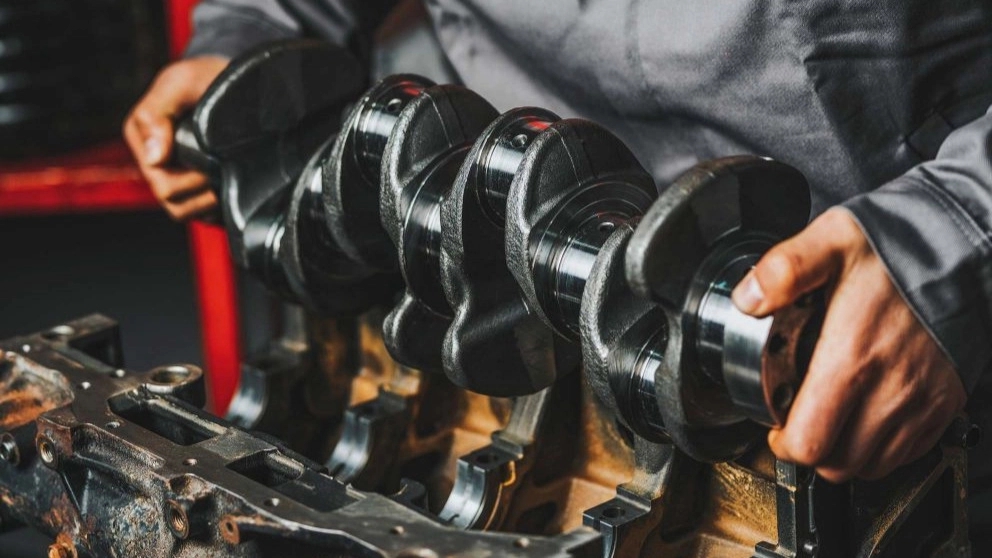
The crankshaft has different implementations. The naming of parts in the crankshaft is quite specialized. The meaning of the journal in the crankshaft is the part of the crankshaft that rotates inside the bearing, and there are two types of journals in the crankshaft. The main journals that are the main axis of the crankshaft rotation and connecting rod journals that are connected to the connecting rod. Another name for the connecting rod journal in English is crank pin. Here we explain the components and the function of each component of the crankshaft.
Movement (CRANK PIN):
Crank pin or moving cranks known as Rod Bearing Journals in English is a cylindrical part of the crank that is connected to the connecting rod. As the crankshaft rotates, the connecting rod moves up and down, transferring power from the pistons to the moving crank in the crankshaft.
The main axis (main Journal):
The main journal or the main axis is connected to the engine and the main axis of the crankshaft rotation. The main journal is critical to engine performance as it provides support and stability to the crankshaft. In the main axis, there are holes for passing oil and lubrication. The distance between the axis of the main journal and the connecting rod journal is called the crankshaft radius.
Flywhel Mount Flange (Flywheel Mount Flange)
The flywheel flange is a flat surface at the end of the crankshaft where the flywheel is mounted. The flywheel is a heavy rotating mass that helps reduce engine vibrations and provides a place for the clutch to attach in manual transmission cars.
Balance Weight (Counterweight):
Balance weight (also called crankweb in English) is a heavy metal mass that is connected to the crank in front of the crank plates. Its purpose is to balance the rotating assembly and reduce the vibrations caused by the reciprocating movement of the pistons.
Oil Passage (Oil Passage):
An oil passage is a small channel or hole in the crankshaft that allows engine oil to pass through and lubricate the bearings and other moving parts. Proper lubrication is essential to reduce friction and wear and increase engine life. The oil pump is responsible for injecting oil into these holes.
Balance hole or balancing (Balance Holes):
The holes inside the balance weight are called balance holes. This hole is used to balance the crankshaft. It is used to balance the crankshaft by inserting heavy metals into this hole.
Crankshaft Wool Bowl:
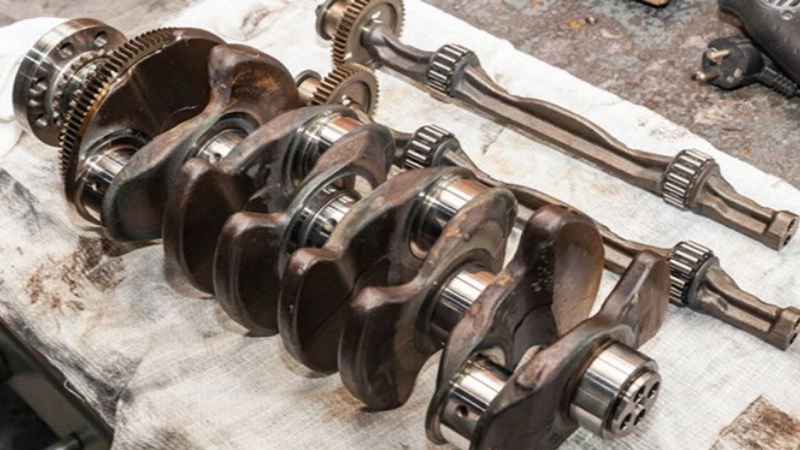
Oil seal is a bowl-shaped gasket that is used in all hydraulic systems, pistons, crankshafts and other car parts where fluids flow. The crankshaft felt bowl is a type of felt bowl that is used to return oil to the car tank and prevent oil leakage and dust from entering the engine. The felt bowl of the crankshaft is located at the end and the beginning of the crankshaft.
The felt bowl of the O-ring is located in the front part of the crankshaft and the engine and behind the head. The crankshaft is located behind the flywheel. The felt bowl of the crankshaft is cheap, but it is difficult to access and the clutch and flywheel must be opened. So our advice is to replace them when repairing the engine.
Key path (Keyway):
A keyway is a slot cut into the crankshaft that allows a key to be inserted and provides a secure connection between the crankshaft and other components, such as a flywheel or pulley.