

The Power History and the First Power Cable
Electric energy has always been around us, but in the distant past we were not able to understand or control it. But all of these underwent many changes in the 18th and 19th centuries, and these changes led to great inventions such as the invention and production of cable wires, the invention of batteries, electric lamps, and other technologies without which life is not possible today. After that, in the 20th century, developments in the field of electricity production such as wind power, nuclear power, and tidal power took place. Here we are going to review a brief history of electricity and electricity generation.
The electrical nature of matter was discovered around 600 BC by the Greek philosopher Thales. He mentioned that rubbing amber with the skin can attract light objects; This is the first step for electricity production. Centuries later in the 16th century, William Gilbert, an English physician, discovered that there were other substances with the same behavior as amber, and he called them "electric", which led to the invention of a device called the Versorio or the absence of a body).
In the 18th century, the Frenchman Charles de Fay discovered that there are two types of behavior depending on the friction of materials, which led him to discover that there are two types of electricity. In the same century, Benjamin Franklin investigated electrical phenomena and came to the conclusion that electricity is a type of fluid that can pass from one object to another and be transferred by friction.
Cable Production Processes
Stage 1 of cable production: joinery
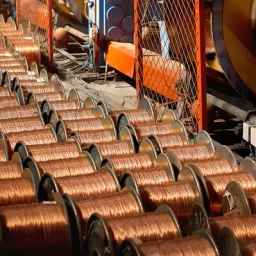
The purpose of the first stage is to obtain metal wires (usually copper or aluminum) with a cut surface of 1.38 mm. At this stage, with the help of joinery machines, 8 mm copper is converted to 1.38 mm copper.
Stage 2 of cable production: annealing< br>
During the joinery process, a lot of pressure is applied to the metal rod. For this reason, the produced wire is very fragile and can easily break if bent. In this step, we anneal the wire metal to increase its flexibility. In fact, annealing allows the metal to slowly cool and eventually harden.
Stage 3 of cable production: Punching (shining the strands of wire)
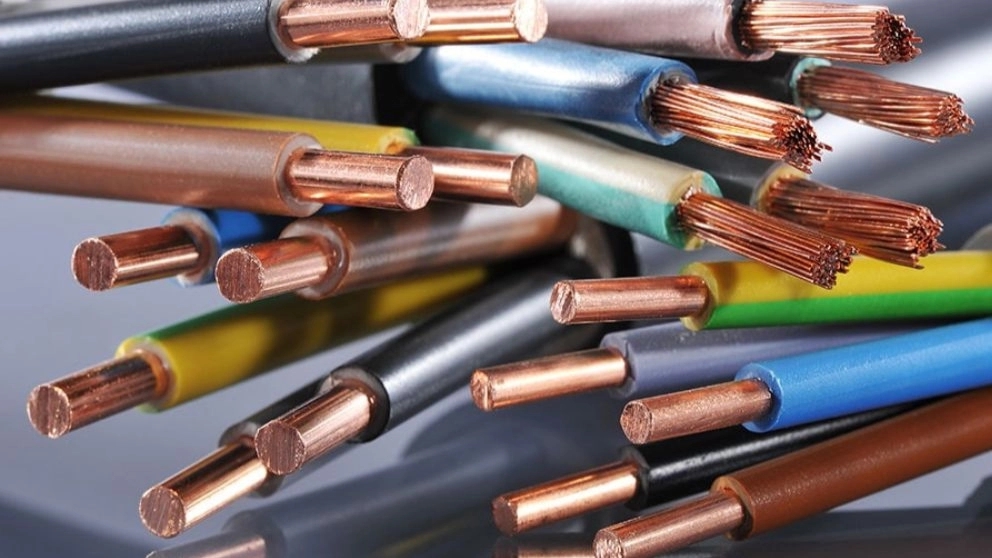
In this stage of cable wire production, two or more wires of the same gauge are twisted together or threaded using a special formula to determine the length of the twist.
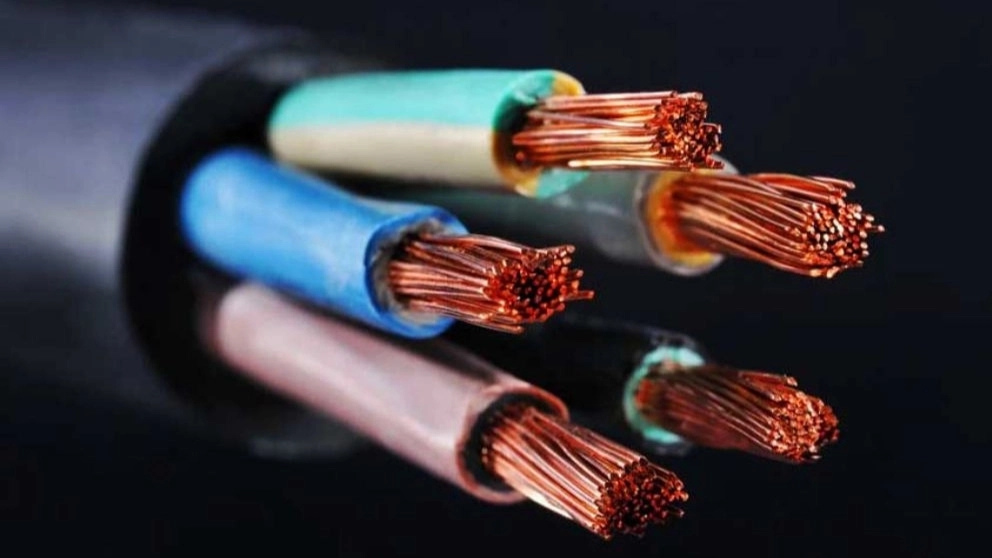
Step 4 of production Cable: Insulation In this step, the wire, which is soft and flexible, is passed through the extruder and insulated. There are different types of insulators and they prevent current leakage.
Stage 5 of cable production: coating
In this stage of the devices Extruder is used for cable sheathing. The coating prevents the penetration of moisture into the cable and protects the cable against external factors such as chemical or electrochemical attack, fire, etc.
Stage 6 of cable production: packaging
b>
Finally, the prepared cables are cut into spools or coils according to the customer's needs.