
What is a false ceiling?
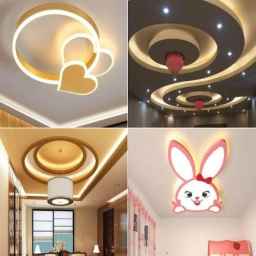
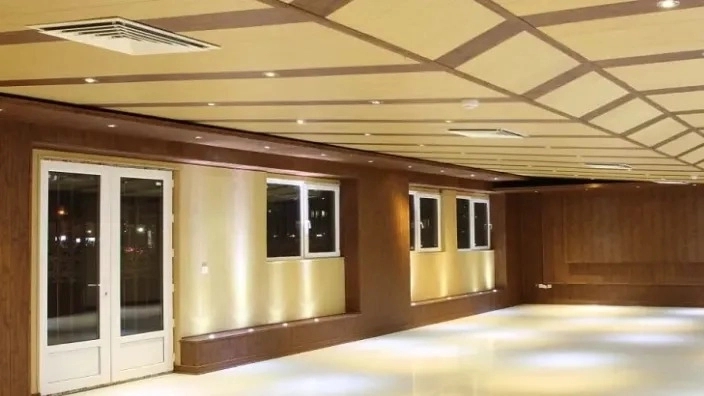
False ceiling (Dropped ceiling) is an architectural element in the construction industry, which is implemented as a cover under the structural roof or the main roof of the building. In addition to covering the main roof facilities, this roof also has other roles such as preventing energy loss and matters related to the beauty of the interior architecture, and it consists of various sections of rebar, corner, plastering, etc.
Different parts of the false ceiling
The false ceiling is made up of different parts, some parts are added depending on the type of roof and the place of its application. If we want to consider the most complex false ceiling, it consists of six parts, which are as follows:
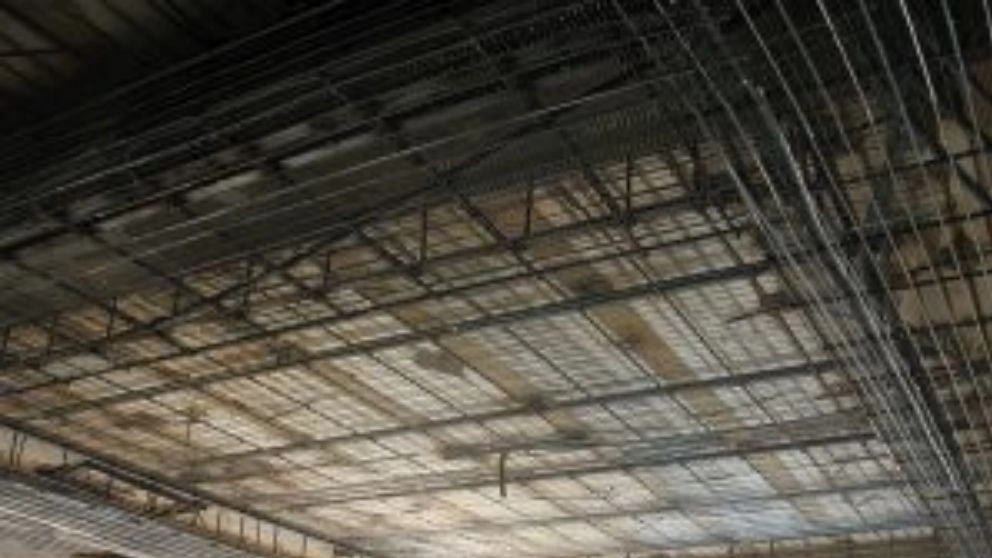
Vertical and horizontal rebars: according to the material of the main roof, if it is concrete and block beams or beams, size 10 to 12 rebars are installed vertically at a distance of one meter before concreting, or welded to the beams. In this case, the rebars that are one meter apart, their heads are bent for the convenience of installing the false ceiling, and the horizontal rebars in this part are connected in two rows from the right and left to the ends of the vertical rebars and themselves, and a network of small rectangles with They have the same dimensions; Of course, sometimes instead of horizontal rebars, corners or shields may also be used.
Corner: Between the wall and the overall structure of the false ceiling, the corner by rebar or plaster has the role of connecting the wall to the false ceiling.
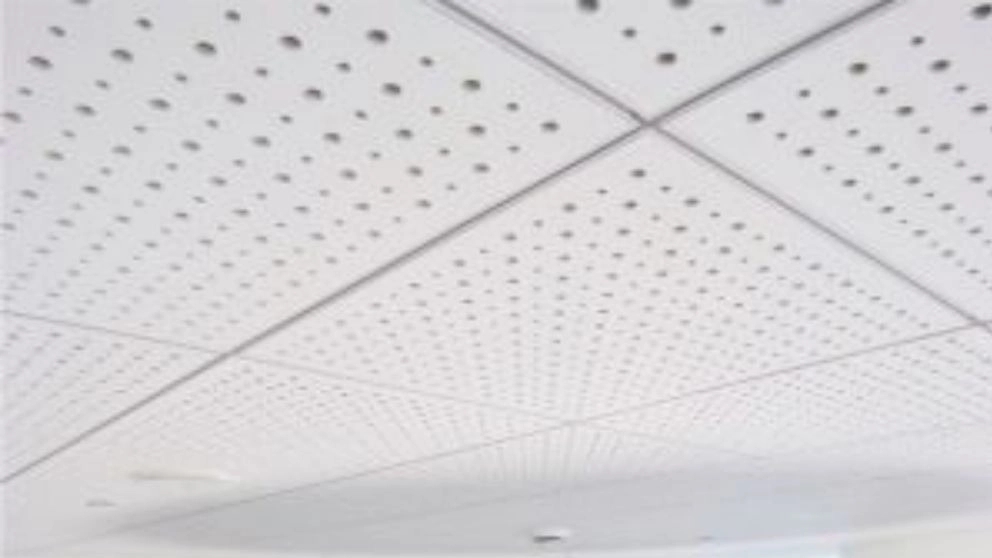
Acoustic sheets: sheets in the form of wooden plaques, plaster and cardboard (the cardboard case has regular holes and is white in color) that are used for isolation and sound insulation.
Carved wood: this structure is installed as the part before the acoustic sheet, which is made of carved wood with certain dimensions; In two stages, the construction of four-turned wood, which in the first stage is connected to the corner with wire and in the second stage with nails to the wood of the first series. It should be noted that this part exists if the last part of the false ceiling is an acoustic sheet.
Rabbits: This structure is installed as a part before plastering, which consists of a net-like metal grid and is connected to the said horizontal bars. It should be noted that this part exists if the last part is plastered and the distance between the rabits and the main ceiling should not be too large so that the appearance of the false ceiling becomes unbalanced.
Plastering: for plastering, use ketchup and soil to strengthen and pass through the holes of the rabbits, and you can use unolitic layers or plaster molds for the last layers of coating.
Types of false ceilings
False ceilings have different types according to variables such as cost, weather conditions, architectural applications and materials used, but they are divided into two types in terms of structure, the first case does not need to be destroyed to access the main ceiling, but in the second case It is not possible except with demolition operations; Next, to the types of false ceilings that are included in these two series.
Robitz and Doddy False
In recent years, Rabbits false ceiling has been used a lot. As mentioned, Rabbits is a mesh sheet that is connected to the sub-grid through armature wires. Rabbits are available in two forms: flat rabbits (used in small openings) and raised rabbits (used in large openings).
False acoustic ceiling
Acoustic false ceiling is used to create a kind of sound isolation. It can be created from basic materials such as cardboard sheets, plaster plaques and fabrics. It is suitable to use these ceilings in public places such as cinemas and lecture halls that require sound insulation. Of course, in places where sound echo is very important, such as a recording studio, in addition to acoustic sheets, aluminum sheets or glass wool are used.
PVC false ceiling
PVC is one of the most widely used materials in the construction industry, and the reason for its use is its cheapness and economic efficiency, and due to its quick assembly, it significantly increases the speed of work. Among its advantages, we can mention the beauty that makes the facade of buildings very attractive and pleasant.
False aluminum ceiling
In these roofs, aluminum is used in the form of tiles, its dimensions are 60x60 and it may also be rectangular. The most common use of aluminum false ceiling is in places that need access to the ceiling; Among the places where this type of roofs are used, we can mention laboratories, hospitals, airport halls and other public places.
False ceiling of prefabricated plaster
These false ceilings are usually made of aluminum and plastering is done on aluminum. The use of this type of roof has advantages that we will mention in this section:
This type of false ceiling is very light, so that in the estimations, the weight of each square meter was approximately 15 to 18 kg.
The installation speed of these roofs is very high.
The use of this type of roof allows the temperature and humidity of the environment to be regulated.
By exposure to sunlight, no change in their color is observed.
They are replaceable.
Combined false ceiling
If we implement several false ceilings together, we will face different geometric shapes, which are called combined false ceilings. The use of different methods of execution in this type of design gives a certain brilliance and beauty to the interior of the buildings.
Grillium false ceiling
These sheets are made of aluminum and alloy sheets. These false ceilings are also known as open ceilings. After the implementation of these roofs, square and rectangular houses are seen, which are continuously placed together; Note that there is no protection inside or behind these roofs and it is easy to see behind the roofs. This factor is the reason why the back of the roofs are painted with black color to portray a good effect.
Ill -favored ceiling
These types of ceilings are a new design to beautify interior decoration. In fact, it is a combination of mesh false ceiling and sky, and one of the advantages of these ceilings is that they are rustproof. One of their most common uses is in the lobby of hotels and residential complexes.