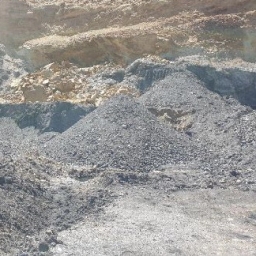

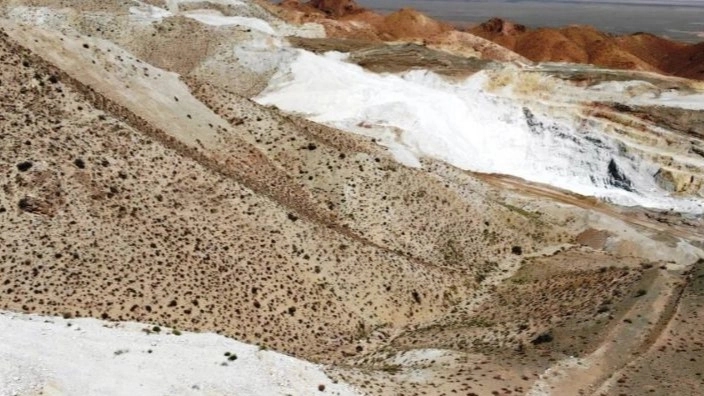
Industrial soils basically refer to soils that are widely used in industry due to having a special composition with characteristics and properties such as white color, lightness, high hardness, etc. These soils are formed under special conditions and extracted from mines, unlike normal soils that are the result of erosion of various rocks. Industrial soils are classified depending on their application and each one is placed in a group that is suitable for doing a specific job.
Division of industrial soils and clay in industry
Each country has a category for industrial clays according to the development of products whose raw materials depend on clay and its view on industry. The United States, which has a long history of using industrial soils, categorizes the types of industrial clay soils as follows. This category is also used in some other countries. Industrial soils or clays in this category fall into six groups:
ordinary clay and shale
balkley
refractory soil
bentonite
fuller's earth
kaolin
Clay
The word clay, depending on its usage, has the following interpretations:
From a mineralogical point of view, it refers to a special group of sheet silicate minerals that have OH- ions in their structure.
Sedimentology is defined according to the size of the particles.
In sedimentary lithology, rocks that have one or both of the above characteristics are called. It refers to making clay.
It is difficult to define clay as a stone, because various other materials are also involved in the composition of these stones, and therefore the definition should be somewhat general. For example, it can be said that clay is a natural soil, its materials are fine-grained and generally it consists of a group of crystallized minerals known as clay minerals and biskel minerals called allophine. Many clays show malleability if they absorb moisture. Clay, as a word specifying the size, represents the smallest particles. The maximum size of clay grains in different grades has unequal values. In terms of size, particles greater than 2 microns are considered the highest limit of clay particle size, while another scale defines clay as a material with particles smaller than 4 microns. Some clays acquire hardness, permeability and beautiful colors as a result of temperature, which makes them used in industry. Clay is used in making porcelain, earthenware and bricks. This soil has many uses, but the mentioned items are among the most important uses of this soil.
Kaolin soil
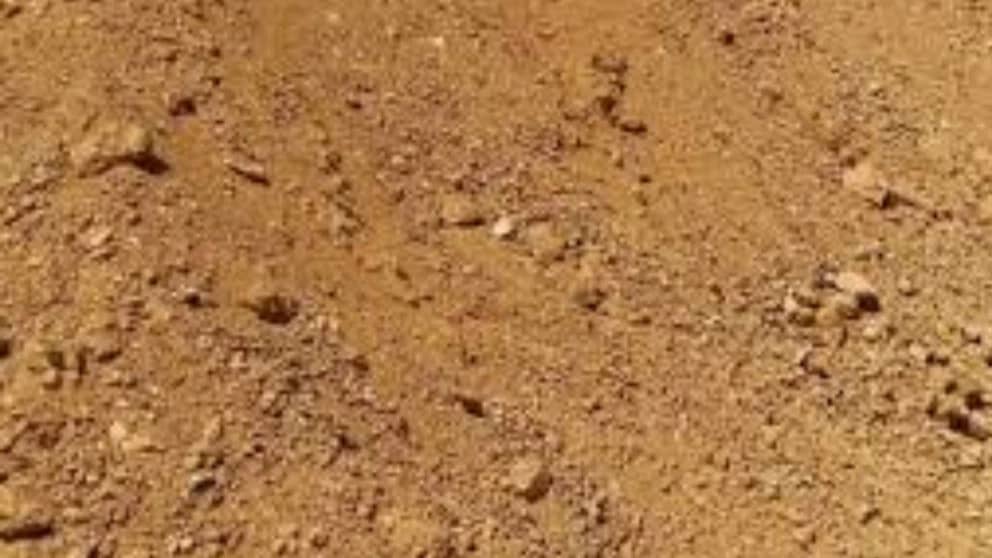
We can safely say that the main material used in many industries is kaolin soil. The word kaolin is derived from the name of a clay mineral called kaolinite. Kaolinite with the chemical formula Al2Si2O5(OH)4 is a clay mineral and belongs to the group of industrial minerals. Stones that are rich in kaolinite are also called kaolin or Chinese soil. The advantages of kaolin soil include low weight and high strength, beautiful and unique color. Minerals similar to kaolinite, including illite, halloysite, and diktite, can be separated from it by X-rays and chemical reactions. This mineral can be found in abundance in Germany, Czech Republic and Slovakia, England, France and China. This soil is often seen in yellow, cream and white colors. Kaolin clay has many uses, some of which are: making plastic, making glazed dishes, making paints, making glue, making paper (to increase the softness of the shine and absorb ink) and...
Bentonite (full -fledged soil or flower flower)
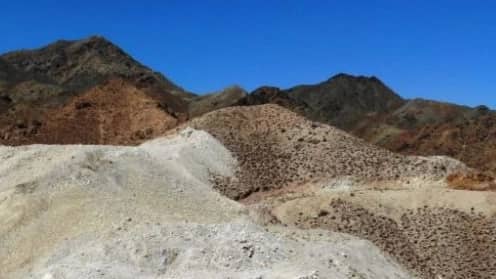
Bentonite is a type of fine-grained clay that has at least 85% montmorillonite. Bentonite is a material from the category of clays and consists of swelling minerals, which are mainly montmorillonite and a small amount of beadlite. Most bentonites are formed due to weathering and alteration of volcanic ash and often in the presence of water, and their source rock is mostly of basic type. Volcanic ash decomposition is mainly carried out in saline and swampy environment, and the more we move away from the volcano, the thickness of bentonite decreases. The use of this soil is mostly in the steel industry, earth wells and medical purposes. Bentonite has an aluminosilicate structure and is placed in the category of three-layer silicates. Bentonite has two tetrahedral layers and one octahedral layer. The general formula of bentonite is as follows: (Na, CaO)(Al, Mg)(Si4O10)3 (OH)6 nH2O
Refractory soil
Refractory soil is a term used for some refractory soils. These soils are usually used in making refractory bricks. In the science of ceramics, a refractory clay is said to withstand a temperature of at least **** degrees Celsius. These soils contain about 23-34% by weight of aluminum oxide, 50-60% by weight of silica, and 10-12% by weight of volatile substances (mostly water) that are released during baking. These soils can contain up to 25% by weight of iron oxide (Fe2O3) and amounts of TiO2, CaO, MgO, K2O and Na2O. Fortunately, our country, Iran, is one of the largest producers of refractory industrial soil in the world. Fire clay is used in making porcelain and ceramic dishes, insulation, electroceramic, plastic, glue, rubber, etc.
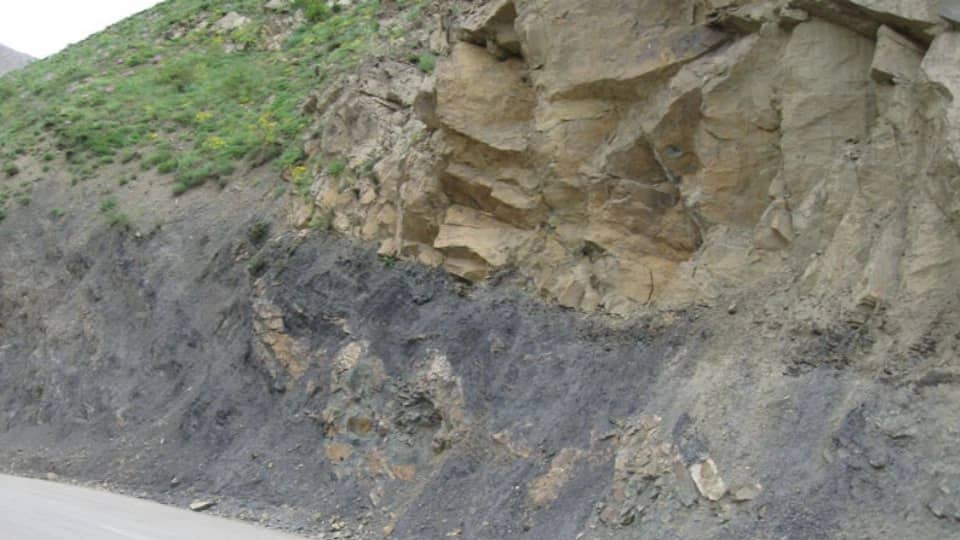
Balkoli soil
Balkeli is a type of clay just like kaolin, and its difference from kaolin is that it has high plasticity and less resistance to heat. However, there is not much difference in the chemical composition of clay and kaolin, and they differ only in the proportion and amount of silica participating in the composition. The general composition of clays often includes 20-80% kaolinite, 10-25% mica and 6-65% silica (quartz). In addition, other secondary minerals and some carbonate materials that have plant origin are present in their composition. Of course, in different sources, other compositions have been mentioned for them, which have small differences, for example, the amount of kaolinite is between 20 to 95%, quartz is 10 to 70%, illite and chlorite are 5 to 45%, and organic materials, montmorionites, iron compounds, Titanium oxide and soluble salts have been considered among its impurities. It should be noted that the range of changes in the chemical and mineralogical composition, as well as in the size of the clays that make up the composition, depends on the different and unique characteristics of the thin clay veins formed inside a sedimentary zone.
Balkeli is a sedimentary clay of natural origin and is also known as a secondary clay, which means that natural weathering factors have caused it to be transferred from its original place and origin from which it originated, its natural color can be from It varies from pale yellow to black, and this color change depends on the presence of other minerals in it and other materials that have been deposited with it. In general, a series of rare geological conditions are needed for the formation and maintenance of Balkeli sedimentary deposits: These conditions include: a- Rocks of origin that are rich in kaolinite and mainly have the lowest amount of iron oxides. B- The erosion of these stones and their transportation into mandabs or saltwater or fresh water basins and continued erosion until the constituent parts become very fine. C- Limited erosion and low range of the next or deep burial of the sediments from the previous stage will eventually cause the formation of bulgary units. This soil is often used in pottery. This material is easily dominated and after baking at high temperature, it turns white or close to white, and therefore, it is right to call Balkley clays among useful clays in ceramic industries.