
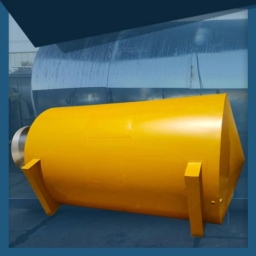

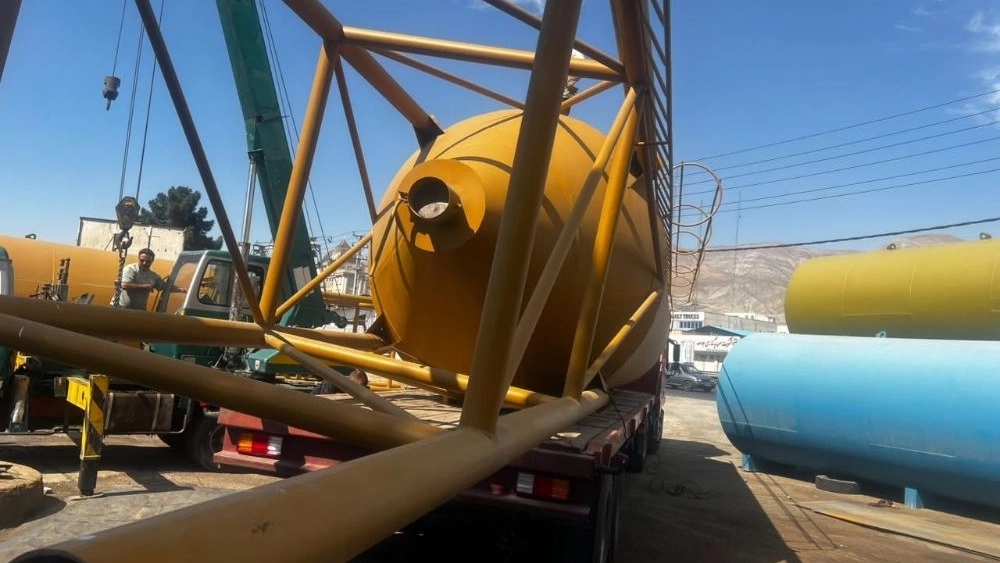
In construction industries, ready-mixed concrete factories and construction projects, proper storage of raw materials plays an important role in increasing productivity and continuity of production activities. Cement is one of the main materials used in these industries, and maintaining its quality during storage is very important. For this reason, the construction of high-quality and standard cement silos has become one of the important needs of companies active in the field of construction and production of concrete products.
Cement silo is an industrial tank that is designed to store cement in bulk. This tank should be able to provide suitable conditions for cement storage and allow the controlled transfer of materials to consumer equipment. Basic design, selection of suitable raw materials, accurate implementation of connections and attention to safety requirements are the most important factors that determine the final quality of the silo.
Kaveh Tanker Manufacturing is a name that can be considered in the process of investigating the manufacturers of metal equipment and industrial tanks. To choose the right silage, it is necessary to carefully check the technical specifications of the product, the quality of construction, the installation conditions and the operational needs of the project. In addition to having a resistant structure, a standard silo should also be compatible with the required capacity and production line equipment.
In this article, we examine the steps of making high-quality and standard cement silos, technical features, types of silos, the importance of choosing raw materials, peripheral equipment, and manufacturer selection criteria. We also discuss the role of Kaveh tankers in introducing services related to the manufacture of industrial metal equipment and the importance of conscious product selection.
What is cement silage and what is its use?
Cement silo is an industrial tank for bulk cement storage, which is used in ready-mix concrete factories, concrete parts production workshops, construction projects and some industrial units.
Construction of cement silos should be done in such a way that the raw materials are kept in proper conditions and the possibility of controlled loading, storage and unloading is provided. In many applications, silos are connected to cement transfer equipment and weighing systems to provide the required materials to the production line in an orderly manner.
The role of silos in cement storage
Cement is sensitive to moisture and its placement in inappropriate conditions can cause quality loss and lumpiness. The use of suitable silage, along with basic sealing and proper maintenance, helps to reduce the possibility of moisture penetration and pollution.
In concrete factories, maintaining the quality of cement is very important; Because the characteristics of the raw materials affect the performance of the mixture and the quality of the final product. Therefore, the proper design of the silo should be taken into consideration from the very early stages of construction.
The importance of regular storage of raw materials
One of the advantages of using cement silos is the possibility of better management of raw material inventory. Production complexes can consider a suitable capacity for cement storage based on consumption and supply schedule.
Choosing the right capacity helps to reduce interruptions caused by lack of raw materials. Also, storage in a dedicated tank makes the management of the workshop space more orderly and makes it easier to transfer cement to the production equipment.
The use of silos in various industries
Cement silos are used in various industrial activities, including:
- Concrete factories ready for continuous supply of cement needed for production.
- Block, table and concrete parts production units.
- Construction projects with continuous consumption of cement.
- Dry mortar and some construction products production factories.
- Industrial units that require controlled storage of powder materials.
Each application needs a design according to its conditions. For this reason, the construction of cement silos should be done according to the consumption volume, available equipment and environmental conditions.
Features of making high-quality and standard cement silos
The quality of a cement silo is not limited to the appearance of the body or the capacity of the tank. Engineering design, selection of suitable sheet, quality of connections, strength of bases and performance of peripheral equipment are factors that are important in product evaluation.
Engineering design and accurate calculations
The first step in the construction of cement silo is the design according to the capacity and operating conditions. The dimensions of the tank, height, diameter, shape of the funnel section, the type of foundations and the location of the equipment must be determined based on technical calculations.
In the design, the weight of the tank, the weight of the stored cement, the loads caused by environmental conditions and the forces applied during loading and unloading should be considered. Also, the installation location and foundation conditions should be checked so that the structure has sufficient stability.
Principle design prevents the selection of disproportionate dimensions and provides the basis for the production of a product in harmony with the needs of the project.
Choosing the right steel sheet
Metal sheets form the main part of the body of many cement silos. The choice of the type of steel and the thickness of the sheet should be done according to the design, capacity, geometric shape of the tank and working conditions.
More thickness alone is not a sign of higher quality; Rather, the sheet should be selected according to engineering calculations. The use of raw materials with clear technical specifications allows the manufacturer to produce a product in accordance with the design requirements.
In reviewing the tanker products of Kaveh or other manufacturers, it is important to pay attention to the specifications of the raw materials and their compliance with the construction plans.
Quality of welding and connections
Welding is one of the important steps in the construction of metal silos. The correct execution of welds helps the integrity of the body and joints and reduces the possibility of leakage or weakness in different parts.
Appropriate preparation of parts, selection of welding method according to the material and thickness of the sheet, compliance with executive instructions and inspection of welds are important actions of this stage.
Also, the assembly quality should be such that different parts are placed in the correct position according to the plan. Dimensional errors can cause difficulty in installation or create unwanted tensions in later stages.
The strength of the foundations and supporting structure
Silo foundations are responsible for transferring the load of the tank and stored materials to the foundation. The design of this section should be done according to the total weight of the collection and loading conditions.
The type of foundations, the dimensions of structural members, connections and the way of restraining the silo must be specified in the technical calculations. Also, the foundation of the installation site must be able to withstand the designed loads.
In making a standard cement silo, paying attention to the foundations and supports is as important as the quality of the body; Because the stability of the whole complex depends on the correct functioning of these components.
Protective coating and corrosion resistance
Preparing the surface, choosing the right coating and applying basic painting are important measures to protect the body. The type of coating should be chosen according to the conditions of the installation site and the technical specifications of the product.
Periodic inspection of the coating and repair of possible damages also helps to maintain the appearance quality and increase the durability of the equipment.
The stages of making cement silos in Kaveh tankers
Construction of cement silo is a specialized process that must be done based on technical plans and specific plans. Familiarity with the manufacturing process helps buyers have more accurate criteria to check product quality.
the first stage; Checking the needs of the project
At the beginning of the work, the required capacity, amount of cement consumption, installation location, available space and how to transfer the materials are checked. It should also be determined what additional equipment the silo needs and how it will be coordinated with the production line.
These reviews help to determine the appropriate dimensions and choose the structure that suits the operating conditions. The more accurate the initial information, the less likely it is that unnecessary changes will be needed in the later stages.
the second stage; Designing and preparing construction plans
After checking the needs, technical drawings including body dimensions, funnel shape, connection locations, bases and accessories are prepared.
The drawings should provide sufficient information for cutting, assembly, welding and installation. It is also necessary that the structural details are in harmony with the foundation conditions and operational requirements.
the third stage; Selection and preparation of raw materials
After completing the design, the raw materials are selected according to the technical specifications. Metal sheets and structural parts should be checked in terms of dimensions and appearance.
Then the cutting and preparation operations are done. Accuracy in this step helps to increase assembly quality and reduce implementation errors.
the fourth stage; Construction of the body and funnel section
The silo body will be assembled according to the drawings, and the funnel part will be made according to the material output design. The shape and slope of the funnel section should be in harmony with the characteristics of cement flow and unloading equipment.
Improper outlet design can cause material to remain in the tank or difficulty in emptying. Therefore, this section must be designed and implemented with engineering precision.
the fifth stage; Welding and final assembly
After the preparation of the parts, the connections are made according to the appropriate implementation methods. The quality of the welds, the precision in the alignment of the parts and the control of the dimensions are very important at this stage.
The inspection of connections should be done based on the technical requirements of the product. The goal is that the body and various components have the necessary strength and integrity.
The sixth stage; Installation of bases and peripheral equipment
Bases, valves, inlet and outlet connections and other equipment are installed according to the drawings. If needed, the dust collection system, level sensor and transmission equipment will also be included in the design.
The selection of this equipment should be done based on the operating conditions. Their coordination with the silo and the production line improves the performance of the collection.
the seventh stage; Implementation of coverage and quality control
After construction is completed, the appropriate protective coating is applied. Then, the different parts of the silo are checked in terms of dimensions, quality of connections, condition of the surface and installation of equipment.
Quality control should be done according to technical specifications and design requirements. Documenting inspection results can also contribute to the transparency of the production process.
the eighth stage; Preparation for transport and installation
At the end, the silo is ready to be transported to the project site. The method of transportation should be chosen according to the weight, dimensions, access route and movement restrictions.
Before installation, the condition of the foundation, operating space, lifting equipment and access conditions are checked. Compliance with safety requirements in transportation and installation is necessary to prevent damage to equipment and people.
Types of cement silos and their different uses
Cement silos are produced in different models based on capacity, geometrical shape, installation method and additional facilities. Choosing the right type should be done according to the actual needs of the project.
Standing cement silo
Standing silo is one of the common models in ready-mixed concrete factories and production complexes. This model is usually installed on metal bases, and its funnel part allows cement to be directed to the outlet.
In choosing this type of silo, the allowed height, installation space, access to equipment and foundation conditions should be checked.
Portable cement silo
In some projects, moving equipment is important. Portable silos are designed for situations where moving or re-installing the tank is part of the operational requirement.
In these models, in addition to capacity and strength, the way to restrain the tank, connection points and transportation safety requirements should be included in the design.
Cement silo with control equipment
Some silos are equipped with level control sensors, dust collection systems and auxiliary equipment for unloading. These facilities can make it easier to manage the cement inventory and control the transfer process.
The type of equipment must be compatible with the structure of the silo and the needs of the production line. Choosing unnecessary or inappropriate features may increase the complexity of maintenance.
Choose the capacity according to consumption
The capacity of the silo should be determined according to the volume of consumption, the cement supply schedule and the available space. Choosing less capacity than needed may increase the frequency of material supply; While excessive capacity can occupy unnecessary space.
Also, the difference in weight capacity and geometric volume of the tank should be considered. The weight capacity refers to the mass of cement that can be stored, but the geometric volume is related to the internal dimensions of the tank.
The importance of auxiliary equipment in the construction of cement silos
Accessories play an important role in the proper functioning of the silo. The correct selection of these components can improve the process of storing, unloading and transporting cement.
Filter and dust collector
When cement enters the silo, air displacement and dust particle emission may occur. Using a suitable filter and dust collector helps to control these particles.
The capacity and type of filter should be compatible with the loading conditions and equipment specifications. Also, periodic inspection and regular service of the filter is necessary to maintain proper performance.
Cement level control sensor
Level sensors are used to check the amount of material inside the tank. These equipments can provide useful information about cement inventory and help in better planning for the supply of raw materials.
Selecting the type of sensor depends on the silo design and environmental conditions. Its correct installation and adjustment is also important to receive reliable information.
Evacuation and transfer equipment
The silo should be able to transfer the cement to the required section in a controlled manner. The output type, funnel shape and transfer equipment should be compatible with the characteristics of the cement and the needs of the production line.
In some applications, auxiliary equipment is required to improve material flow. The design of this section should be done according to the actual operating conditions.
Inlet and outlet valves and connections
Valves and connections should be designed in such a way that loading and unloading operations are carried out properly. The quality of construction and installation of these components affects the overall performance of the silo.
Also, proper access for inspection and maintenance should be included in the design to make periodic repairs easier.
The role of Kaveh tankers in the selection and construction of cement silos
Choosing the right manufacturer for making cement silos is one of the important stages of industrial equipment procurement. Kaveh Tanker Manufacturing can be one of the investigated options for applicants of cement silos and metal equipment. A detailed evaluation of this collection should be done based on the actual specifications of the products, verifiable records and scope of services.
Attention to the specific needs of the project
Each project is different in terms of required capacity, installation location, consumption volume and operating conditions. For this reason, the design of the silo should be done according to the characteristics of the same project.
Providing detailed information about the installation space, available equipment and how to consume cement helps the manufacturer to offer a more appropriate product. This reduces the possibility of unwanted changes in later stages.
The importance of the quality of raw materials and construction
The quality of sheets, precision in cutting, basic welding and correct assembly are important criteria for product evaluation. Examining technical specifications and quality control documents will help the buyer make a more accurate decision.
In the selection process of Kaveh tankers, it is important to pay attention to the technical details of the product and the possibility of reviewing relevant portfolios.
Transparency in specifications and services
Information related to capacity, dimensions, sheet material, accessories, protective cover and installation conditions should be clear. Clarity of the scope of services also helps to avoid differences in order and delivery stages.
Providing detailed information about the product provides a better basis for comparing options and choosing according to the needs of the project.
Importance of maintenance and service after delivery
Cement silo also needs periodic inspection and maintenance after installation. Checking the body, mounts, protective cover, and accessories will help maintain proper performance.
When choosing a manufacturer, it is better to get enough information about maintenance instructions, technical documentation and support terms.
Criteria for choosing a high-quality cement silo manufacturer
To choose the right manufacturer, you should check the technical and performance criteria together. This approach avoids making decisions based solely on advertisements or product appearance.
Examining related portfolios
Actual prototypes can provide information about the manufacturer's experience in building similar equipment. It is better to check projects that are close to your needs in terms of capacity, type of application and installation conditions.
Evaluation of design and technical specifications
Construction drawings, dimensions, capacity, specifications of sheets and types of connections must be carefully checked. Also, the design of the foundations and the conditions of the foundation must be in harmony with the technical requirements of the project.
Checking the quality control process
The manufacturer must be able to provide clear information on how to control raw materials, inspect welds, check dimensions and final product control. Quality control in different stages of manufacturing helps to increase the reliability of the product.
Attention to transportation and installation
The dimensions and weight of the silo affect how it is transported and installed. Checking the access route, installation site limitations, required space for lifting equipment and foundation conditions should be done before ordering.
Transparency in agreements
It is very important to be clear about product features, service scope, responsibilities of parties and delivery conditions. Documenting agreements can prevent possible disputes.
Basic maintenance of cement silage and increasing its useful life
Construction of high quality and standard cement silo is only a part of the path of successful operation. Correct maintenance and periodic inspection also play an important role in maintaining the durability of the equipment.
Inspection of body and protective cover
The body of the silo should be checked for corrosion, surface damage and the condition of connections. If damage to the protective coating is observed, the repair must be done with the appropriate method and according to technical recommendations.
Examination of bases and foundations
Bases and foundations should be checked periodically for deformation, cracking, corrosion and condition of connections. Any unusual symptoms should be evaluated by a specialist.
Peripheral equipment service
Filters, level sensors, valves and transfer equipment should be serviced according to the manufacturer's instructions. Regular maintenance helps to reduce the possibility of malfunctioning of the silo.
Compliance with safety principles during repairs
Repair and inspection of the silo must be done in compliance with safety requirements. Entering the tank, working at height and performing operations on industrial equipment require training, risk assessment and appropriate safety equipment.
summary
Construction of high-quality and standard cement silo requires engineering design, selection of suitable raw materials, accurate execution of connections, strength of foundations and continuous quality control. Each of these steps affects the safety, durability and final performance of the tank.
Suitable silo should be in harmony with the required capacity, conditions of the installation site and production line equipment. Also, the correct design of the funnel section, the use of a suitable dust collection system and paying attention to periodic maintenance can help improve the performance of the equipment.
Kaveh Tanker Construction can be one of the considered options for applicants for the construction of cement silos and industrial metal equipment. Examining the technical specifications of products, evaluable portfolios, quality of raw materials and transparency in providing services, helps to make a more informed choice.
If you intend to supply cement silo for your ready-mixed concrete factory, construction project or production unit, it is better to specify the operational needs, desired capacity, installation space and peripheral equipment carefully before ordering. Then evaluate the available options based on the same technical criteria so that the selected product is compatible with the project conditions.
Finally, the construction of high-quality and standard cement silos reaches the desired result when basic design, accurate construction, safe installation and proper maintenance are placed together. Paying attention to these principles, along with the conscious choice of a manufacturer such as Kaveh Tankersazi, can make the path of providing suitable equipment and better management of raw materials smoother.
