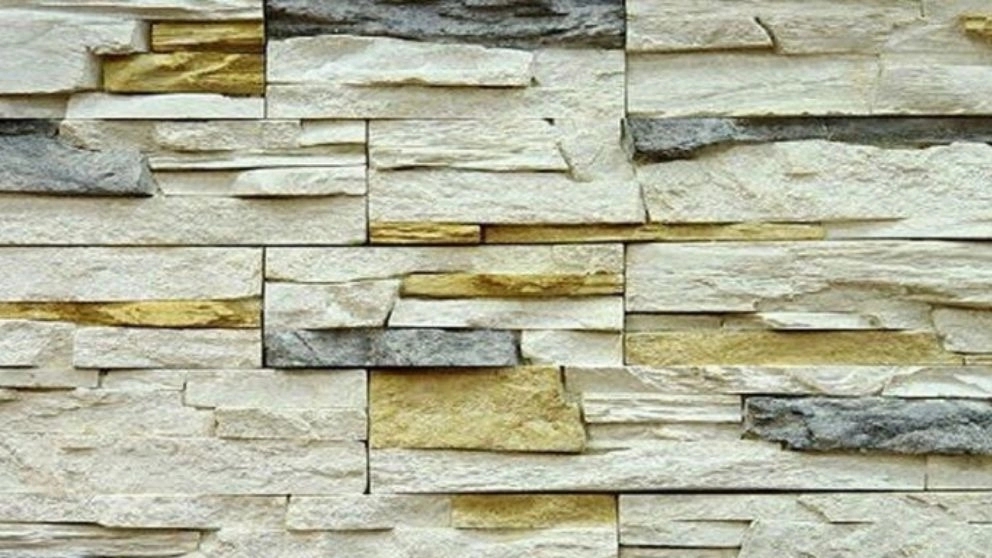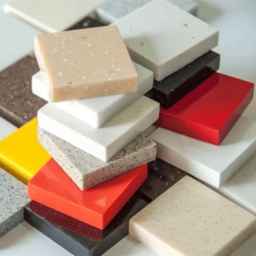

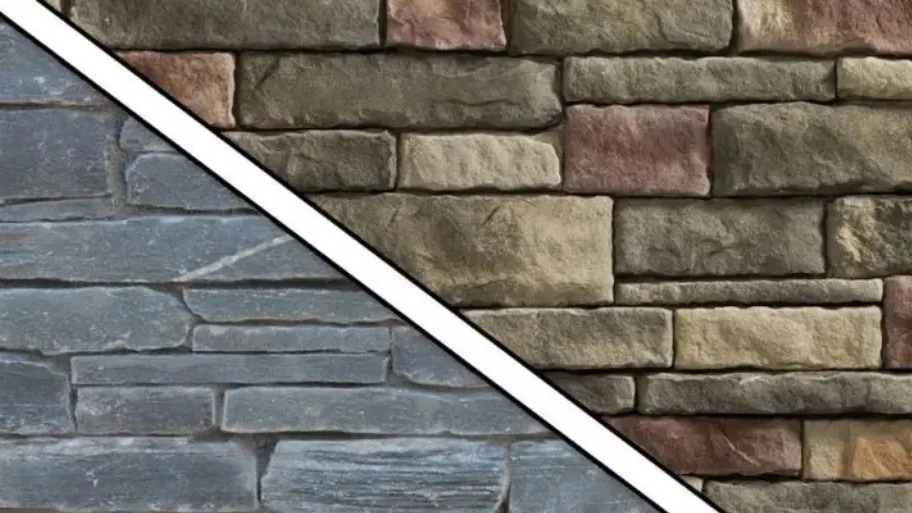
What is an artificial stone?
Synthetic stone is a group of prefabricated construction materials that are made from a combination of cement, clay, aggregates of waste stones and lightweight soil with polymer materials under special conditions. Artificial stone has less weight than natural stone, it can be colored, and by pouring the raw materials of artificial stone in different molds, various designs can be obtained.
The weight of artificial stone varies depending on its model and ranges from 15 kg per square meter to 70 kg per square meter. Artificial stone has a structure that allows its use both inside and outside the building on the floor and facade. The use of natural stones in the structure of artificial stone makes its behavior in different conditions very similar to natural stones. Also, the thickness of artificial stone can be changed and it can be cut into slabs or cubic blocks.
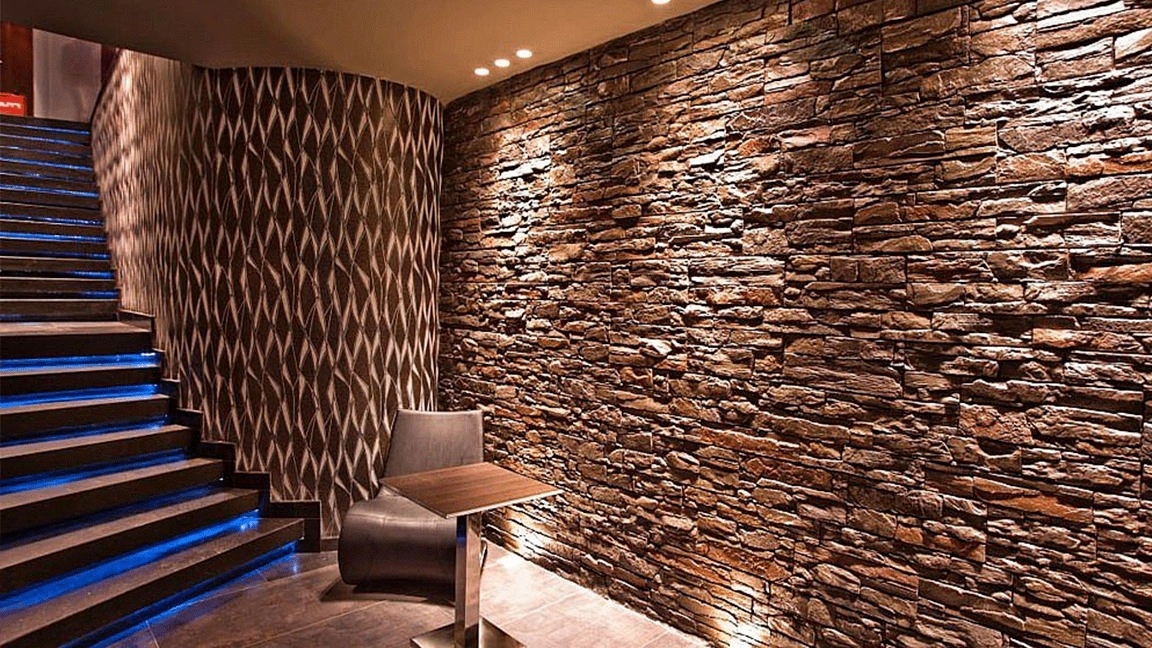
Artificial stone production technology
Artificial stone can be produced by three methods: vibrating, pressing or a combination of these two methods under special conditions. The main raw materials used in the composition of artificial stone are aggregates, mineral fillers, concrete additives, binders, pigments, and artificial stone resin.
Aggregates are actually sand-sized stone materials that are obtained from the crushing of large stone pieces or from sandy sediments. Aggregate can be calcareous or silicate. Limestone aggregates include marble and dolomite, and silicate aggregates include granite, porphyry, quartz, basalt, silicate sands, and quartzite. They choose the grain size and type of stones according to the desired appearance and the physical and mechanical characteristics of the final product.
Fillers or mineral fillers are mineral substances that are used to make the product cheaper or add a special feature to it. Among the types of fillers, we can mention ATH (in Corin artificial stone), granular glass, high-purity silica, and calcium carbonate.
The cement used in the production of artificial stone is Portland or white cement, and the resin used in it is based on polycarboxylic ether, which helps to smooth the artificial stone paste, reduce excess air in concrete, reduce water consumption, increase compressive strength and reduce Concreting time helps a lot.
A variety of artificial stone production methods
Artificial stone is also made in two ways, dry and wet. In the dry method, the slump of the concrete mix is zero, but in the wet method, the concrete mix is looser and the concrete slump is 7 to 10 cm. The dry production method of artificial stone is very similar to the construction of a sand castle on the beach, and the mold can be used several times a day, but due to the hardness of the concrete mix, spreading it in the mold requires more precision, and although due to the zero slump, the product It works sooner, but it hardly takes the form of a specific texture. Therefore, to have a more polished look with various designs, you can use artificial stone production by wet method.
Types of artificial stone
Artificial stone was divided into the categories of cement plast artificial stone, marble artificial stone, quartz artificial stone, onyx artificial stone and vacuum laminated artificial stone.
Cementation
Combining concrete with polymer materials, mineral pigments, additives and stabilizers, and natural and mineral light grains, artificial stone cement plast is produced. Cement Plast artificial stone is widely used in beautifying the interior and exterior of the building and is available in various colors and designs.
Marble artificial stone
Artificial marble or cultured marble has an appearance similar to natural marble. Aggregate, this type of artificial stone is a combination of marble and granite, and due to the high use of mineral fillers, it does not allow light to pass through itself. Artificial marble stone compounds are poured into various molds and products such as bathtubs, sinks, kitchen tables, bathroom walls, stone furniture, various types of cabinets, Roman facades, statues, columns, etc. are produced..
Attribute and benefits of marble artificial stone
High strength
Low water absorption
Easy maintenance and installation
Lower price than natural marble
Resistance to cold or high heat
Artificial Corinne Stone
Combining concrete with polymer materials, mineral pigments, additives and stabilizing materials and natural and mineral light grains, Corian Solid Surface is the name of a product that was first produced in an American company. . Corinth is an engineered material similar to quartz that is obtained from the combination of acrylic polymers and minerals bauxite, aluminum trihydrate and various pigments.
Corian artificial stone has the ability to pass light through itself, optical equipment can be used behind it, it is thermoplastic (the ability to be molded with heat) and it is resistant to sulfuric acid. By changing some raw materials, it is possible to produce an artificial stone similar to Corian, with the difference that the final product will be heat hard. Corin artificial stone was used as an open stone and cabinet, sink and vanity, counter or desk, etc.
Attribute and benefits of artificial stone Corine
The ability to connect parts without identifying the seam (by sanding and polishing the seam surface)
No problems
Has the ability to repair scratches
stain resistant
Variety of designs and colors
Onix artificial stone
Onyx stone is a kind of beautiful stone that can be found in nature, it has a veined and marble-like appearance. Onyx artificial stone is produced with the combined technology of Corinth stone and artificial marble, and it is transparent. Onyx artificial stone is used as a partition, flooring, wall covering and stone under the sink and vanity, which gives a remarkable beauty to the space with lighting.
It is one of the products similar to pebble design artificial stone or river, which has the same application as onyx artificial stone.
One of the advantages of these types of stones is the ability to bend and install them very easily. Also, the variety of colors, high adhesion, high tensile and compressive strength, resistance to rain and snow and ultraviolet radiation, resistance to cold or high heat and cheaper price than natural stones are other advantages of onyx artificial stone.
Artificial quartz stone
Artificial quartz stone is produced from the combination of quartz aggregate, polymer materials, pigments and other minerals under special conditions, and most of its ingredients are silica, which is one of the hardest and most resistant materials in nature. Artificial quartz stone has no pores and seams, and for this reason, it will not be a place for bacteria or various microbes to accumulate, and for this reason, it is also called an antibacterial stone.
Synthetic quartz stone is used in sink, cabinet stone, tombstone and tombstone, open stone with high resistance, flooring in commercial areas, bathroom wall, elevator floor and stairs, washroom and laboratory tables.
It is possible to produce an artificial stone with the appearance of quartz by changing the raw materials. In this case, the finished price of the product will be lower, but it will not have the resistance and antibacterial properties of artificial quartz stone.
Venoma
This type of artificial stone is one of the newest types of artificial stone that has been produced in Germany for the first time. Vacuum laminate artificial stone consists of three main layers. The first layer is made of polymer concrete, where industrial foam is used instead of water. The second layer is a nano gel sheet and the third layer is transparent and shiny laminate. These three layers are finally vacuumed and packed.
Vacuum laminate synthetic stone is produced in different sizes and thicknesses, and if its thickness is small, it is translucent or backlit. This type of artificial stone can be used as a partition, bathroom wall covering, TV room, etc.
The benefits and characteristics of the artificial stone
Light weight
Attractive designs
Various and unchangeable colors
Shiny surface
Low thickness
Very long life
High compressive and bending strength
Anti-stain
Anti-scratch
Frost resistance and very low water permeability
Resistance to high heat and climate changes in general
Possibility of customization
Easy and convenient installation
Low cost repair
Important points of artificial stone production
The sand must be of good quality, because if it has free lime or soil, the final product will mold.
Artificial stone vibration should not be more than 40 seconds. Longer vibration causes water and cement to separate from the mortar. In this case, the work surface will become flaky and the work post will also become brittle, and this will cause the artificial stone to not stick to different surfaces.
The less water consumption, the stronger the mosaic will be. Concrete lubricant can be used to reduce water consumption.
The more water used to produce artificial stone, the more the mortar shrinks after curing. Excessive shrinkage of artificial stone causes damage to the mold, so the final shrinkage can be minimized by using lubricants and concrete additives.