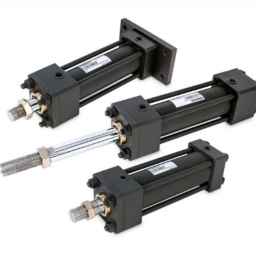

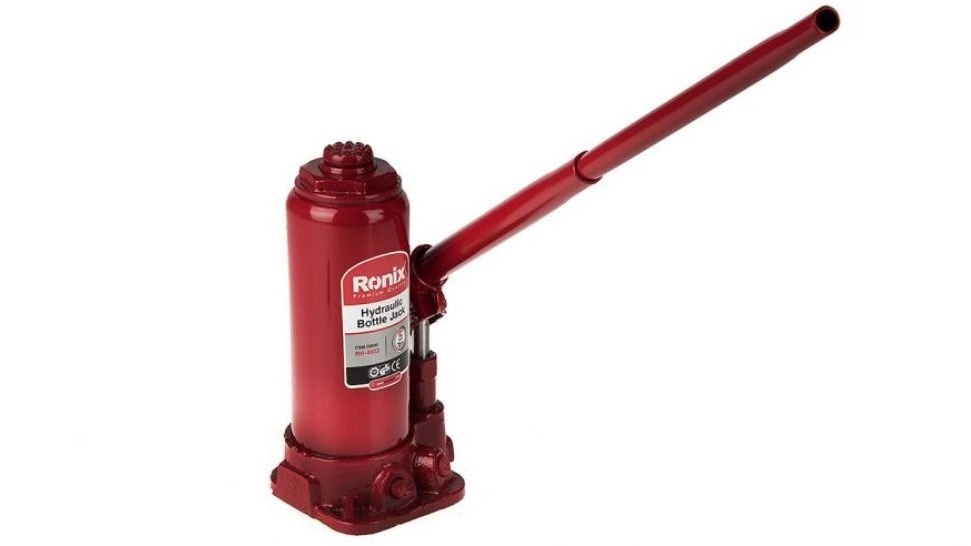
The principles of the function of the hydraulic jack
In the hydraulic jack, a force is applied to the oil in the cylinder. This force then transfers the incompressible oil to the large cylinder. Next, the oil puts pressure on the piston of the large cylinder and causes the load on the cylinder to rise. In general, the pressure on the small piston is exactly transferred to the big piston and moves it upwards.
The feature of incompressibility of liquids is the basis for their use as a suitable means for converting and transferring work in the construction of hydraulic jacks. In simpler terms, it can be said that a physical work can be done by pressurizing liquids in a hydraulic jack.
To understand the function of hydraulic jacks, it is better to be familiar with the science of physics. According to Pascal's law in fluid physics, the pressure is the same throughout a fluid and is applied perpendicularly to it. When the fluid is placed in a closed environment and pressure is applied to them, this pressure will exist on the entire surface.
On the other hand, in physics, pressure is equal to the amount of force divided by the unit area. The amount of pressure is equal in all parts of fluids such as oil and only the levels are different. In other words, you put constant pressure on different surfaces; Therefore, the amount of force can be increased or decreased based on the individual's ability.
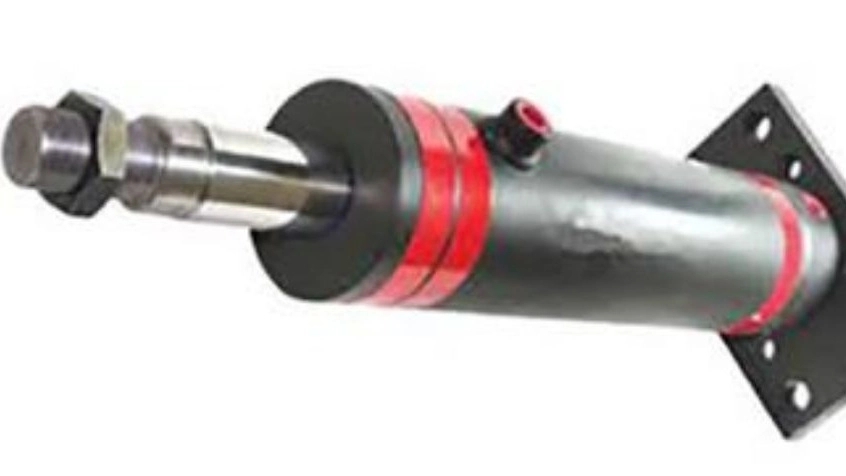
The components of the hydraulic jack
Hydraulic jack, while simple, is composed of special components, each of which plays an important role in the operation of this mechanical structure. The quality of each of these parts and the precision in the construction and assembly of the hydraulic jack guarantee the optimal operation of the hydraulic jack.
In short, it can be said that the hydraulic jack is a set of oil and metal parts. A lever has been designed for this mechanical structure, which can be pressed with the foot. Each time you do this, the object will move upwards. A cylinder is also located at the end of the jack and every time the pedal is pressed, the cylinder moves upwards. Of course, the movement of the cylinder has a start and end point, and its movement path is called a course. When you apply pressure to the oil on one side, the fluid will deliver the same force to you on the other side. Hydraulic jacks consist of eight main parts, which are:
The main cylinder of the inner jack with polished surface
Jack shaft with chrome plating
Piston inside the cylinder
Seal (seal), packing and inner piston seal O-ring
The door at the end of the jack
Jack's throat
Seal, packing and o-ring of the throat door seal with a chrome jack rod
Equipment for connecting the jack to the mechanical system
Applications of hydraulic jack
Hydraulic jacks are used in various industries as well as everyday applications. It can be said that wherever the automotive industry needs to lift objects, traces of hydraulic jacks can also be found. Forklifts, machinery and equipment for road construction, mining and agriculture, dump trucks, elevators and drilling industries, architecture, refinery towers, etc., all use this mechanical system in some way. These jacks are designed and produced in different models due to their diversity in efficiency and usability. Each of these models has a different length and diameter and has special features and characteristics.
The most used hydraulic jack
Telescopic jack is usually mentioned as one of the most widely used types of hydraulic jack. Of course, this jack is also known as multi-stage cylinders. Several tubular piston rods are used in the design of this type of jack, which are known as sleeves. The number of sleeves is four to five, which have different sizes and diameters. The diameter of the sleeves is designed to fit inside each other. Telescopic jack is designed and marketed in one-way and two-way mode. It should be noted that the price of telescopic jack is higher compared to other types of hydraulic jack. These jacks are usually used to make elevators and unloading machines.
The benefits of using hydraulic jack
Hydraulic jacks are used in different situations. This high diversity in the application of hydraulic jacks is considered a major advantage for them. The hydraulic jack system has a simple design, is easy to use, has the ability to increase power, has good flexibility, and also has high efficiency. Among the most important advantages of the hydraulic jack, the following can be mentioned:
Hydraulic jacks are made in various designs and do not require much space for operation.
The hydraulic jack design is simple and easy to use.
Hydraulic jack is the best option for moving and lifting heavy objects.
The weight of the hydraulic jack is less than other jacks.
Important Tips for Use and Keeping Hydraulic Jack
When using a hydraulic jack, we may encounter problems that we need to know the reason and solution for. For example, sometimes the hydraulic jack does not lift the heavy object sufficiently. In this case, the jack arm does not reach the end of its motion course. This problem occurs when the amount of oil in the jack is low. Of course, leaking and damaged seals or contaminated oil can also cause this problem. It is necessary to pay attention to the fact that there should be no air inside the oil for the smooth and uniform movement of the jack. Sometimes the jack rod goes up and down with difficulty. The reason for this problem can be the failure of the main rod, failure of seals and jack pump.
In general, hydraulic jacks may suffer failures that require service or cylinder replacement for safe operation. Among some other common reasons for failure of hydraulic jacks, the following can be mentioned:
Lack of proper pressure in the jack, which can increase oil leakage from the seal
Improper maintenance of the jack, so that if the jack is not inspected regularly, its useful life will be reduced
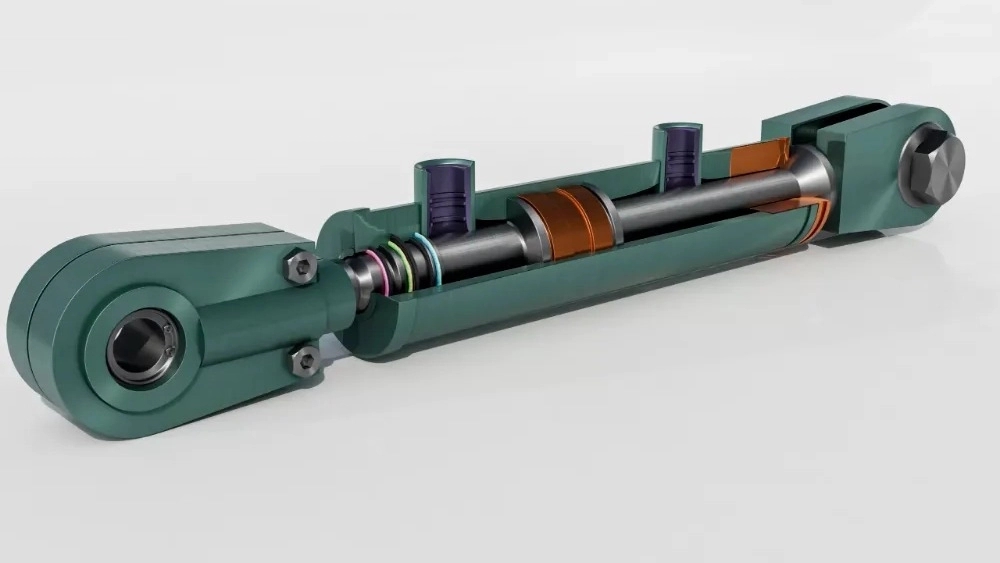
Important points in selecting, designing and manufacturing hydraulic jack
When ordering the design and construction of hydraulic jacks, you should pay attention to some points. For example, the jack cylinder, as the most important part in the jack, must have sufficient thickness for machining and bearing pressure. It is also necessary that the inside of the jack cylinder is completely ground and polished and does not have any high or low points. Among other important points in choosing hydraulic jack parts, the following can be mentioned:
The hydraulic jack rod must be chrome coated so that it can be sealed with the jack neck in the best possible way and no oil leakage or escape occurs in the system.
The internal piston of the hydraulic jack must be made according to the standard of packing and anti-wear seals
Seals or seals and packing on the piston must be made of anti-wear material with standard size and from among the best possible quality materials.
The end cover of the hydraulic jack must be connected to the main cylinder through thread and welding
The hydraulic jack throat cover must be made according to the jack throat packing standard and seal with the cylinder body to ensure that there will be no leakage.
Water: The straps and packing on the throat cover of the hydraulic jack must be made of anti-wear material, standard size, and also the best quality materials.