
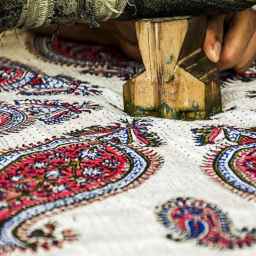

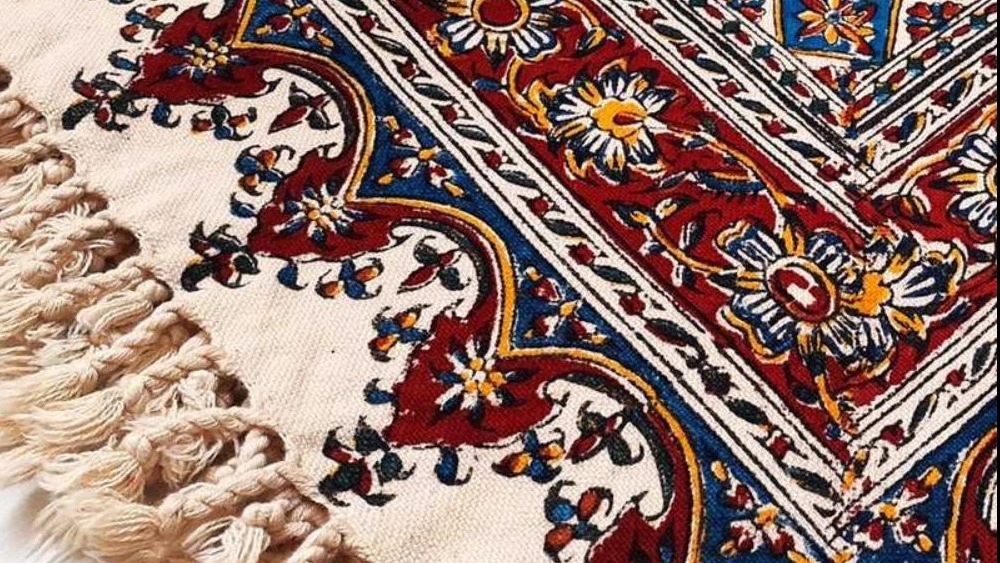
Familiarity with the art of pen
Penkari or chit-making does not have a clear history, the clearest and most complete explanation of this art is related to the writing in the third volume of Pope's book, which Phyllis Ackerman said from the words of an author that this art dates from the 4th and 5th centuries of Hijri. Or it was found at the time of the Ghaznavids. Calligraphy was developed and perfected in the 11th century during the reign of Shah Abbas due to the courtiers' interest in this art and craft. In this period, various designs were prepared and produced, the most widely used of which was gold design or wreath design, and most men's and women's clothes were made with design fabrics. A type of calligraphy that was used for clothes was called Delge, which had a special design and pattern. Other types of penmanship in ancient times are red jigranat and purple jigranat.
After that, with the passage of time, it underwent changes in the nature and method of construction, and during the Safavid era, it expanded significantly and reached its peak and ended in the middle of the Qajar era. The production was penmanship and the penmanship workshops continued from the beginning in Qaisarieh to the end of the market. Today penmanship is one of the most important arts and crafts in Isfahan province (which was the capital of Iran during the Safavid period) and most of the penmanship workshops are in the city of Khorzouq. It is safe to say that more than 70% of the tableware of the province and even the country are produced in this region in a traditional way with pure linen fabrics and natural colors and are exported to all over Iran and the world.
A variety of designs and roles
Various designs and roles are used for penmanship, some of which are:
✅ historical landscapes, domestic and wild animals, miniatures, industrial hunting grounds, shepherds and musicians, flowers and bushes and slimy, pictures of poets, chain , inscriptions, Zorkhaneh and gymnasiums, ancient stories of Persian literature, pictures of Iranian lovers, inscriptions decorated with poems, especially the poems of Mohtsham Kashani, historical topics and events, epic stories of Ashura.
Tips on pen colors
✅ The colors used in the past were all kinds of natural colors, including vegetable, animal and mineral colors. But today, due to the difficulty of preparing and stabilizing natural colors, chemical colors are used. Such as pomegranate skin, sesame oil, incense, rose flower, grape juice, turmeric, castor oil, black and white alum, iron rust, etc., they provide the color materials they want and then prepare the fabric printing preparations.
✅ An interesting point to note in the preparation of the main colors is that because of its concentration in all colors, to prevent the color from spreading on the fabric, it works In this way, the katira is soaked in water for 10 to 12 hours and the produced gum is added to the color.
Glycerin, castor oil and sesame in all colors to create a suitable environment and prevent dryness. They are used to make the color in the groove inside the molds and increase their durability.