What is the pipe and fittings?
A pipe is a piece in the shape of a hollow cylinder that can be used to transport liquids and gases. The material of the pipe can be iron, plastic, steel, lead, aluminum, clay, cement, and polymer, each of which has its own application. The pipes are basically round, but some steel pipes can be produced in the form of hexagonal or square molds.
Fittings are a type of connection between pipes and the reason for using them is to create a branch and in some cases to help reduce the size and dimensions of the pipes and to divide and change the flow path. The material of the connections may be rubber, copper, steel, plastic, etc.
Introducing Types of Pipes and Fittings
Steel: They are one of the most widely used pipes in the industry and after their production To stay safe from rust, they are placed in zinc solution. Steel pipes are used to transport liquids and gas, but acidic and alkaline materials provide conditions for rusting. These types of pipes are light in weight and last approximately 25 to 50 years.
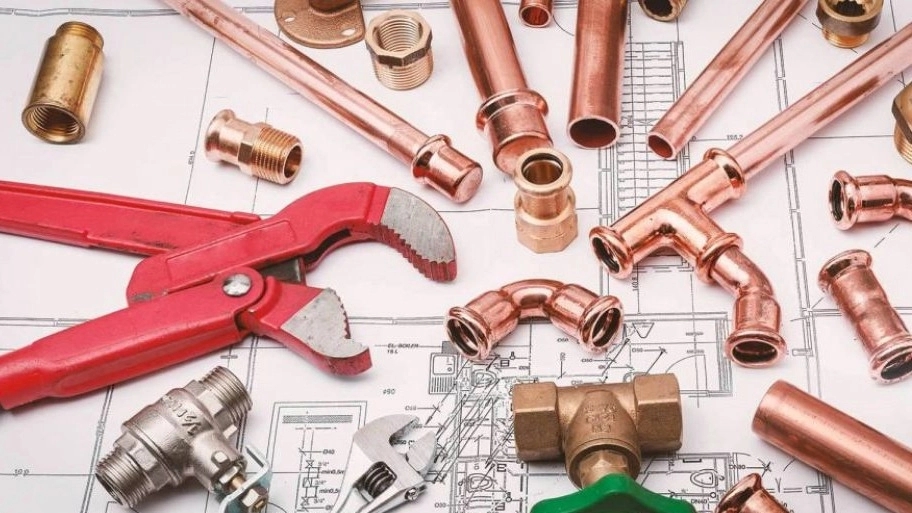
Copper: the most widely used pipe for water supply and air conditioning are copper pipes, but they have a high price compared to other pipes, the diameter of these pipes is small, and due to their resistance to rust, their life is long, they also show resistance to heat and high temperature, and they are used to transport water Hot and steam are good options and have good plasticity.
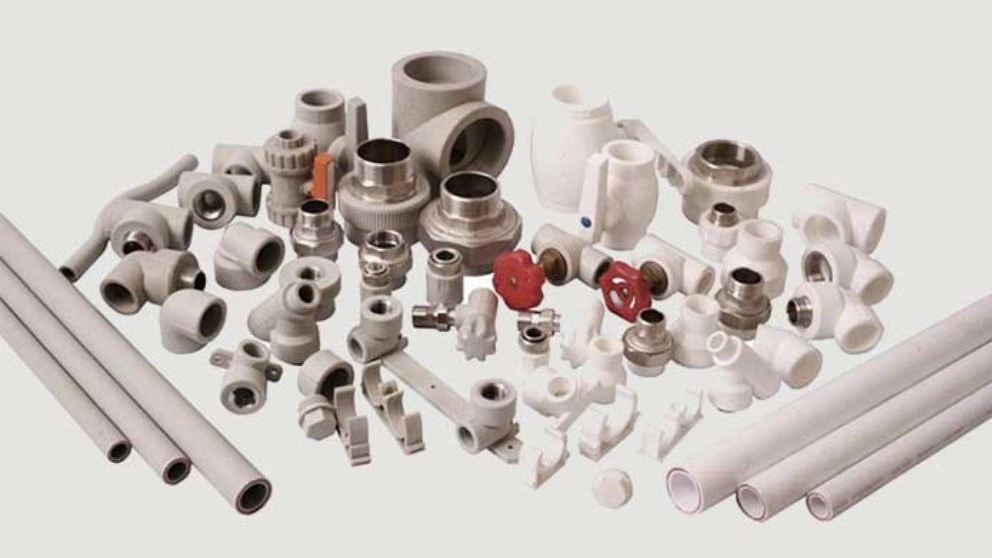
Plastic: Plastic pipes are light in weight, which makes them very easy to work with, and they also have the ability to transport liquids and gases, and alkaline and acidic materials (because they are resistant to rust). ) but due to their high expansion coefficient, they do not have the ability to transport and transport hot materials, and due to their smooth inner surface, they get less sediment. In addition, plastic pipes are resistant to electric currents and are flammable in combustion conditions. span>
cast iron: resistance in Against corrosion and useful life (100 years), they have made the type of pipes used in water and sewage systems. Cast iron pipes have a diameter of 5 to 120 cm, and they are also able to withstand variable pressures, and their prices are reasonable.
Galvanized: Material This type of exposed white iron pipe has a diameter of 12 mm to 15 cm and a length of 6 meters. In order for these pipes to be galvanized, they must be placed in a zinc solution after production. This type of pipe is used to transport liquids and gas. They are severely affected by the destructive effects of acidic and alkaline substances. These pipes are produced in two types, light and medium, which are easy to work with and have a useful life of almost 10 years, and their prices are low.
Wrought iron: these pipes are very similar to galvanized pipes and only The difference between them and galvanized pipes is that they are also made without seams, their diameter is from 12 mm to 15 cm, and due to their lightness, it is not difficult to work with them. Wrought iron pipes are generally decorative, but they are also used to transport liquids and gas. They take
✔️ Types of connections and their application
brain connections A piece of metal that is used for connection and its two ends are in the form of a screw. Brain joints are usually made of two models, one of which is a screw cap and the other is a simple screw cap. Another type of nuts is the nut tube, and its length is 30 cm, and it should be mentioned that the thread operation is done on it before for easier replacement. Therefore, it can be said that brain connections are used in plumbing circuits to connect two parts with internal ribs. Connection tee connections One of the important applications of these connections is in the iron industry, which has different types. To order this product, you must be very careful about its dimensions because it has different dimensions. Elbow joints and their types Creating an angle in pipelines to change the flow direction is one of the main uses of these connections. These joints are produced in two angles of 45 and 90 degrees, both of which are made of seamless and seamed steel. Its appearance is usually that one side has a ribbed brain. These connections are available in two models, long radius and short radius, the only difference between them is their diameter and dimensions, and the other difference is the high pressure drop in the short radius elbow. The use of elbow joints can be mentioned in the joints of hoses, pipes, tubes, etc. to transfer fluids. Flange connections This type of connection is used when connecting two pipes with different diameters or changing their direction. It should be mentioned that these connections are used in repairs and have a very high flexibility. It is recommended not to use these connections in underground pipelines. Among the various types of these connections, we can name flanges with raised and simple surfaces, blind flanges, edged flanges, facing flanges, and welded flanges. In flange connections, it is better to know that the pipe is connected to equipment such as pumps, compressors and pressure tanks, it has a relatively high cost and is usually connected to valves and pipes that are in the flow path. br>
✔️ Applications of pipes in industry and building
The most important application of pipes in the liquid transportation sector This transfer can be the transfer of sanitary materials such as drinking water from one place to another, in which plastic and metal pipes are the most used, or it can be for the transfer of chemicals and waste from a factory or a city. In this section, steel pipes and polyethylene pipes are the most used.
Another important application is the transfer of gas and gaseous materials through pipes, in this sector, steel pipes and gas polyethylene pipes are used. It can be used to transfer gas from refineries and petrochemical companies, in this section, the pipe's bearing pressure is very important, and the pipes used must be made of special steel alloys with specific compositions so that they do not face problems in gas transmission. The use of steel pipes for gas transmission has become customary for a long time, and Sarande companies have made these pipes with new compounds and alloys.
✔️ Pipe makers
What materials are the pipes made of? Pipes are often made of plastic, polymer, metal materials such as brass and zinc, or steel alloys, each of which has a different structure and properties, plastic pipes are simpler in construction and simpler in construction, but at the same time with a complex combination. They are wet, on the other hand, metal pipes are made by melting raw materials, which are mostly natural. In some special cases, such as Manisman pipe and galvanized pipe, the composition of the pipe is slightly changed, these changes are aimed at adding properties such as more strength or resistance to rust, decay, or chemicals and acids. /p>
✔️ Types and diameters of pipe
The pipes are made in different sizes and diameters depending on the ingredients and their application, one of the most important characteristics of the pipes is the nominal diameter or the size of the external diameter of the pipes, which is directly related to the temperature and pressure tolerance of the pipe. which may be designed and produced in different parts and applications of pipes depending on their application, from the smallest diameters of about 3 inches to the largest of about 65 inches, which are further characterized by the pipes you will get to know
Smaller diameters are mostly used in the transmission and internal piping of buildings, offices, industrial centers such as factories, and higher diameters, especially above 50 inches, are mostly used in the agricultural sector, intercity transmission and special industries such as petrochemical or steel smelting. is used.
Another characteristic of the pipes is their length, the pipes are produced and supplied as branches, the length of each branch of the pipe can vary from 0.5 meters to 6 meters, depending on the type and resistance of the pipe. Yes, the most traditional type of cutting and closing pipes is especially in 50 and 100 cm plastic pipes.
✔️ Types of pipes? How many types of pipes do we have?
The pipes have different specifications depending on the ingredients, the specifications that include strength, pressure tolerance, useful life or insulation, in general all types of pipes are as follows.
Plastic pipes
Plastic pipes include green pipes, polypropylene and PVC pipes and similar parts, which have become the most popular piping system in the world's sewage industry today.
Advantages of plastic pipes: high strength, high pressure resistance, very long life, no rotting and rusting, hygienic, easy installation.
Disadvantages of plastic pipe: low heat tolerance, low flexibility and bending for orientation
Application of plastic pipe: use in the drinking and sewage part of the building, installation of piping system on the wall, sewage transfer
PE polyethylene pipes
These pipes, whose raw materials are polyethylene, include a variety of PE polyethylene pipes and similar parts.
Advantages: long life, high pressure resistance, easy installation
Disadvantages: twisting and low flexibility to direct the pipe
Application: The most important application of these pipes is in the petrochemical industry and the transfer of chemicals between two points and the transfer of waste materials from factories, but they can also be used in the cases of transferring sanitary materials. He mentioned the transfer of water and wastewater between cities or the irrigation of fields, orchards and agricultural lands, in which polyethylene irrigation pipes and drip irrigation tapes are used.
✔️ PVC PVC pipes
These pipes include polyca pipes and matching parts, these parts include all kinds of elbows and conversions and PVC joints that are made of PVC and polymer materials, one of the most important companies producing pipes The PVC companies are Lule Gostar Golpayegan and Polymer Golpayegan.
Advantages of PVC pipe: easy to install, easy to carry, light weight, hygienic and polished surface inside
Disadvantages of PVC pipe: high fragility, low flexibility, short life
Application: It is most widely used in the sewage piping industry of buildings, but it is also used in the sewage transfer sector, and it is also used in the transmission of electric hub wires as electric pipes.