☑️ The most important tile tools
Tile and ceramic are among the most widely used materials used to cover building surfaces, including floors, walls, and facades. The high durability of these products against moisture, fire and the penetration of all kinds of microbes and pollution has caused employers in many of their projects to want the implementation of tiling in the highest possible quality. is using them. In fact, one of the most prominent features of skilled and professional tilers is the use of appropriate tiling tools.
☑️ Tile Tile Special Installation of Ceramic Tile
In order to install ceramic tiles in principle, various steps such as preparing the work surface, leveling, preparing mortar or glue, applying it with a trowel, gluing ceramic tiles, strapping, etc.
The implementation of these steps as best as possible and obtaining a uniform and beautiful surface at the end of the work depends on the use of tiling tools and special devices for this work.
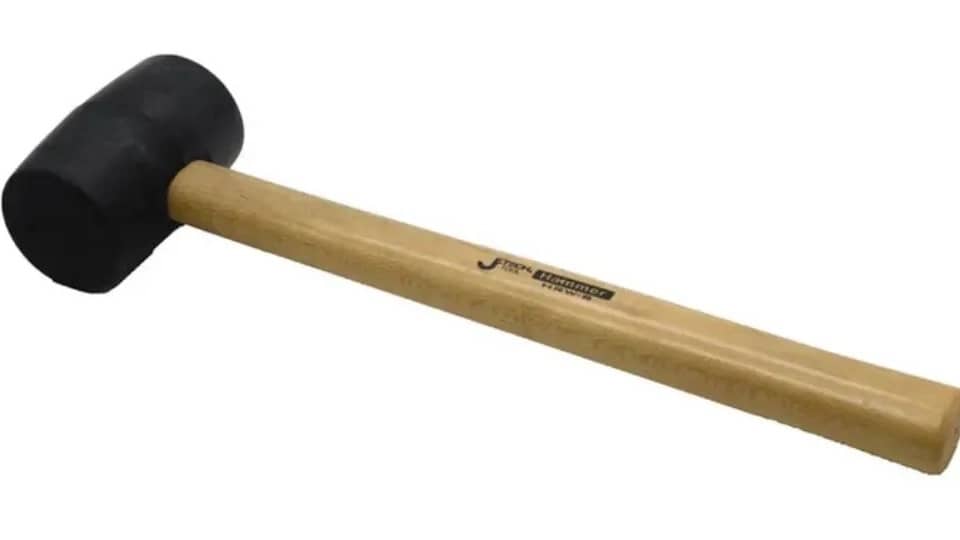
1- 1- Plastic hammer: One of the most common tiling equipment
Plastic hammer is an important tiling tool for installing tiles, ceramics and stone. After placing the panel on glue or mortar, the craftsmen level the surface of the tile by applying successive strokes. For this, a device is needed that can distribute the pressure well and does not damage the tile or ceramic.
Plastic hammer is one of the best tiling tools for doing this work due to its light weight. By hitting the surface of the panel with a plastic hammer, all points behind the tile are connected to the holding mortar and the mortar is spread evenly on the lower surface. Also, with this action, the creation of an empty space under the work, which may later cause cracks and separation of the panel, is prevented.
2- Ceramic Tile Cutting Machine: Key Tile Tool
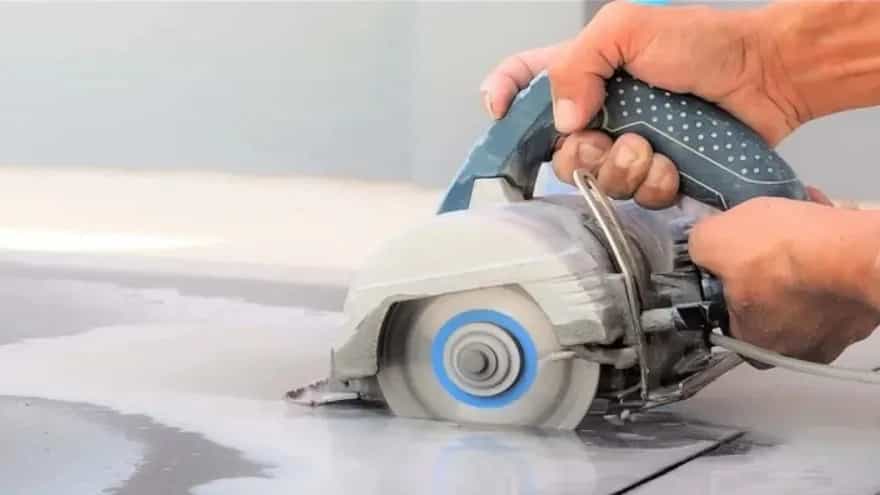
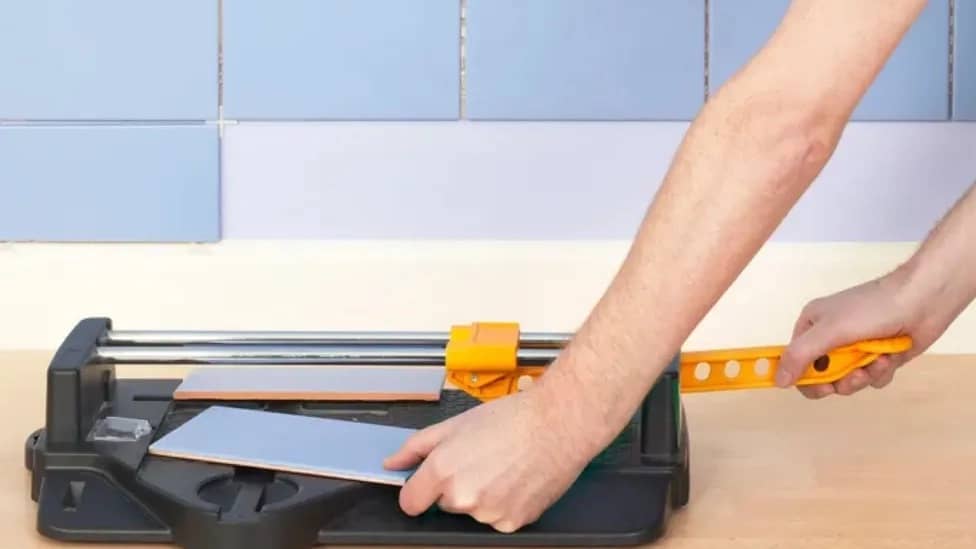
One of the most important tiling tools is a cutting machine, which is also known as a tile cutter in this industry. This device has different types in the market in terms of quality and power. In the general classification, tile cutters can be divided into two types, manual and electric.
These devices are used for accurate and high-quality cutting of ceramic tiles in specific sizes. For example, in the corners and sides of the building where a whole piece cannot be used, first the necessary measurements are made with a ruler and special templates, and then the tile is cut in the same shape and dimensions as required.
The model of the cutting machine directly affects the quality and beauty of the tiling surface at the end of the work. The selection of the cutting machine should be based on the type of ceramic tile, its hardness and dimensions. The machine's weight, dimensions, blade material, engine power, etc. are other things that should be considered in choosing the right tile cutter.
☑️ 3- Simple System
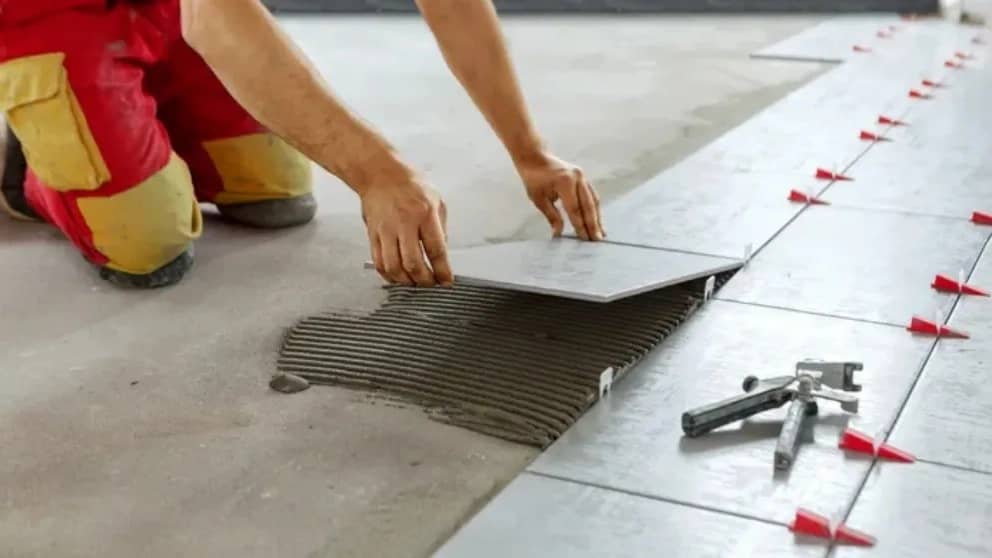
The ceramic tile alignment system, which includes clips, wedges and special pliers, is considered one of the most useful tiling tools. The non-alignment of the panels on the tiling surfaces and the remaining air between the glue and the tile is considered one of the biggest problems caused by the implementation weaknesses, which can be easily corrected by the leveling system.
The ceramic tile alignment system, which includes clips, wedges and special pliers, is considered one of the most practical tiling tools. The non-alignment of the panels on the tiling surfaces and the remaining air between the glue and the tile is considered one of the biggest problems caused by the implementation weaknesses, which can be easily corrected by the leveling system.
The requirement to achieve beautiful, uniform and regular tiling surfaces is the alignment of all panels installed on a certain surface. For this, they use a series of clips between the panels when placing ceramic tiles. Then, by placing the wedges and tightening them with pliers, the air between the tile and the glue is completely removed and the panels are completely aligned.
After the glue has set, at the end of the work, the wedge and clip can be separated from the panels by hitting with a hammer. With this method, which was introduced in order to eliminate human errors and implement tiling surfaces as accurately as possible, we will have a completely smooth surface without separation and pockmarks.
4- Tile separator or spacer
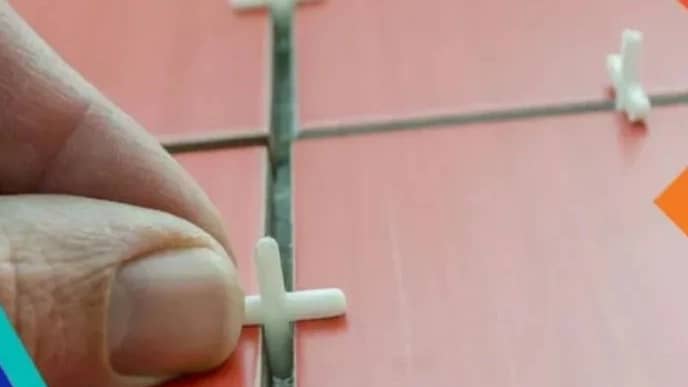
Observance of regular distances between tiles of the same level and the same size of the bands are considered to be one of the most effective factors in ensuring the beauty, uniformity and final quality of tiling surfaces. Old craftsmen used tools such as ropes and screws to place tiles at a certain distance from each other.
But these traditional methods have their own difficulties and their optimal implementation requires high precision. Today, for quick and easy installation of ceramic tiles, a new tiling tool called spacer is used in different sizes and shapes such as plus or cross. Tile crosses are made of high quality and durable material and can be used for a long time in various ceramic tile installation projects.
5. 5- Captain
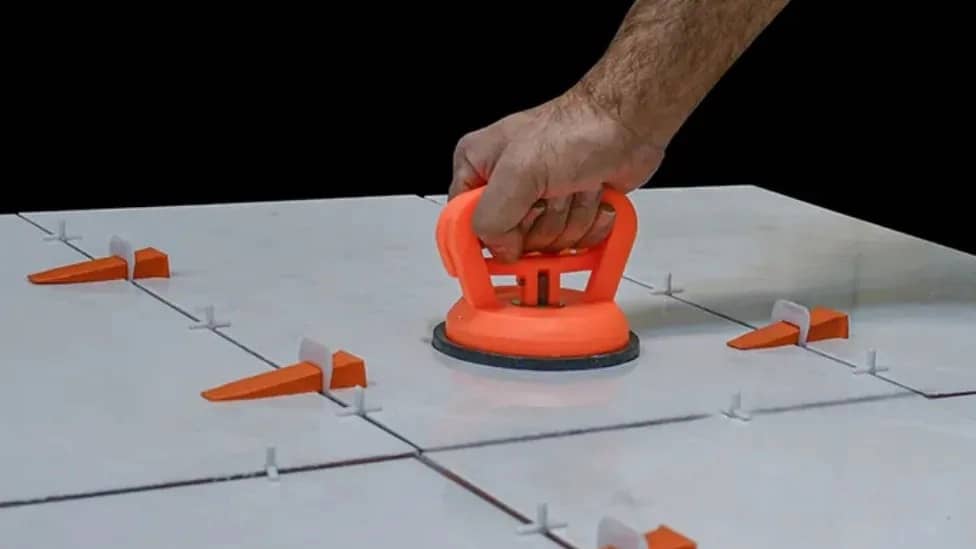
As you know, it is difficult to move panels with a medium to large area, and a special ceramic work tool is used for this. Vacuum is a device that is connected to the surface of ceramic tiles by creating vacuum and suction, and with its help, panels can be easily moved and fixed.
6. Vibration hammer: New tile tool
The vibrating hammer is one of the most important tiling tools that helps to speed up and facilitate the installation of heavy and expensive ceramic tiles. This new tiling tool has the ability to use tools such as a hammer and a pry bar at the same time. With the help of the vibration device and its suction properties, the panels can be easily moved without their surface getting dirty or scratched.
After placing the ceramic in the desired place, by pressing the special button, the vibrator is activated and the craftsman can fix the panels easily and in the shortest possible time. By using a vibrating hammer, the contact surface between the panel and the tile adhesive can be maximized, and this increases the quality and durability of the surfaces.