
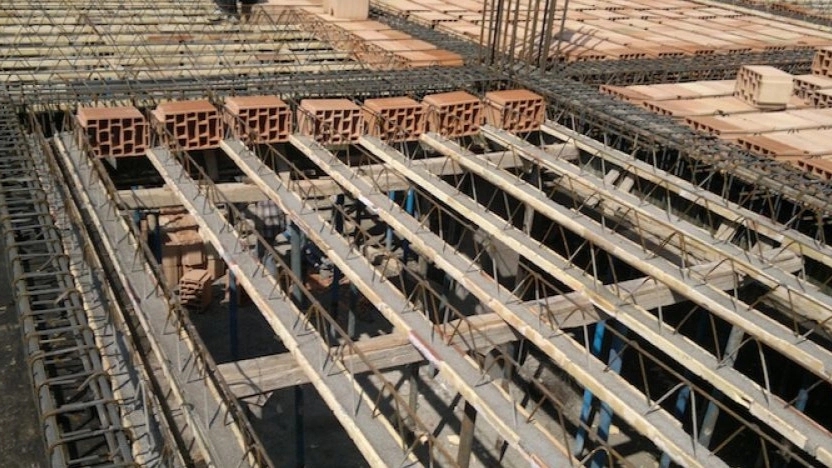
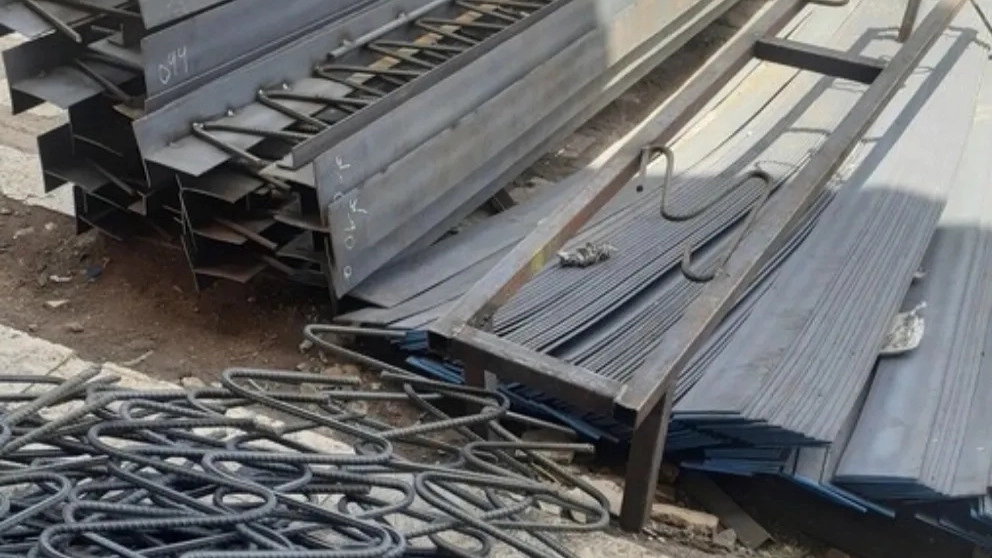


The joist is a prefabricated part, consisting of concrete and steel, which creates T-shaped sub-beams after the complete execution of the roof. Beams are loaded in three stages. In the first stage, it bears the load caused by transportation. In the second stage, the load caused by the roof concreting components, which bear the dead weight of the roof (the weight of beams, blocks and in-situ concrete) and the loads during execution between the main supports and the beams, and in the third stage, bearing the load resulting from the dead loads and live after processing the cover concrete and obtaining sufficient resistance.
truss joists
Truss beam is a pre-made network of lower, upper and transverse tensile bars (zigzag) that are welded or hooked to each other in the shape of a truss and provide the necessary stability for carrying and carrying out. This beam consists of the following components.
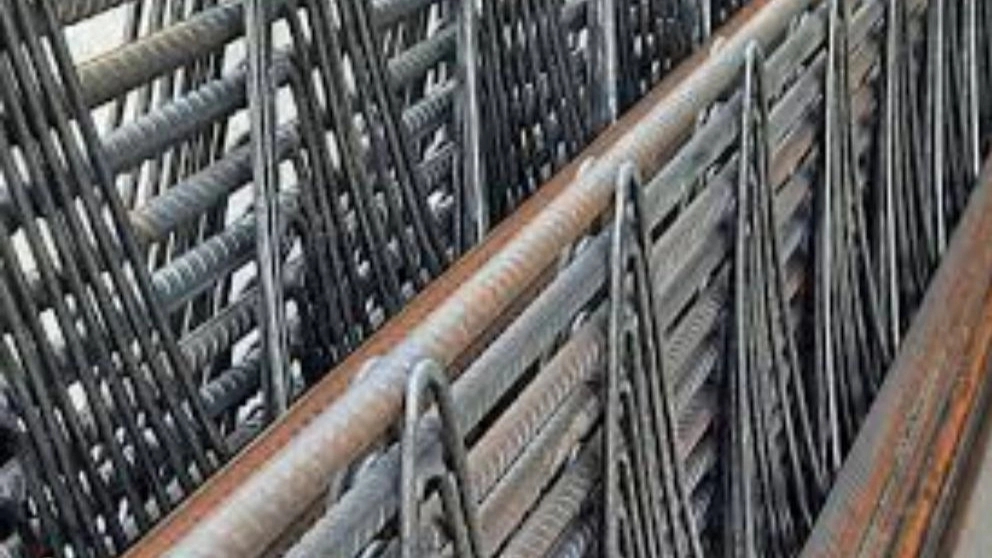
Lower bars (tensile member)
In the first stage of beam loading, the lower beam of the truss as the tensile member of the beam truss must be able to withstand the tensile force (resulting from the bending anchor). due to the weight of the beam itself during transportation. And also able to withstand the tensile force (resulting from the bending anchor) caused by the dead weight of the roof in the distance from the axis to the axis of the beams and between two temporary supports (candles). In the second stage of loading (exploitation), the tensile bars of the beam (either the bottom or the necessary reinforcements) act as the tensile member of the T beam. >
In the first stage of loading, the transverse bars act like the diagonal member of the truss and with the help of the tensile and upper members, provide the necessary stability to bear the weight of the beam itself (during transportation) and the dead weight of the roof between the temporary supports (during implementation) provide. In the second stage of beam loading, the transverse bars provide the necessary connection between the tensile bars of the truss and the covering concrete (in-situ concrete). Also, the opposite is done with a part of the shear force of the T beam by transverse bars.
Upper bar
In the first stage of loading, the upper bar is supported by other members of the truss. , bears the weight of the beam during transportation as well as the dead weight of the roof in the distance between two temporary supports (during molding and concreting before reaching the strength of the cover concrete) If the upper one is placed in the thickness of the covering concrete and above the level of the blocks, it acts as the heat loss steel of the composite section of the roof. In the section of the T beam, if it is placed lower than the level of the blocks, it will not have such a role.
Reinforcement bar
In order to strengthen the tensile strength, apart from the two longitudinal tensile bars that continue throughout the length of the beam, a bar with a shorter length that is calculated according to the bending moment diagram is inside the concrete. The heel is placed, the two ends of which must be protruding from the concrete of the heel.
Connecting auxiliary rebar
This rebar is used to restrain the tensile bars and enable the installation of more It is used from two tensile bars in the heel of the beam
heel concrete
The heel concrete is the concrete part of the truss beam, which serves as a block seat and also covers and restrains the lower bars of the truss. To provide support for the blocks (permanent mold) and to avoid molding the lower part of the roof, the heel of the beam is concreted before installation. Heel concrete plays a very important role in the method of roof implementation, if the horizontal and vertical surface of the beam is curved along the length, placing the blocks will face problems. The block seat must be smooth and even so that the blocks are evenly placed in place and the underside of the roof is suitable for subsequent joinery. After concreting the heel, care must be taken to maintain and keep the concrete moist. The type of concrete and the thickness of the concrete coating on tensile bars have a great effect on the resistance of the roof, fire resistance and the durability of the beam.
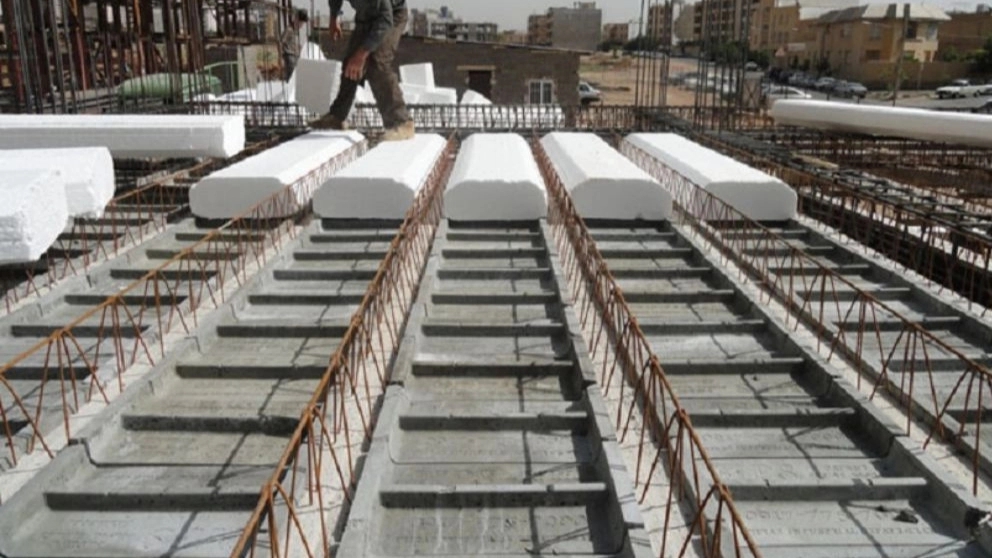
Features of beam heel concrete
The minimum width of the concrete heel is 10 cm and it is usually implemented with a width of 12 cm. The thickness of the heel is at least 4 cm and at most 5.5 cm, and it should not be less than the diameter of the largest tensile bar plus 30 mm. It is recommended to use water-reducing materials (lubricants), other suitable additives or a low water-to-cement ratio in aggressive areas to prevent corrosion of rebars and reduce concrete permeability.
Dimensional features And appearance
The width of the lower part of the prefabricated beam should not be less than 10 cm and its height should be 2.5 times the width of the beam. The width of the side edge of the beam, which is the seat of the blocks, should be at least 15 mm and be healthy and smooth. The dimensions of the beam and the wires used in the construction of the beam should be based on the practical calculations of the beam and based on the buyer's request. The concrete part of the beam should be continuous and porous and broken. The tensile bars at both ends of the beam should continue outside the concrete heel and be visible. The two ends of the reinforcing bar should be visible from the surface of the heel concrete