
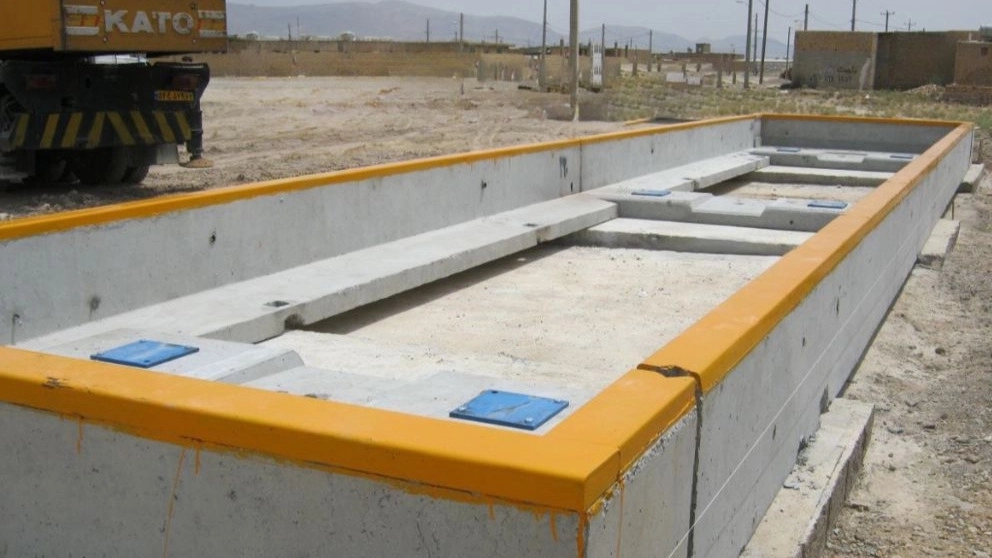
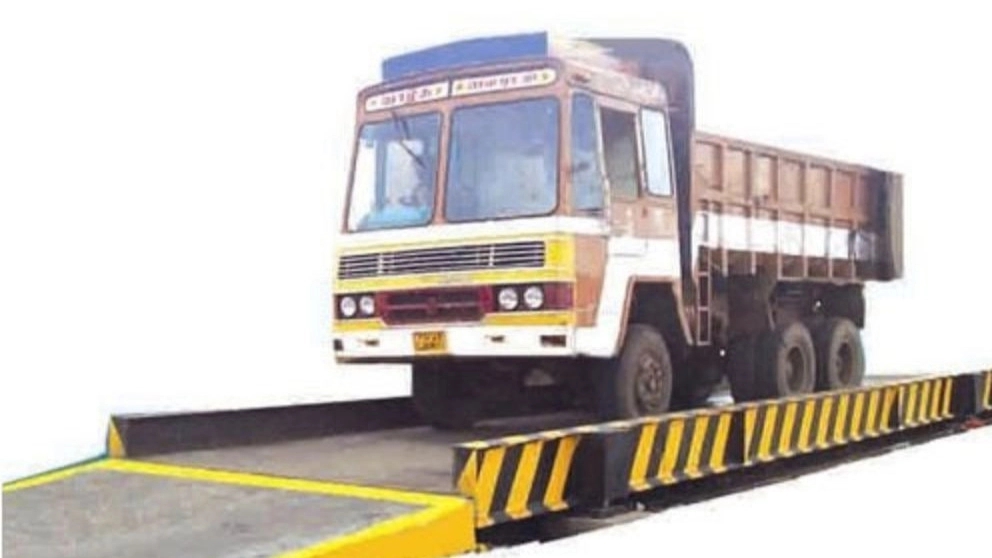


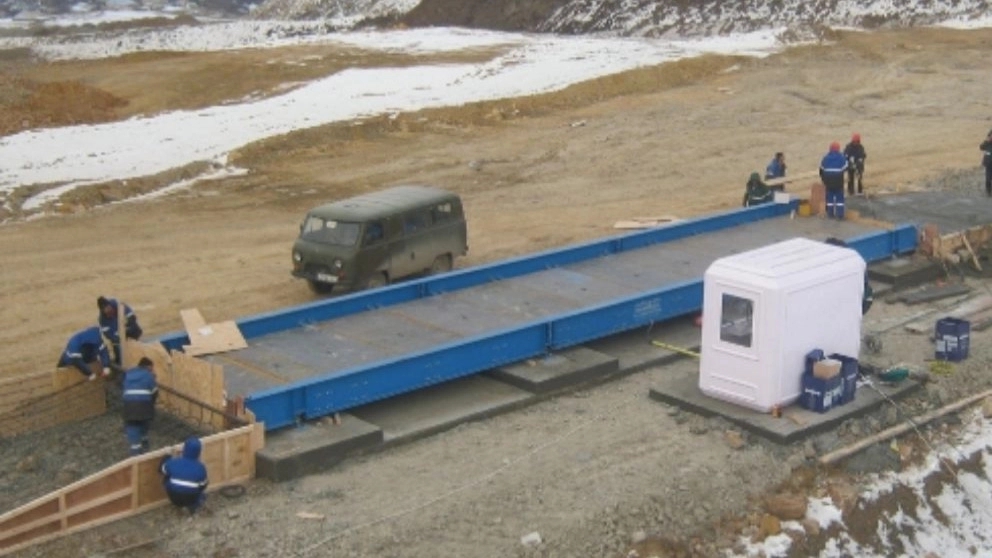
Every road weighbridge has at least three parts of the following structure called the foundation, the facing structure called the load plate (platform), and electronic equipment.
1. Foundation:
The bottom structure of the scale, which is made up of rebars (rebars) twisted together and plates (base plates) for the placement of weight sensors (load cells), and the space between the rebars is filled with concrete after molding.
The role of the foundation is to reduce the pressure caused by the weight of the load and prevent Sit and sink it into the ground. Some manufacturers provide the foundation in a prefabricated form and transport it to the site for installation.
The remarkable point about the prefabricated foundations is that the speed of the construction and the strength of the concrete (provided it is executed under the conditions and controlled materials and proper processing of concrete) in it is more, and its cost (due to less excavation) is less than the case of implementing the foundation in place.
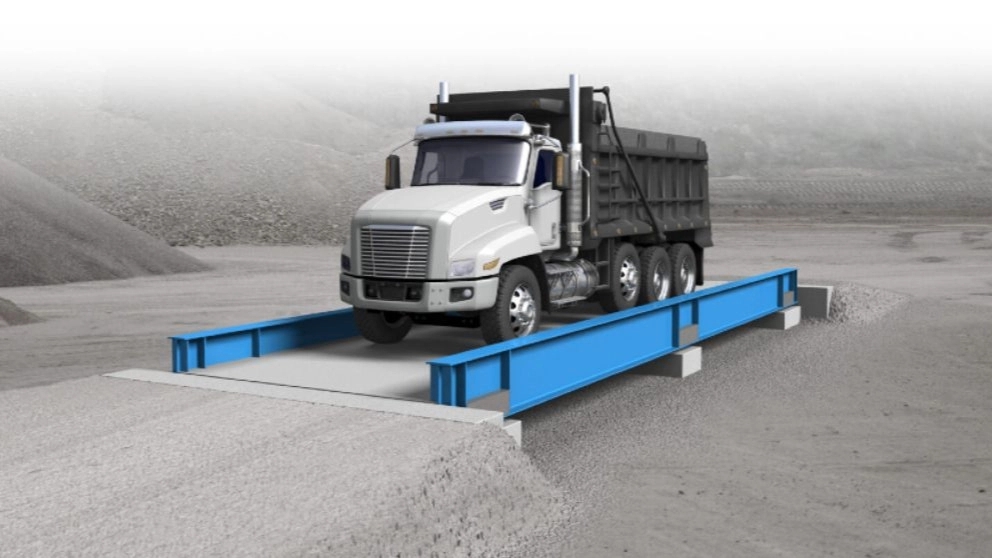
2. The Load Page (Platform)
That is, the weighing plate or platform or the main structure, it is the most visible face of the weighing structure and the place where the load is placed. done correctly to achieve accurate weighing. Therefore, the accurate design of the structure for the correct transfer of power to the weight sensors (load cells) requires accurate design by engineering software and the use of experienced experts. The load plate also has metal, concrete, and concrete-metal types; that the type of concrete-metal usually does not have the ability to be moved after installation.
3. Electronic equipment
which itself has several subsections including weight sensor (load cell), distribution box, connection wires, indicator, printer, outdoor display, traffic light and roadblock. From among the above electronic parts, we will suffice to introduce the equipment that is necessary for setting up any scale:
3.1. Load cell (Load cell)
Weight sensor (weight sensor) or load cell is the name of a converter that is designed and built with the purpose of converting pressure caused by weight into voltage and electrical fluctuations.
Load cells have compression (barrel), tension (S shape), and bending (single point and multiple) types; that various types of compression load cells are used in the production of road scales, all types of tensile load cells are used in the production of scales and ceiling scales (hanging), and all types of bending load cells are used in the production of shop scales, bascules and pan scales.
3.2. Connecting wires (Connecting wires)
As its name suggests, it has the role of connecting and transmitting voltage and electrical fluctuations from the load cell to the distribution box, and from the distribution box to the indicator.
The importance of connecting wires is that the type of material and its coating must be specific, and even its diameter and length must be a specific and fixed value. Because all these characteristics have a direct and significant effect on the electrical resistance of the wire; Especially, the voltage changes and electric fluctuations passing through it are very weak (microvolts) and sensitive, and the smallest change in the above characteristics will cause a huge error in weighing.
3.3. Junction box, which is called J.box for short, works like a junction box in the wiring of the building; and is an electrical (and sometimes electronic) piece that unifies the wires coming out of It has load cells for the entry of only one wire to the weight indicator.
The important point about the distribution box is that this part works in the best possible way for the greater accuracy of the scale and causes the least possible error in weighing. It is possible that it does not change the voltage and electric fluctuations coming out of the load cells and only has the role of parallelizing and unifying the electric fluctuations together; And in this case, the distribution box will be an ideal electrical part.
is a device that converts the changes in the voltage of the output wire from the distribution box into a weight number and shows it on its screen. The capabilities of this device can be very simple or with more advanced equipment such as It has a printer or the ability to connect to it, has an all-character keyboard or the ability to connect directly to it, has different communication ports with other electronic equipment, or the ability to connect to a computer in order to use the computer screen instead of the display screen. The parts used in making the indicator can have high sensitivity and delicacy, as well as a wide range of quality and accuracy; If it is not selected from high-quality types, it will cause a large error in showing the correct number of the weight. 3.5. Printer (printer)
The road scale printer is a device that is used to print weight information and other information related to the weight of loads in weighing places. This device is usually used in road weighing stations, weighing stations, and weighing centers.
The function of the road scale printer is that the load on the scale is weighed first. This information is then sent to the printer and the printer prints it on the corresponding receipt or label. Information such as load weight, date and time of weighing, scale serial number and other related information may be printed along with it.
The road scale printer is used to record and maintain accurate weight information of loads. This information can be used for commercial, financial, tax and legal purposes. Also, by using the road scale printer, it is possible to issue weighing receipts and relevant reports.