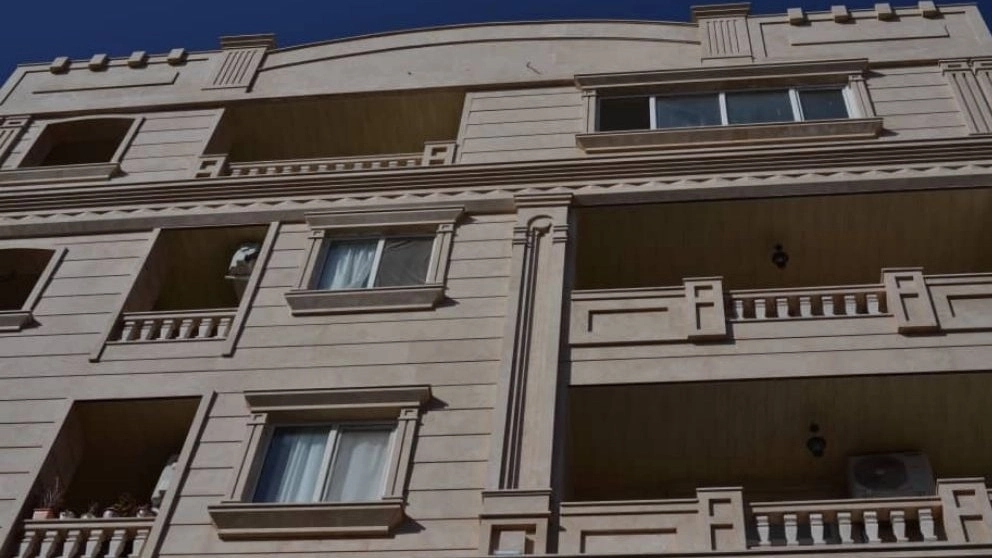
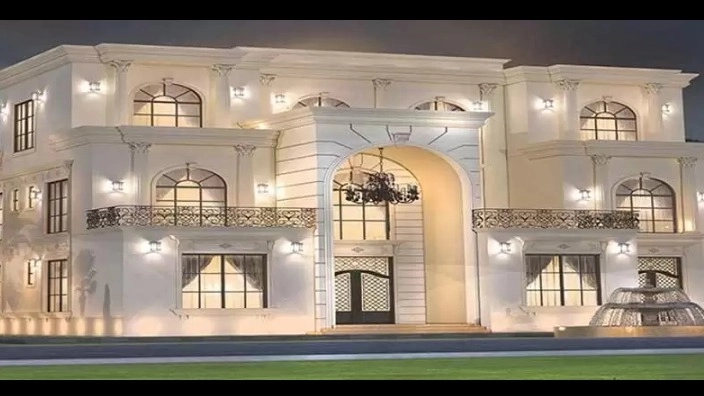



What is a Roman view?
Roman architecture is the legacy left by Greek architects and established architectural orders. The Romans were innovators who combined new construction techniques and materials with creative design to produce a wide range of new architectural structures. The Roman facade in Iranian buildings is also a model for associating the same art and originality.
☑️ Roman view history
The Roman facade is a completely up-to-date and creative architecture, many of these innovations were a response to the changing practical needs of the Roman society. These projects were often supported by the Roman state apparatus and were sustained throughout the Roman world with government funding and organization, so that many of these buildings remain to this day.
Roman architecture was initially based on the classical guidelines that the Greeks had first created.
For this reason, they adhere to the general principles of Greek architecture, such as simplicity, having curved columns and round capitals, columns that have a groove and the capital is twisted like a ram's horn, and columns with a narrow body and longitudinal grooves with a bell-shaped capital. It was upside down and decorated with acanthus leaf design, they were completely adhered.
However, the Romans added their own ideas and used the appropriate creativity of their land.
The Romans also created the compound capital, which was a combination of two Greek capitals. The Tuscan column was another adaptation of a traditional idea and form of the Doric column with a smaller capital, a slimmer body without flutes and a molded base.
Tuscan columns were especially used in interior architecture such as porches. In Roman architecture, columns were still used even when they were no longer structurally necessary, and this was an imitation of the Greek style.
☑️ Roman innovative materials and techniques
One of the biggest innovations brought by Roman architecture was the widespread use of concrete. Roman architects found that concrete was not only stronger than ordinary marble, but it could also be easily decorated and sculpted into various shapes. Concrete is also much more affordable because it can be produced locally.
It was not only the beautiful buildings and large facades that made Roman architecture so impressive, but the infrastructure was also very important in Roman architecture. Much of what constitutes the architecture of modern society could not exist without the ideas of Roman architects.
☑️ The impact of Roman style on modern architecture
It is not surprising that the extensive architecture of the Roman Empire has influenced many countries in their architecture and infrastructure, and centuries after the fall of the Roman Empire, many large and important buildings in other countries imitated this architectural style. were designed Columns, domes and arches have made their way into important buildings around the world.
Recently, many official buildings built in the United States are heavily influenced by Roman architecture. The most obvious example is the White House, which exhibits Roman influences in the exterior arches and columns. The Federal Hall in New York City, which has Doric columns, is modeled after the Roman style.
☑️ Features and types of today's Roman facade
As it was said, Roman facades in today's buildings are inspired by the classical Roman style, but its different types are different depending on the type of stone and materials used. In today's architecture, for many reasons, concrete is no longer used as the main material of the Roman facade, and other stones are also used.
This is due to wider access to all kinds of ornamental stones and solid materials in today's society. Nowadays, materials such as marble, granite, travertine, sandstone, all kinds of artificial stones and sometimes white cement are used to design the facade of a building with a Roman design.
In terms of the colors of the facade of the Roman building, it often has neutral and bright colors such as white or bone. Another characteristic of the Roman facade in modern buildings is the observance of the principle of symmetry, which shows the strength and strength of the building as a worthy complement. Extensive lighting is another feature of the Roman facade in contemporary buildings.
The lighting of the columns and walls of the Roman facade, in addition to being beautiful and eye-catching, especially at night, leads to the appearance of the building and makes the authority and strength of the building more evident. Basically, in the Roman facade, the splendor of the building is of great importance, and anything that can increase this splendor or make it more visible has a positive use.
In short, the main features of the Roman facade in Iranian buildings can be summarized in these cases:
One-hand materials, usually stone
Big and tall columns
Classic and large capitals (suitable to the dimensions of the column)
Head pains, crown and inscription in the body of the facade
Stone sculptures, especially with designs of animal heads
Extensive lighting
Small windows with dark colors