
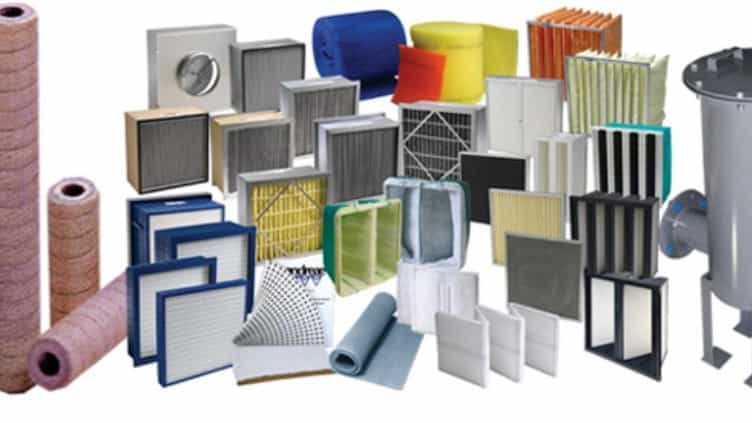

Mechanical Files
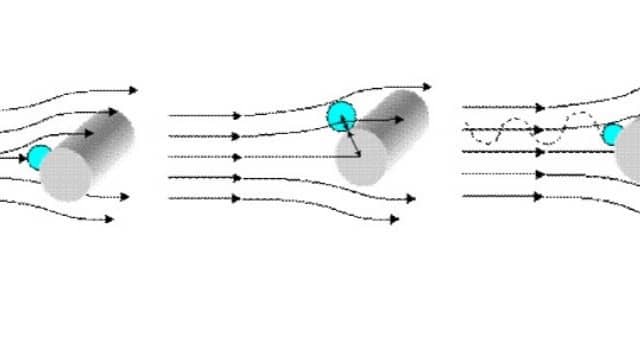
Mechanical filters simply capture the pollutants in the filter medium and depending on the size of the filtered particles, they can work in three different ways:
Particle filtering happens when the polluting particles are more than the space between them. The filter fibers pass through and cause them to accumulate in the filter medium. A strainer is effective for filtering larger particles such as lint or hair.
Entrapment occurs when particles follow the air flow and contact the filter fibers due to the Vander Waals force, which describes the existing molecular attraction. Air flow diffusion is effective when filtering very small particles and is often used by HEPA (High-efficiency particulate air) and ULPA (Ultra Low Particulate Air) filters. In the emission of particles, they are so small that they move irregularly in the air stream and cause them to get stuck in the filter fibers.
Electrostatic Files
Electrostatic filters use charged fibers that attract and trap airborne particles. These filters are usually made of polypropylene or polyurethane fibers. Electrostatic filters are able to filter 94-96% of pollutant particles under proper working conditions.
Electronic File
Electronic filters consist of a set of electrodes inside the filter network. When current is applied to the electrodes, the particles entering the filter cause a voltaic arc and become positively charged. The particles are then adsorbed and trapped in a negatively charged array of electrodes or a disposable, cleanable collection pad. Electronic filters are effective in filtering very small particles, but compared to mechanical types, they are noisy, expensive, and difficult to service.