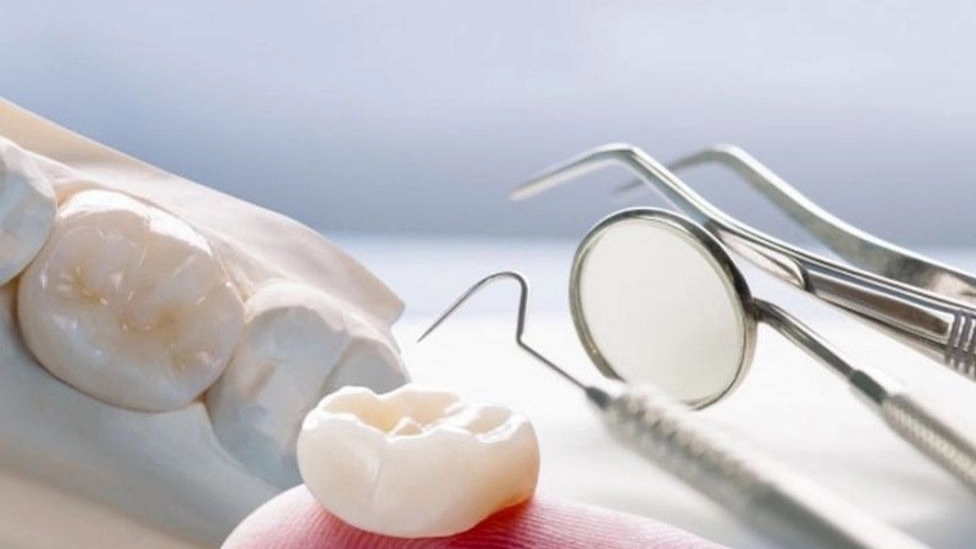
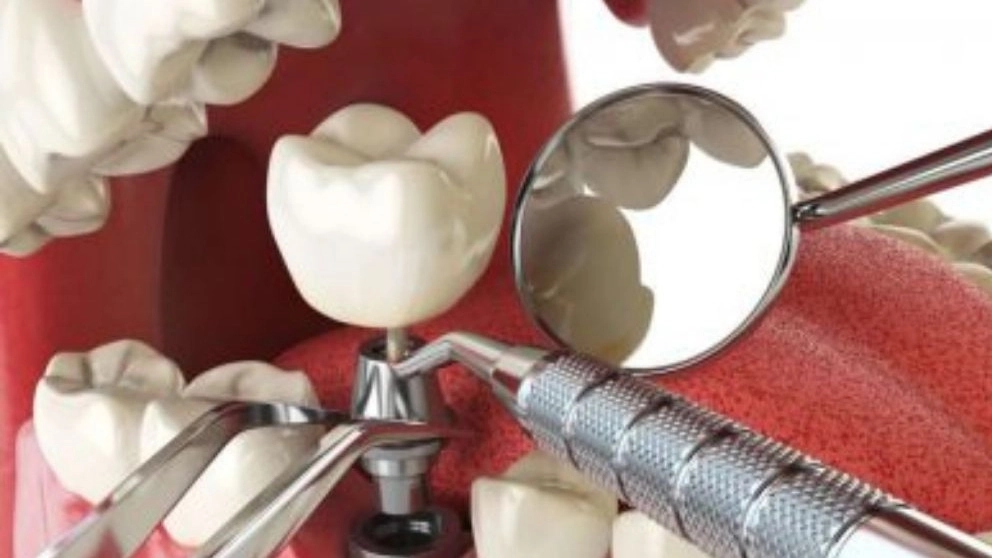
Ceramic materials used in dentistry are defined as inorganic and non-metallic materials that are made by humans by heating raw minerals at high temperatures.
Ceramics used in dentistry are part of systems are designed with the aim of producing dental prostheses and in turn are used to replace lost or damaged tooth structures. Ceramics used in dentistry are fragile. This means that they have high compressive strength and low tensile strength and may break under very little pressure. All ceramics used in dentistry have a lower fracture toughness compared to other dental materials, such as metals.
مان Classification of ceramics used in dentalization
Ceramics can be classified based on the amount and type of crystalline phase and their glass compositions.
At the microstructural level, we can define ceramics based on the nature of the glass-to-crystal ratio composition. . There is a great variety in the microstructure of materials, but they can be divided into four main categories.
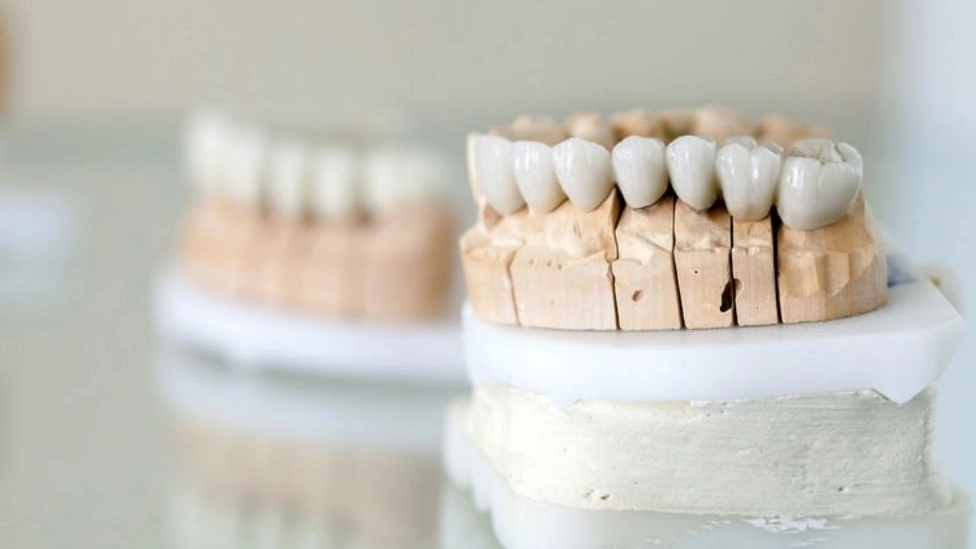
🔹🔹 Glass-based systems 🔹🔹
Glass-based systems are made of materials that contain silicon dioxide (silica or quartz), which have It is a variety of alumina.
Aluminum silicates found in nature that contain varying amounts of potassium and sodium, known as feldspar. Feldspars are modified by different methods to create the glass used in dentistry and dentistry. Artificial forms of aluminosilicate glasses are also made for dental ceramics. The researchers found no documented evidence that natural aluminosilicate glass performed better or worse than synthetic glass, despite claims to the contrary. These materials were used for the first time in dentistry to make porcelain dentures.
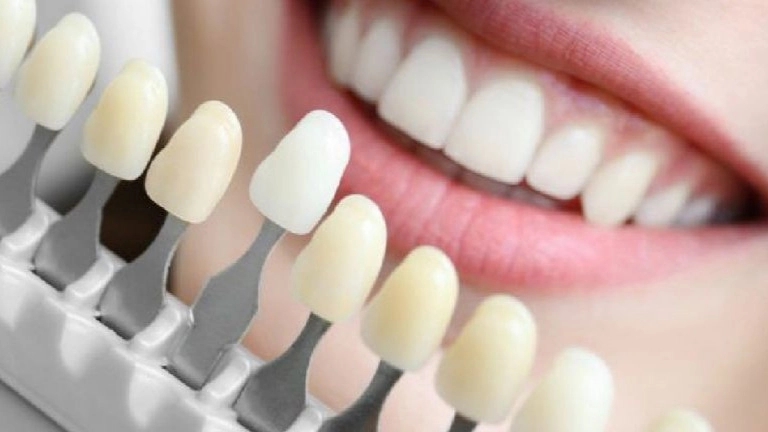
🔹🔹 Glass-based systems with fillers 🔹🔹
This category of materials has a wide range of glass-crystal ratios and crystal types. So this category can be divided into three groups.
The composition of the glass is basically the same as the pure glass of category 1. The difference is that different amounts of different crystal types are either added or grown in the glass matrix.
The main crystal types today are lucite, lithium disilicate, or fluoroapatite. Lucite creates aluminosilicate glass in dental porcelain by increasing potassium oxide. Lithium disilicate crystals are created by adding lithium oxide to aluminosilicate glass. It also acts as a flux and lowers the melting temperature of the material.
"Subgroup I"
Feldspathic glass that contains low to moderate amounts Lucite is called "feldspathic porcelain" by default. Lucite is added to these materials to increase the coefficient of thermal expansion of the materials so that they can be applied to metals and zirconia. These materials are usually liquid powders used for coating core systems and are also ideal materials for porcelain veneers.
The raw materials had a relatively random size and distribution of lucite crystals. The average particle size was about 20 μm. This random distribution and large particle size contribute to the material's fracture resistance and wear properties compared to tooth enamel. Glass that contains a high amount (approximately 50%) of lucite is placed in this category. These materials are produced in two forms: powder/liquid, machined and compressible. This material is called a glass ceramic where the crystalline phase is grown within the glass matrix by a process called "controlled glass crystallization". and crowns are used, they have performed excellently clinically. Machineable and compressible systems are more durable than powder/liquid systems and have shown excellent clinical results for inlay and posterior veneer applications and anterior veneer and crown restorations.
"The third subgroup"
Lithium disilicone glass ceramic is a new type of glass ceramic that was introduced under the name Evoclar.
The crystals that form inside this material are They are needle-shaped and make up about two-thirds of the volume of glass ceramics. The shape and volume of the crystals help the bending resistance and fracture toughness of this material to be almost doubled.
This material can be very transparent even with a high crystal content. This is due to the relatively low refractive index of lithium disilicate crystals. This material is so transparent that it can be used for full contour restorations, or for the highest level of beauty, it can be covered with a special porcelain.
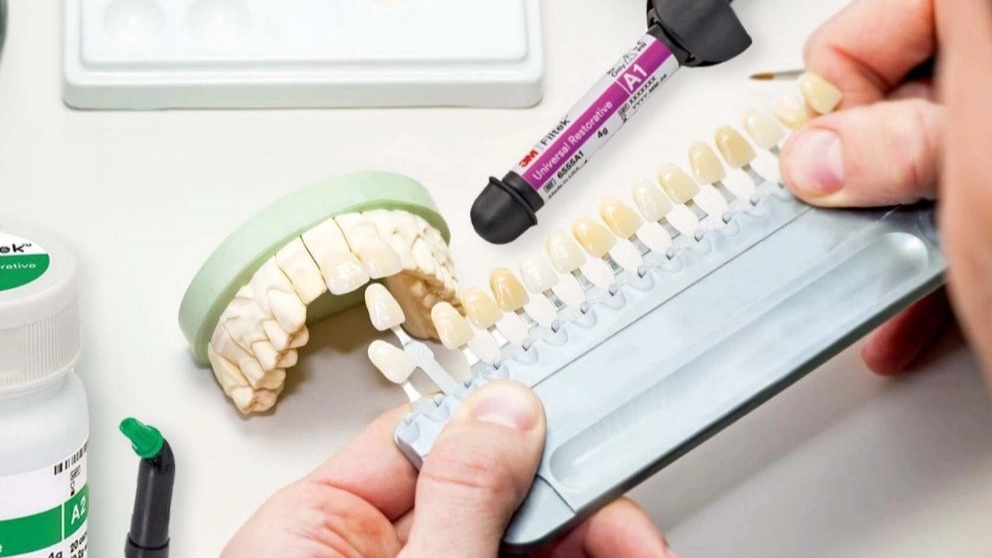
🔹🔹 Crystal-based systems with glass fillers 🔹🔹
Permeable and partially porous alumina was introduced in 1988. This system was developed as an alternative to conventional metal ceramics and has met with great clinical success.
This system uses a porous crystalline matrix of a high modulus material (85% by volume), where There is a connection of particles in the crystalline phase. It is very different from glass materials or glass ceramics because these ceramics consist of a glass matrix without crystalline filler, where there are no interparticle (crystal) junctions.
The crystalline phase includes alumina, alumina/zirconia or an alumina/magnesia mixture called "spinel" which is made by a process called "slip casting". Or it can be milled from a pre-porous block of both materials. Then the alumina or spinel framework is infused with low viscosity lanthanum glass at high temperature.
For this new series of dental ceramics, very high bending strength has been reported, which is three to four times higher than any other series of dental ceramics.
Alumina/zirconia materials should only be used in molars due to the lack of transparency, because they are not ideal for the beauty of anterior teeth. For anterior teeth, the alumina/magnesia version is ideal due to its greater transparency. It is about half the strength of the alumina/zirconia version, so it should not be used for posterior teeth.
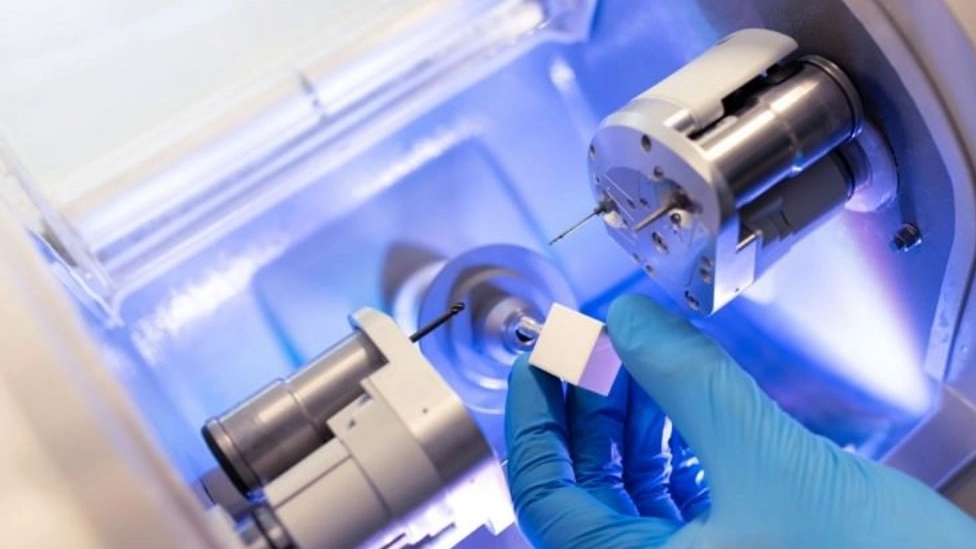
🔹🔹 Polycrystalline solids 🔹🔹
Porous single-phase ceramics are materials that have a dense structure, free of They are air-free, glass-free, and polycrystalline.
There are several different processing techniques that allow you to create porous solid aluminum oxide or zirconia frameworks. Solid ceramics (without polycrystalline glass) have the highest strength and toughness potential. But because of the high temperatures and firing, shrinking techniques were not available until recently to be used as a high-strength framework for veneers.
Zirconia has unique physical properties that make it twice as strong as Alumina-based ceramics do. Reported values for the flexural strength of this new material range from over 900 MPa to 1100 MPa.
It is important to note that there is no direct correlation between flexural strength (modulus of rupture) and clinical performance. All things being equal, it is inherently better to have a stronger material than a weaker one.
Another important physical property is fracture toughness. The fracture toughness for zirconia is reported to be between 8 MPa and 10 MPa. Fracture toughness is a measure of a material's resistance to crack growth. Using a slow cooling protocol in firing the glaze to prevent heat loss from the zirconia and porcelain increases the fracture resistance of the porcelain by 20%.