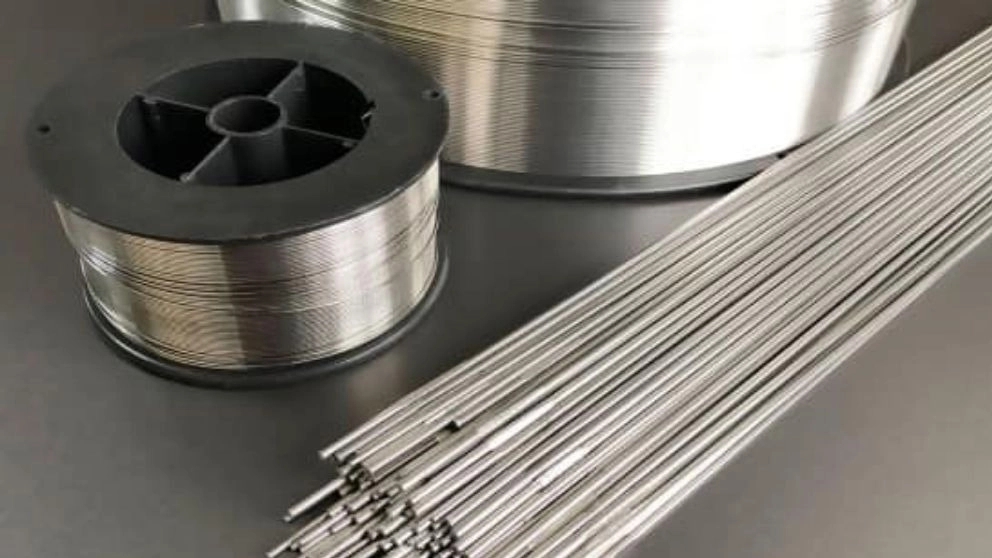
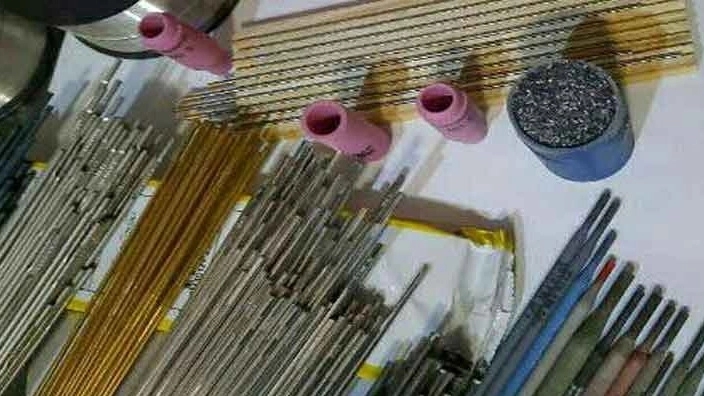



What is a welding wire?
Integrating metal parts together or welding requires the use of welding wire.
Heat must be used to connect metal parts.
For this purpose in welding, the wire is softened by hammering or compression due to heat.
There are different types of welding wire. The type of wire you need depends on the type of work you need to do.
In addition, each type of welding job requires a specific type of welding wire.
Many manufacturers overlook the efficiencies they can gain by changing the wire or welding process.
Welding wires are available for almost any welding project. Welding wires come in three forms.
Depending on the need for quality, productivity and cost, you can use three different welding wires for work.
✔️ These wires include:
Solid metal welding wire with protective gas (GMAW)
Metal core welding wire (GMAW)
Flux welding wire (FCAW)
✔️ Metal solid wire with protective gas
This is the best wire to use when working on metal sheets, because it can produce smooth and clean welds. When using this welding wire, the shielding gas cannot be exposed to the wind, because it may lead to the final product not being desirable.
What is the quality and durability of welding with this welding wire?
The result of welding with this welding wire depends on the chemical composition of this wire and the type of shielding gas;
In addition, the method of use is also effective in the work result.
Welders often prefer GMAW for work;
Because the welding deposit is without slag and does not need to be cleaned or needs little cleaning.
This advantage increases efficiency when using them.
✔️ Features of this type of welding wire
1) Welding with a metal with dirty surface
There are many classifications of GMAW wire, each with different oxidation levels.
Highly oxidizable wire can withstand surface pollution up to medium level;
But in this case, what is the right type of welding wire?
For these applications, look for ER70S-6 wire which
It has more silicon and manganese than ER70S-3.
You can also choose an ER70S-4 intermediate electrode for applications that require more oxygenation than the ER70S-3 but less than the ER70S-6.
2) Out -of -position welding
In out-of-position welding, welding is done vertically and
Gravity drives the molten slag towards itself.
GMAW solid wire can be used for out-of-position welding
The short arc method is used on thin materials that have fast solidification slag. In out-of-position welding, welding is done vertically and
Gravity drives the molten slag towards itself.
GMAW solid wire can be used for out-of-position welding
Short arc method used on thin materials that have fast solidification slag.
3) Mechanical features
In general, the resistance of a weld deposit made with a GMAW solid electrode is limited by the electrode resistance.
If you have a high strength, low alloy base material, it may be difficult to find a solid metal GMAW wire that meets the needs of the base material.
For these applications, metal core or powder electrodes may be more suitable.
4) Operations after welding
In some welding modes with GMAW wire, such as short and spherical arcs, spatter may occur
Need to be cleaned before painting or covering.
However, solid wire welding is generally a clean process that requires minimal post-weld treatment.
✔️ Metal core welding wire
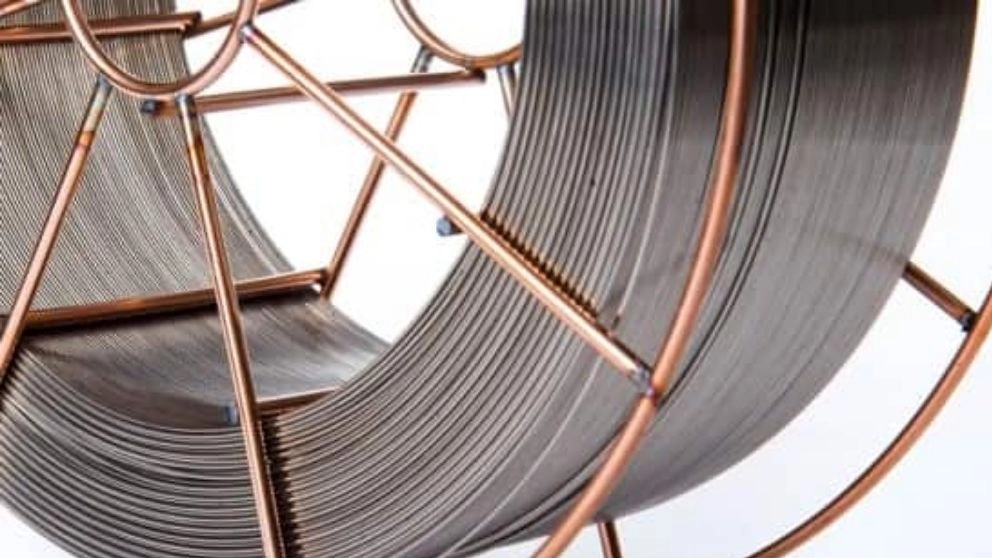
✔️ Metal kernel -type characteristics
1) Welding with a metal with dirty surface
Metal core welding wire can withstand a larger scale of surface contamination than solid metal welding wire due to its metal components.
For this reason, if you do not want to remove the contamination on the metal surface before welding,
This type of wire is a better choice.
2) Deposition
Due to the tubular nature of the metallic wire, the current density of this welding wire is higher than that of a solid wire with the same diameter at a given welding amperage.
This characteristic can lead to an increase in the deposition rate in a certain ampere.
3) Welding speed
If speed is your main concern, metal core welding wire should be your first choice.
Metal core wire can increase productivity due to less spatter surface (less cleanup after welding) and higher movement speed.
4) Out -of -position welding
Although in short arc mode it is possible to use metal core wire out of position at low amperes;
But metallic wire is generally not used for out-of-position welding, except in the vertical down position.
But if there are restrictions, what is the method of using this welding wire?
Like GMAW solid wire, pulse welding can improve the out-of-position deposition rate with metal core wire.
5) Mechanical features
Metal core electrodes are available for high strength, low alloy applications.
Although low-alloy metal components can be added to the core to achieve desirable mechanical properties.
6) Operations after welding
The cleaning time is usually reduced in this type of electrode;because the core wires They create a little metallic splash.
✔️ Powdered welding wire
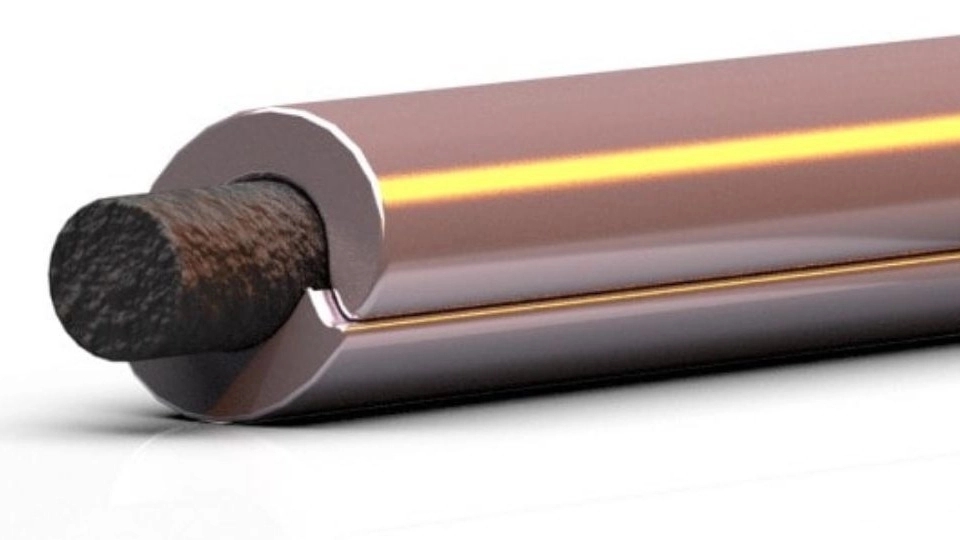
✔️ Powder type features
1) Welding with metal with a dirty surface
In the above welding wire, FCAW wire is the most suitable option for welding in metal with a dirty surface.
2) Sedimentation
When high deposition is required, large diameter FCAW wires can be used
Fill more space per hour than GMAW solid wire or metal core wire.
3) mechanical properties
Since slag materials and other components are added to its core,
FCAW electrodes can achieve good mechanical properties.
4) Operation after welding
FCAW wire requires the most cleaning because of the slag it leaves on the weld.