


Concrete
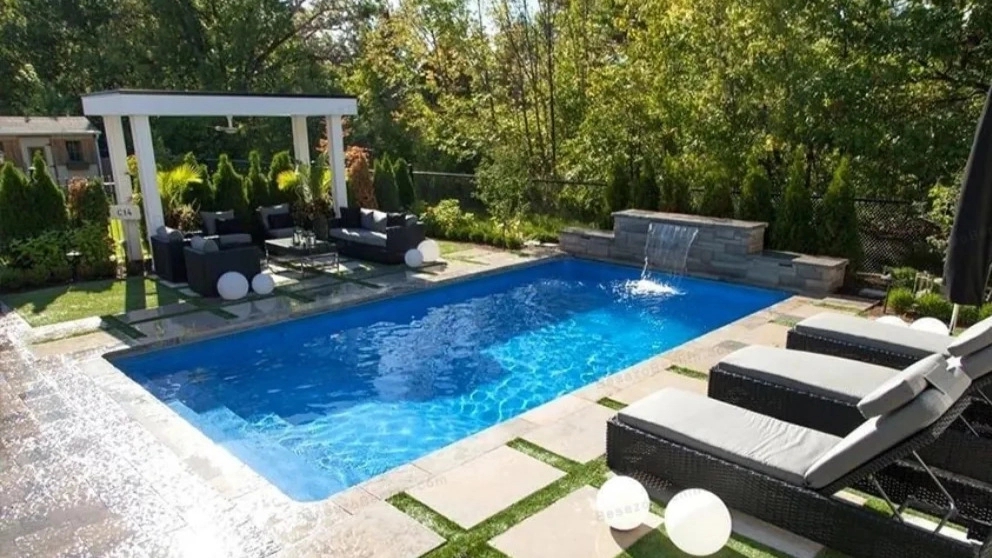
Concrete pools are often the most expensive type of pools that need to be constructed, drilled and poured concrete. Concrete pools allow you to build your desired pool in any shape and size. After the construction of the pool and at the end of the work, plaster, paint and special coating materials that are available in different colors are used. The construction of concrete pools begins with the excavation and creation of a steel frame. The concrete is poured and then placed under a plaster coating (which can be renewed every few years if needed). Using a steel and concrete base is a safe method for building a concrete pool, which affects its durability. But it is also expensive and due to the long manufacturing process, it may take several months before it can be used. Another disadvantage of concrete pools is cracking or settling or moving the ground.
Fiberglass
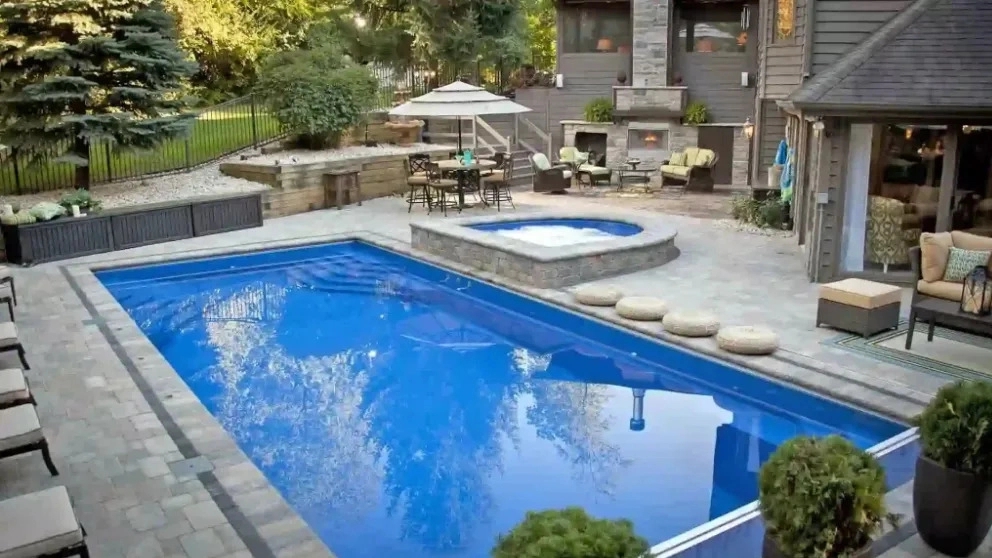
Fiberglass pools are usually produced in one piece by manufacturing companies and are worked in-ground. These types of pools are more flexible than concrete pools and are considered a suitable option for earthquake-prone areas. Despite the higher cost than concrete pools, fiberglass pools can be a good substitute for concrete pools due to their higher durability. On the other hand, these pools have a smooth surface and are easier to maintain than concrete pools.
Viniel (vinyl Liner);
These inground pools are made with panel walls that are connected together, placed on a concrete base, and finally a vinyl liner covers the entire pool. These pools are less expensive than other types of pools. Vinyl pools can be built in different shapes and sizes and are easily included in small plots.