
b>Gear jumping while driving without any particular reasonObserving abnormal vibration in the gear lever
Gearbox is one of the main parts of the car that can transfer the torque of the engine to the wheels. In this way, the desired speed of the driver is set and the car will move at this speed. Of course, many issues such as improper maintenance of the car lead to damage to this vital car system, which will disrupt its performance.
What is a manual gearbox?
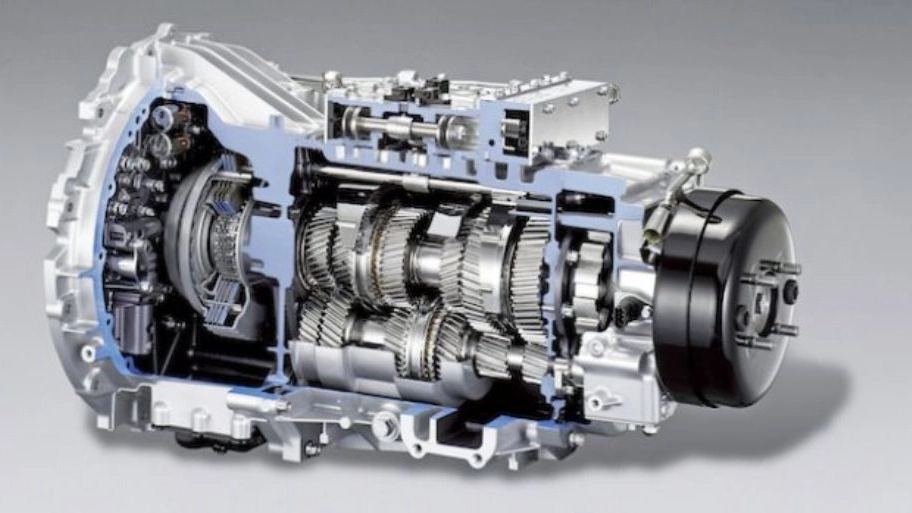
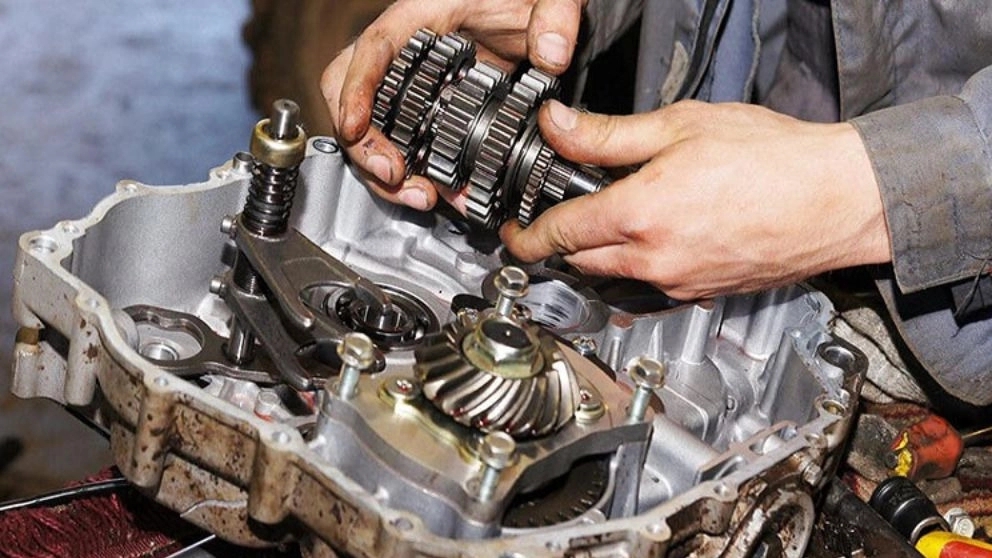
With fuel consumption, the car engine has the ability to produce a specific torque force along with the specified engine speed. The gearbox is responsible for receiving this power from the engine and transferring it to the wheels by adjusting the desired speed of the driver. In fact, the gearbox system allows the car to move at a certain speed without increasing the engine speed. This system has two manual and automatic models. In manual transmissions, there are a series of gears with different dimensions and weights, each of which can create a specific speed for the car. For example, heavy gears with a larger circumference are used to move at low speeds. But to move at high speeds, we will need gears with light weight and small dimensions. Of course, the gearbox also has other tasks, which are as follows:
- Preventing unwanted speeds when moving downhill
- Adjusting the direction of the car's movement forward or backward
- The ability to work the car in place without moving the wheels
Symptoms of manual gearbox failure
If the manual gearbox breaks down, there will be signs that can be used to identify the fault in the gearbox system. These signs are:
What is an automatic gearbox?
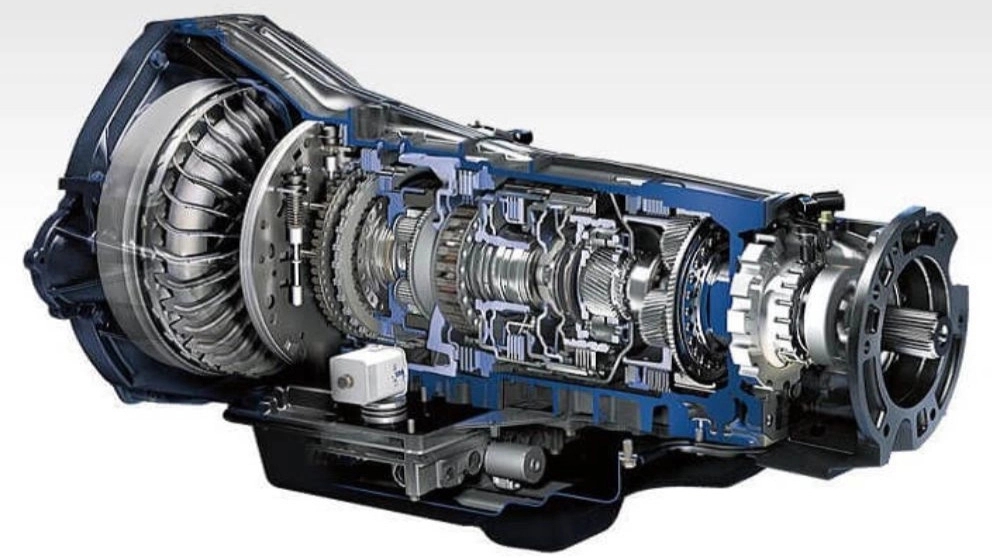
Automatic transmissions, as their name suggests, change gears automatically. These systems no longer need the clutch pedal and will lead to easier driving. In these systems, the car does not need to be removed during on-site operation. For this reason, fuel consumption is slightly higher than manual transmissions at this time. Of course, when moving at high speeds, the amount of fuel consumption will be greatly reduced and economical.
Automatic transmission consists of several components such as automatic transmission clutch, automatic gears, car central computer ( ECU) and torque converter. These systems have different models such as AMT gearbox, two clutch DCT, planetary AT and CVT. Of course, the appearance and mechanism of operation in all these models are almost similar to each other. So that all of them receive mechanical power from the engine and transfer it to the gearbox with the help of a torque converter. Then the power starts to rotate the gearbox shaft. In this way, the car moves at a certain speed.
Symptoms of automatic gearbox failure
There are many signs that can inform you about the failure of the automatic transmission. These signs are:
Types of manual gearbox
In general, there are currently three models of manual transmissions:
Gearbox with gear changing bush: In this model of transmissions, the gears Azad inside the shaft is related to self-locking and a part called Bush is used to change gears.
Sliding gear gearbox: In this gearbox model, several different shafts in parallel and They are installed side by side. Then the sliding gears are placed next to each other on the shaft and engage with each other. Then the gear change is done.
Brass gear gearbox: In this gearbox model, the brass gears are continuously connected. For this reason, before connecting them to each other, you can choose the gear you want to move.
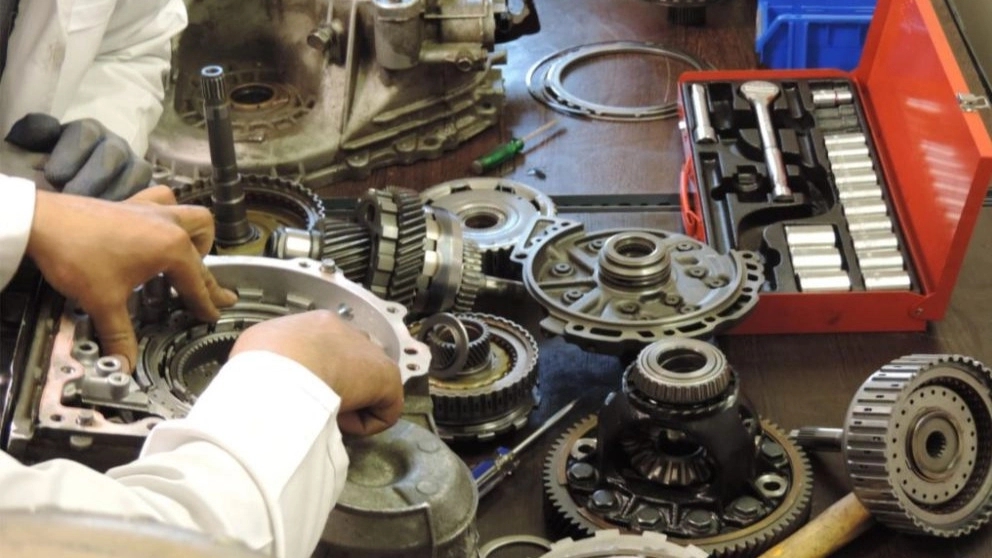
Types of automatic gearbox
Automatic transmissions are divided into 4 models, including AMT, AT, DCT and CVT, based on the type of their functional structure. In the following, we will introduce each of these models in detail:
AMT automatic transmission: In this model, the automatic transmission system (AMT) is like the structure of a manual gearbox. But it takes help from the automatic method for switching and clutch operation. In AMT transmissions, there is no real clutch pedal or gear lever. In addition, actuators are installed on the gearbox to open and close the clutch and change gears. AMT gearboxes can be used in two ways, manual or automatic, in the manual method, the buttons installed on the steering wheel are used instead of the gear lever. AMT automatic gearbox has advantages such as consumption It benefits from low fuel, short gear changing time, low production costs, and the absence of a real gear lever and clutch pedal. It is known that a number of sensors are installed on the engine and gearbox, which can be used to control the pressure transmission module and the gear change time. In this model, the transmission speed between different gears is fast and the gearbox automatically adjusts the gear based on the car's speed. Among the advantages of this system, we can point out the quick response of the transmission, the easier gear switch, the right torque and the proven technology. Or you've heard of the two-axle DCT, first introduced by Audi. These gearboxes have two axles with different gears. Normal gears are placed in one, and strange and reverse gears are placed in the other. When driving these cars, both axles are ready to work continuously. Therefore, the gear changing speed is very high. Among the other advantages of this system, it is possible to mention the improvement of gear changing comfort and low fuel consumption.
CVT automatic gearbox: Another model of automatic gearboxes is the CVT gearbox. In this system, unlike manual models, when switching between different gears, the traction force is not interrupted. The main core of this gearbox has two sets of conical discs that are located on a belt. To change gear in this system, changing the distance between two discs and its belt radius is used. In the CVT gearbox, the gear is easily switched and the acceleration is very good.
Post Author
2372
common:article
Similar Posts
Contents of this post
What is a manual gearbox?
Symptoms of manual gearbox failure
What is an automatic gearbox?
Symptoms of automatic gearbox failure
Types of manual gearbox
Types of automatic gearbox