
What is the appropriate heating facility for each property
Every house nowadays has a heating, cooling and air conditioning system. With the advancement of science and technology, various forms of heating systems such as heaters, fireplaces, radiators, packages, etc. have emerged. The purpose of these systems is to provide air with the right temperature in the home environment, for our comfort and well-being. The main part of energy consumption in a building is the heating and cooling facilities.
heating system; It is a facility that uses heat energy to control and maintain the temperature at our desired and desired level in our home, office and other buildings. These facilities are part of the heating, cooling and air conditioning or HVAC (Heating, Ventilation and Air Conditioning) facilities. The heating system can be central or distributed. Heaters, fireplaces, radiators, packages, fan coils, water heaters, engine rooms, etc. are some of the building's heating facilities.
Heating facilities are divided into two categories in terms of equipment.
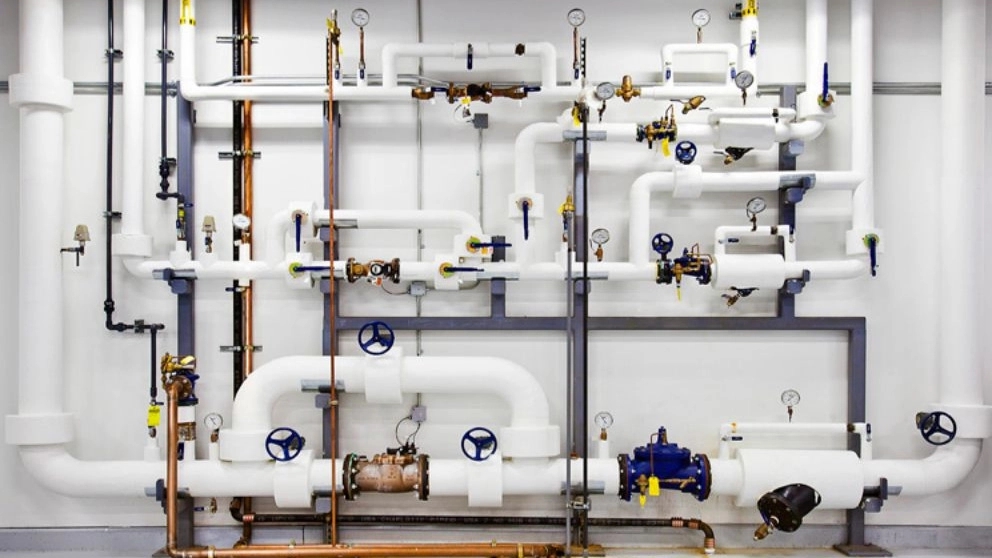
Central heating system: These installations and heat generating equipment are placed outside the air-conditioned space or apartment unit. For example, they are installed in the engine room or on the roof. Such as steam boilers, types of chillers, hot water boilers, radiators, etc.
Single unit or package heating system: These facilities are located to heat each unit separately. Such as: fireplace, heater, etc.
Nowadays, according to the problem of global warming and the warming of the earth and its environmental damage, the problem of choosing heating facilities suitable for the needs of every building, which also provides the right temperature It is considered very important to be slow and have optimal energy consumption. In the following, we will introduce the types of heating facilities and their features so that you can make a better choice for your building using this information.
Heating facilities: Engine house
The engine house is one of the central heating systems. In this heating facility, water is heated inside the engine room and reaches the units through the radiator heating system. By circulating hot water in the water pipes of each unit, the space of the house is heated. This system consists of components including: boiler, burner, expansion source, circulator pump and heat exchangers. The advantages of the engine house include the following: b>
Low space occupation
High safety
Appropriate and uniform heating throughout the building
Good productivity
High useful life
Heating facilities: package
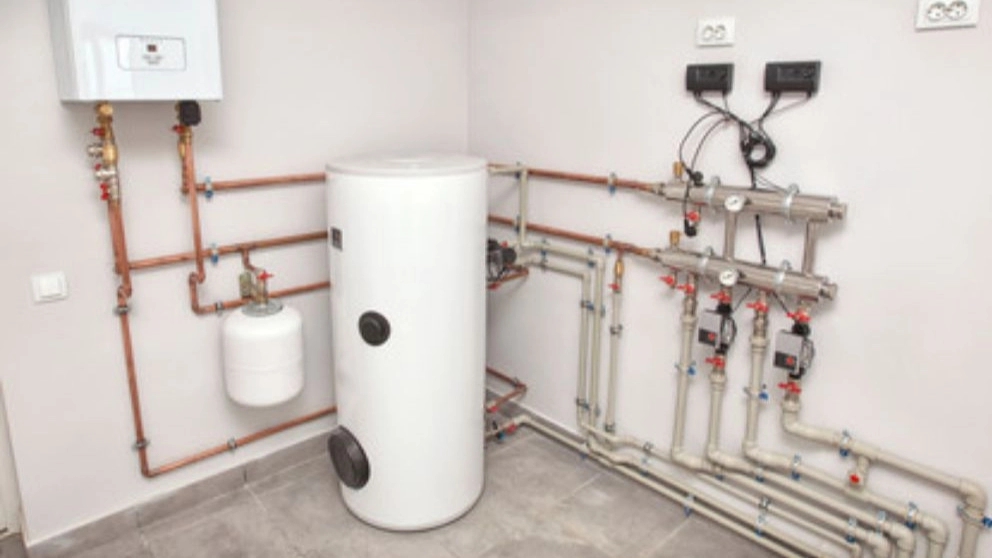
The package has the role of a small engine room inside the house or office building. Packages can be ground or wall mounted. Based on the needs and conditions, you can have both types of packages together in one unit. The point is that the wall packages are smaller than the ground packages and they can be easily installed in a space like the kitchen.
The packages provide the hot water used in the building and the heat needed to heat the radiators. Buildings that have a package do not need central engine room facilities; For this reason, they don't have the expenses of piping and providing boilers and burners, etc., to build a central engine room. These days, package manufacturers are trying to increase the thermal efficiency of their products and reduce fuel consumption.
Wall and ground packages are divided into two groups, with fans and without fans. The presence of a fan helps to easily exhaust smoke and toxic gases produced as a result of combustion through the chimney. In addition, some wall and ground packages have two heat exchangers and some have a single exchanger. In the packages that have two heat exchangers, one of the exchangers is for heating the water used and the other one is for heating the radiators. It heats the heat exchanger. The package consists of components including: control board, hot water sensor or thermistor, limit thermostat and three-way valve. Radiators, whether in the central heating system or in the package system, are of various types such as: aluminum radiator, radiator They have panels, steel radiators and electric radiators. Of course, the electric radiator does not need an engine room or a package for heating.
The advantages of the package are as follows:
High safety due to the use of warning sensors
Setting the temperature in each apartment unit to Independent face
high efficiency
no water wastage
maintenance cost is lower than the engine room
but the only disadvantage of the package is that if the package malfunctions, the home environment and water consumption will all be cold.
Heating facilities: underfloor heating
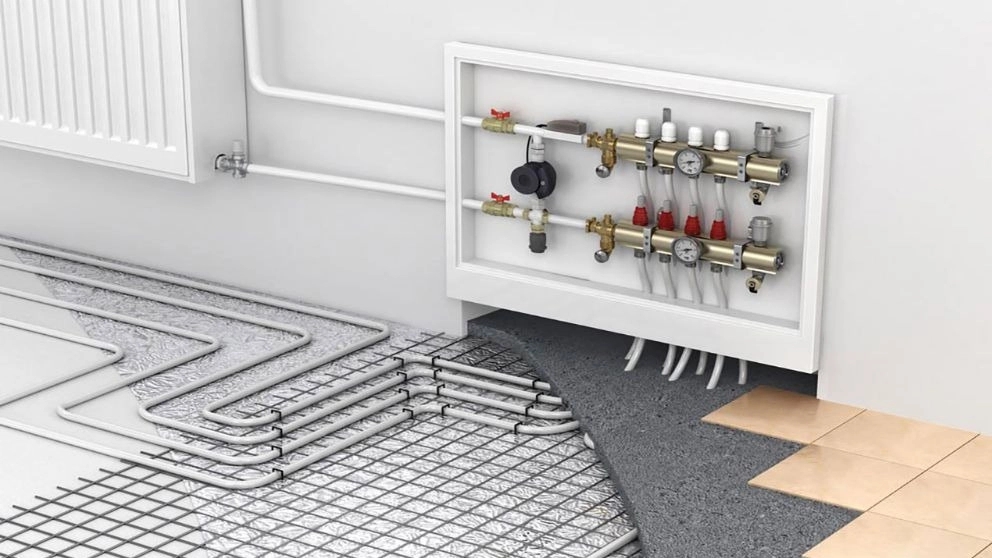
The underfloor heating system is a new heating system for heating the environment inside the building. On the floor of each floor, multi-layered pipes are placed under the flooring, and the building is heated by passing hot water through these pipes. In this system, the radiator and heater have been removed. The advantages of the underfloor heating system are as follows: Uniform distribution of heat Ability to adjust the temperature for each part of the house separately 🔷resolving the problem of excessive cold in the first floors
🔷not occupying space
🔷saving in energy consumption
🔷preventing air drying
🔷high safety