
What is the pressure capacity?
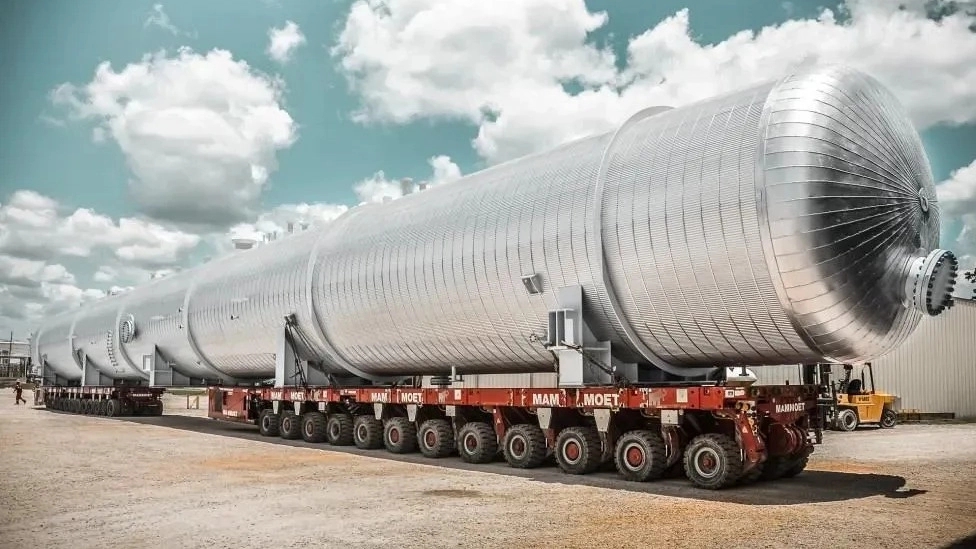
Pressure tanks are one of the types of industrial tanks and a leak-proof container that stores liquid or gas. Pressure vessels are produced in different sizes and shapes for different purposes and generally, their geometric appearance is spherical, conical and cylindrical.
One of its common models is a combination of a long cylinder with two caps. Pressure vessels operate at internal pressures higher or lower than atmospheric pressure. In addition, the operating temperature of these devices is also different.
How does a pressure work off?
Pressure tanks are designed to operate by reaching the pressure level required to perform a functional function such as holding air in a scuba tank. These tanks can apply pressure directly through valves and release valves, or apply pressure indirectly through heat transfer.
Potential pressure levels range from 15 psi to about 150.000 psi, while temperatures are often above 400 °C (750 °F). A pressure tank can hold from 75 liters (20 gallons) to several thousand liters.
☑️ Application of pressure tanks in the industry
Pressure vessels are used in many different industries, but three industries cover most of the market. These industries include oil and gas industry, chemical industry and energy industry.
Oil and gas industry
In the oil and gas industry, a pressure vessel is often used as a receiver where physical and chemical processes at high temperature and pressure It is done.
Chemical industries
In a pressure vessel in the chemical industry, a process (chemical reaction) takes place, which leads to a fundamental change in the contents of the vessel.< /span>
Energy Industry (electricity generation)
There are several reasons why the energy sector in general needs pressure vessels. One of the main reasons for their need in the energy sector is the presence of harmful gases. Also, nuclear power plants use special pressure vessels called reactor pressure vessels (RPVs).
Types of pressure tanks
☑️ Process capacitor
Process tanks (tankers) are designed for the maintenance and storage of liquids and for integrated operation in petrochemical facilities, refineries, gas plants, oil production facilities. and gas and other facilities are used.
☑️Toclavs
Autoclaves are large containers that are pressurized and reach high temperatures. They are usually cylindrical because a spherical shape can better withstand high pressures safely. Autoclaves are designed to store items that are placed inside and then the lid is sealed.
High pressure capacitors
High pressure tanks are the most durable tanks in the market that continue to work under the heaviest loads and against corrosion, temperature and pressure. They have the best resistance. These tanks are usually made of stainless steel. Common applications for high pressure vessels include high-speed mixers, chemical reactors, and supercritical extraction devices.
Expansion capacitor
Expansion tanks to regulate changes in the amount of hot water in heating devices and changes in the speed of water flow and maintain the static pressure produced by the pump on the surface They are designed to be used in sanitary hot water devices.
☑️The heat
A heat exchanger is a device that transfers heat from one device to another. Heat exchangers are mostly used in industrial facilities such as iron and steel, oil, petrochemical, gas, power plants, food, pharmaceutical, leather, textiles, air conditioning, ships and marine industries.
☑️ Water pressure capabilities
In a water well system, a pressurized reservoir produces water pressure by using compressed air to pressurize the water. Because of this pressure, when the faucet is opened, the water flows out of the tank through the pipes inside the house.
☑️ Vacuum capacitor
A vacuum tank is a part of a device that filters air or fluids through suction, outgassing, pumping, or a combination of techniques. These tanks use pressure to prevent pollution, purification, dehydration and even electricity.
☑️ AME Pressure Capacitor
These vessels are any ASME stamped pressure vessels, also known as ASME boilers. The ASME stamp indicates that the tank has been inspected and meets the stringent standards of the ASME VIII Code. In addition, ASME stamps provide end users with information about the ASME boiler and its manufacturer.
☑️ Pressure capacitors with thin wall
Thin-walled pressure tank refers to tanks in which the thickness of the tank shell is much smaller than the overall size of the tank, and the tank is under internal pressure. which is much higher than the outside air pressure.
Steam capacitor
These tanks are closed pressure tanks that are used to heat liquids that mainly include water. These heated liquids are used for cooking, electricity generation, central heating, water heating and sanitation.