
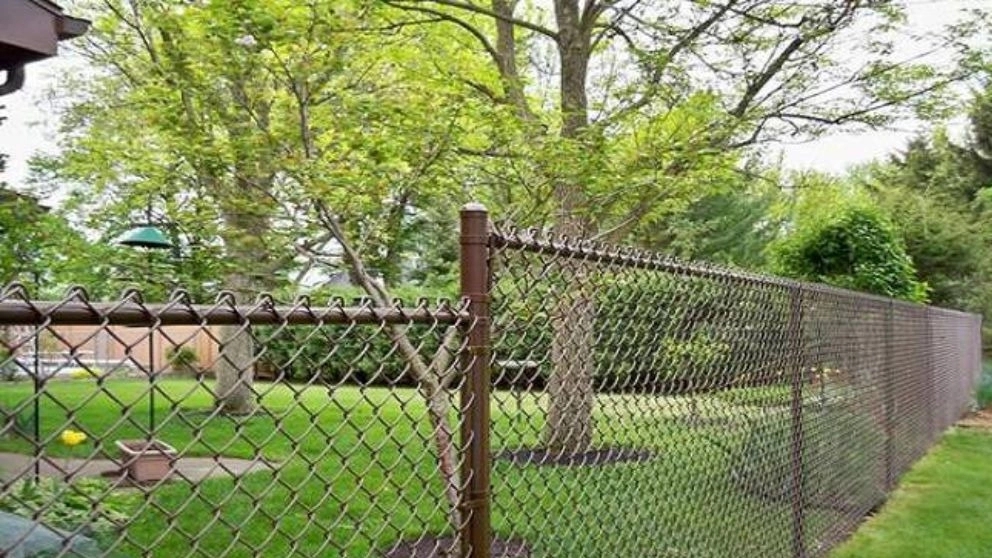

Mesh fence or the fence mesh, which is also called garden fence, is used to demarcate and personalize different lands to prevent passers-by or animals from entering agricultural and garden lands or to mark the border between neighbors. You can also use fence nets to establish security in your desired areas. Various materials are used to produce fence netting, such as hot and cold galvanized wire or steel, each of which has its own use and application.
The process of producing fence fence or fence
Fence production methods are generally divided into manual and fully automatic or industrial methods. In the industrial method, in most cases, all production steps are done fully automatically. In some cases, some steps may be done automatically and some manually, which is called semi-automatic fencing.
Manual method of manufacturing of fence or fence mesh
Contrary to what you might think, machines and automatic devices are used manually in Tolbed Tori, with the difference that these steps are performed by one to two people instead of a machine, and only the process of weaving the lace fence is done by hand! For example, there is a device for winding netting on the spring form of fence netting, which works using an electric motor! In this machine, there are molds that place and produce different sizes of fence mesh springs depending on their intended use. In such a way that each mold is specific to a special and unique size of the spring and by changing it, the size of the spring also changes. It twists to take a zigzag shape. Each side of this zigzag forms a side of a rhombus. These zigzags are woven together and create a mesh surface of the fence. Basically, the meaning of weaving zigzag wires is to twist them together in such a way that row by row is added to the length of the fence net. For the strength and rigidity of the structure, the two ends of the side wires are screwed with a rechargeable screwdriver so that the fabric does not fall out of place. Finally, it is time to wrap the produced fence net in a roll and pack it. After packing the produced fence net, they send it to the market.
Automatic method of manufacturing of fence or fence mesh
Lace production is done automatically by fully automatic machines. In this way, first, galvanized wire or black wire is purchased for the weave of the fence. The thickness of the purchased wire depends on the type of machine, the type of customer order, and the degree of strength that we consider for the fence netting, and it can be different. After purchase, the wire is placed in its special place in the machine. Due to the type of coil packaging, the wire has circular curves, so it is straightened by the machine.
Then the wire is put into work and coated if needed. Coating at this stage makes it unnecessary to paint the fence net. During the process, the coating will be dried by air flow and the coated wire will enter the fencing section. In this stage of the fence net production method, the first row of the fence is cut and twisted with a wire of exactly the same size. This operation is done automatically and can be adjusted. The place where two wires are twisted together determines the dimensions of the fence spring or fence net. (The fountain means the same rhombus-shaped frames)
This process is routinely repeated until the end of the wire. Then it is cut and the beginning and end of the net is created, it is automatically wound and tightened to prevent the possible opening of the two wires.
At the end of the first stage, we have a row of lace that has been directed upwards and made room for a new wire. A new strand of wire enters the machine and starts twisting in the row of the last wire.
At the end of the work, this wire is also cut and guided upwards. The wires inserted into the fence weaving machine become a fence and increase the length of the fence.
As the length of the fence increases, this piece goes to the packaging stage and is packed in a roll. The work steps may be short or long depending on the length of the fan we want to pack. For this reason, in each workshop, a specific environment for each package is considered, which will vary from 20 to 30 meters. But based on the customer's order, this size is variable.