☑️ What is CCTV?
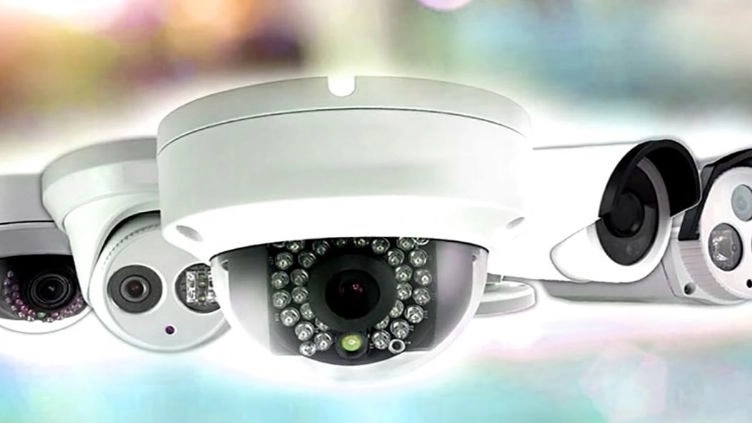
Closed circuit camera is one of the equipment that can be seen in many places. What is a CCTV camera? It is one of the components of the monitoring system that sends images to the device or server. A powerful CCTV system that has quickly gained popularity among different groups. Although this popularity was gained slowly at first. But gradually, with the increase of capabilities, in addition to the limited monitoring application, it could also have diagnostic and monitoring applications with a wider range and protection.
☑️ ☑️ What is the abbreviation and what does a CCTV mean?
Closed Circuit Television, abbreviated as CCTV, is translated as closed circuit television. In general, it can be called a video surveillance system. This system is used to transmit the image signal to a specific point. As the name suggests, in closed circuit and unlike TV, its signal is not freely distributed. The signal is transmitted in a closed network between the camera, the recording device and the display (monitor or TV).
☑️ What do we buy a CCTV?
This system was often used for surveillance in areas that require security. Now, these goals have been changed in order to improve and increase work efficiency and reduce costs, etc. For example, the camera was installed in the store just to monitor customers and prevent theft and misbehavior. While today, the capabilities of this system in stores can have a great impact on the amount of sales and profits.
Many offices, streets and even houses are equipped with such technology. According to different purposes, cameras with various capabilities are used by people. The ability to recognize faces in CCTV cameras allows the collection or organization to have a library of the faces of its employees. By using it, entry and exit is allowed by identifying each person.
A CCTV camera with the ability to count people makes management and monitoring easier and more targeted in crowded and high-traffic places. By collecting information from these types of cameras, better decisions are made in the distribution of manpower in times of need. Other technologies such as night vision, intrusion detection, motion detection, WDR and hundreds of other innovations have made monitoring and security purposes much easier than ever.
☑️ What is the CCTV component?
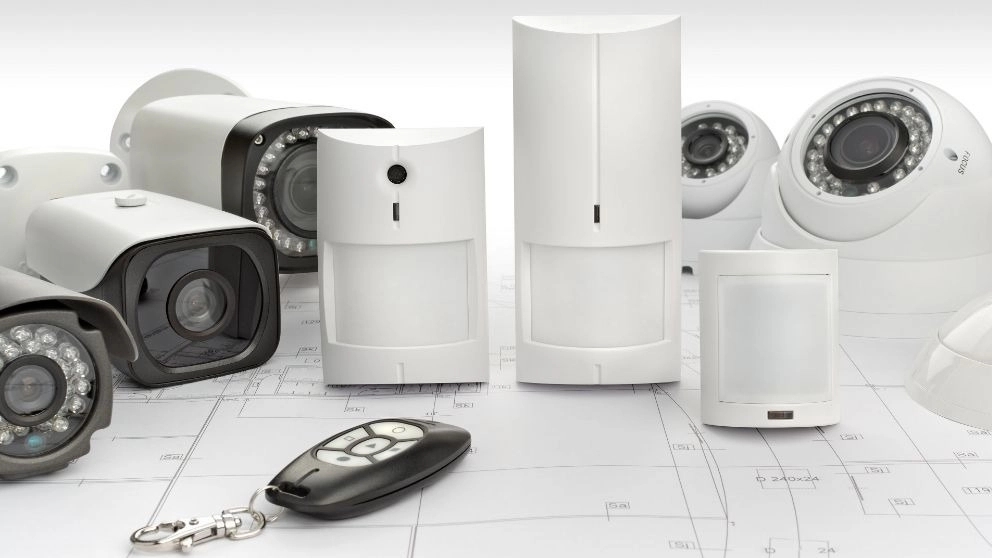
The main components of CCTV are:
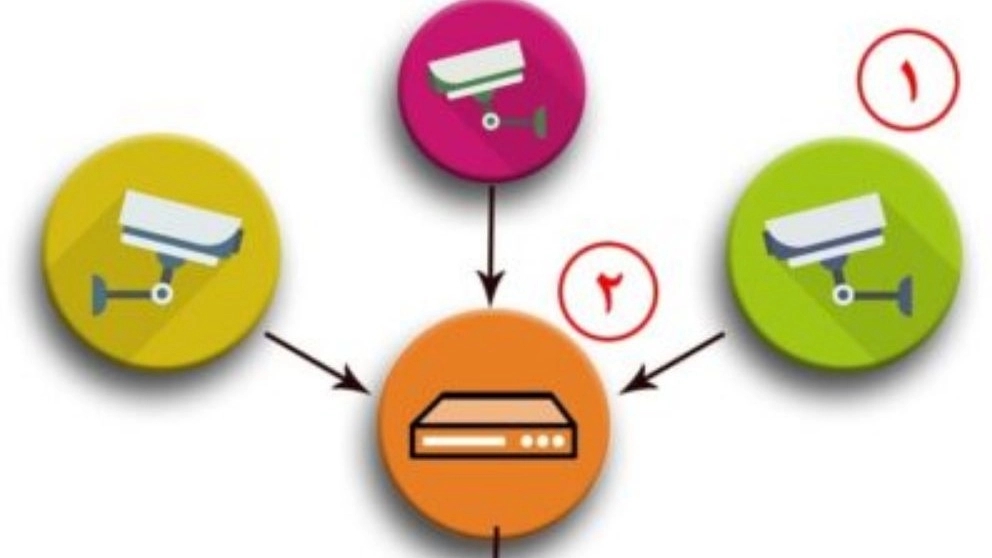
CCTV: It is responsible for receiving images from the desired location and sending them to the server.
Server: In the closed circuit, the server device (DVR or NVR) receives and records the images sent from the cameras. It also provides the possibility of managing them.
Memory or hard disk: enables recording of images on the server.
Cable: Connecting the camera to the server.
Power supply: To provide power to the cameras, a power supply is needed to change the city's voltage to 12 volts.
Power cable: connecting cameras and power supply.
Connections: Connecting cables to closed circuit equipment through special sockets.
☑️ CCTV types
CCTV cameras are produced and designed in different types for different uses. You can find a suitable camera in the market for any user and surveillance purpose, and even your budget. Therefore, I suggest that before buying, you should do research in the market from a reliable source and then make a purchase. CCTV cameras are divided into different categories based on shape, application, technology, lens and image resolution. The shape of CCTV cameras is one of the camera categories that most customers use.
☑️ CCTV with different body and appearance
Dom camera: This camera is mostly used in indoor and roofed environment.
Bolt camera: cameras that are suitable for outdoor environments.
Speeddam camera: rotating cameras with the ability to rotate to the left and right with special use
Box camera: cameras suitable for industrial environments with a separate lens
Fisheye Camera: Camera for places with high ceilings and for 360 degree environment monitoring
Cube Camera: Internal camera with audio recording and two-way audio communication
Needle Camera: Very tiny cameras with the ability to hide behind objects
Bulb camera: wireless cameras with the appearance of a bulb, suitable for hidden installation
☑️ CCTV with a variety of lenses
The lens is one of the main components in a CCTV camera and plays an important role in the use of the camera. The lens is fixed and variable in the camera. If you choose a CCTV camera with a fixed lens, the angle of view that the camera gives you is fixed and unchanged. This angle of view has a different value in different cameras based on the focal length of the lens. For example, a camera with a 2.8 mm lens provides an angle of approximately 100 degrees, or a camera with a 4 mm lens provides an angle between 50 and 60 degrees. These angles are fixed and unchanged, and you should install the camera in the right direction for better camera coverage. The value of the angle of view of the camera horizontally and vertically is included in the data sheet of the camera.
If you need to change the viewing angle and zoom in the image, use a camera with a variable lens. Changing the viewing angle in a camera with a variable lens can be done in two ways. The first type must be done manually and mechanically and it happens by the button on the camera. In the second type, in addition to changing manually, you can also make settings remotely. These lenses are called motorized lenses. Their prices are slightly higher than cameras with the other two types of lenses.
☑️ CCTV with different resolution
As mentioned before, CCTV cameras are produced according to different uses and different prices. Clarity and resolution also play a decisive role in CCTV cameras. In the past, good quality resolution was expected only from network surveillance cameras. While we are currently witnessing high and extraordinary qualities in analog HD cameras. The reasonable price of this type of camera has caused many customers to switch to this type of camera.
☑️ Important CCTV capabilities
In addition to the features mentioned above, when buying CCTV cameras, you should also pay attention to its important features. These features will help you better choose the right CCTV camera for your use.
☑️ Camera Night Visibility
If your CCTV camera is going to provide images at night or in a dark environment, it must be equipped with night vision. In other words, if the environment is dark and without light during the camera recording, the camera should be able to provide the image. This feature exists in most of the CCTV cameras available in the market, but their variety has caused the quality of the provided image to be different. Therefore, according to what you expect from the camera, consider this feature for the camera.
If you need casual images that just show what's going on and the details aren't that important, the camera's infrared IR capability is a common night vision feature that offers different ranges. EXIR is a more developed infrared feature that has greatly improved the quality of the provided images. More and better details are seen. Although, like the IR capability, the images are black and white.
The images at night are also captured in color by CCTV cameras. Color night vision capabilities have emerged in the camera industry with a variety of technologies and qualities. Each of them somehow tries to have more market share by improving their technology. ColorVU, Startlight, Warmlight, Darkfighter can be mentioned among the types of color night vision.
☑️ Improvement of light in the image
This feature is also very important. Especially for CCTV cameras that are installed on several levels in an environment with different light intensity. CCTV cameras that are exposed to direct light such as car lights, CCTV cameras where the presence of windows and sunlight on the camera cause the image to turn black, and so on. There are examples that if you install a normal camera, the images will be presented to you either in black or white without details.
To solve this problem, it is enough to choose a CCTV camera with anti-light capability. WDR is one of the most important of this group of capabilities. It is embedded in CCTV cameras in both digital and real ways. If the camera is equipped with WDR, more light radiation in a part of the environment will not make the image black or low quality. As a result, image clarity is maintained. BLC and HLC capabilities are also other anti-light capabilities of CCTV cameras.
☑️ Camera Resistance to weather conditions
The CCTV camera should be suitable for its installation location and environmental conditions. In such a way that if it is installed in a harsh environment, moisture will not damage the camera or fog and steam will not obstruct the view of the camera lens. The temperature of the environment does not interfere with the performance of the camera. Protection standards in CCTV refer to the resistance of the camera in different weather and environmental conditions. Like the IP standard, which specifies the camera's resistance to moisture and dust with different numbers.
The IK standard is another protection standard that shows the camera's resistance to impact. These standards are especially important for cameras that are installed outdoors. Because they are exposed to more damage from the weather and external factors. Usually, IP66 and IP67 cameras are suitable for outdoor use.