
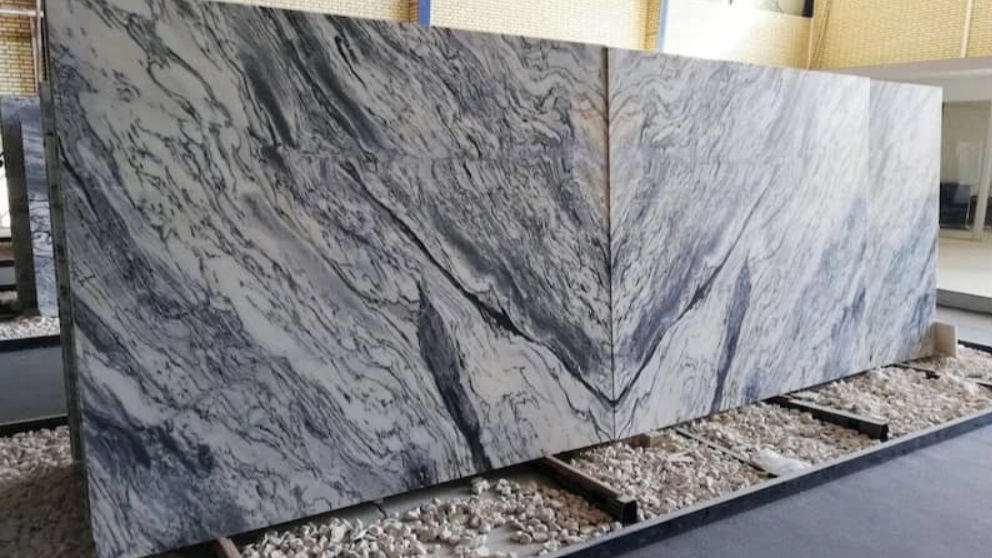
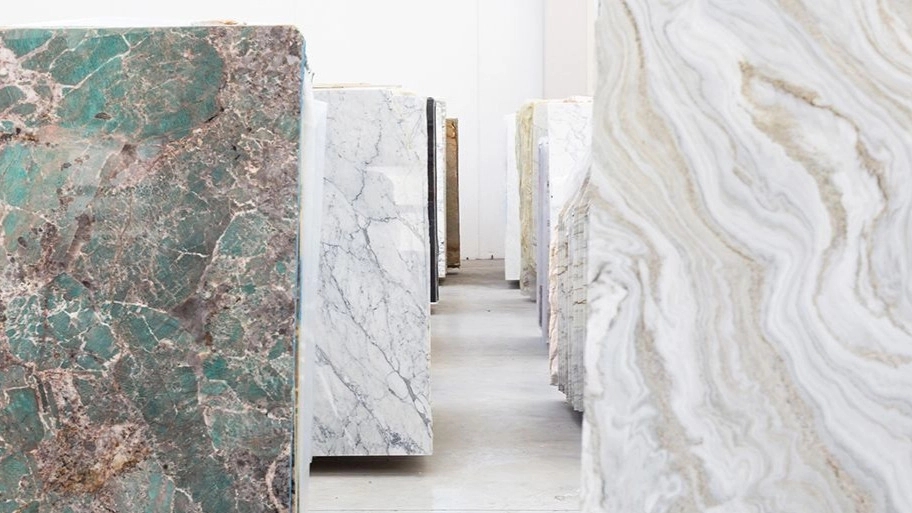
Crystal stone or colloquially called porcelain stone is a mass of limestone or dolomite rocks that have been recrystallized due to internal factors, such as temperature and pressure, and are therefore considered metamorphic rocks.
In fact, Chinese stone is a family of marble stones, which are different in different places in terms of the degree of transformation and some chemical compounds. Porcelain often has large crystals. These coarse crystals are the difference between porcelain and sedimentary carbonate rocks.
Chinese stone feature
Porcelain stone often has large white or light gray to cream crystals.
The main mineral that forms them is calcite, but some of them also contain quartz, which increases the hardness of the stone.
Its bending strength is between six and fifteen MPa and its tensile strength is four MPa on average. The porosity of this stone is very low and between 0.3% and 1.2%.
These stones were used in different spaces of construction projects in the past years, but their use has been greatly reduced for some time. The reason for that is the great variety of travertine stone.
Using porcelain stone for facade and exterior space is completely technical and correct, and this stone is between granite and travertine in terms of water absorption and grout adhesion. It means that it is as absorbent as travertine and not as non-sticky as granite. In the meantime, Sirjan stone is still widely used and has its fans due to its high resistance and beautiful design. This stone has a relatively high price.
Crystal stone and porcelain stone are recently processed and cut into slabs, which makes it possible to use them in stylish interior spaces.
As mentioned, porcelain stone has a low color variety and is usually white or white with a halo or yellow streaks. And it does not have a special resin because it has very little porosity and empty veins
To ensure the resistance of the stone over the long years and its long life, they have used a thicker stone, i.e. eight centimeters.
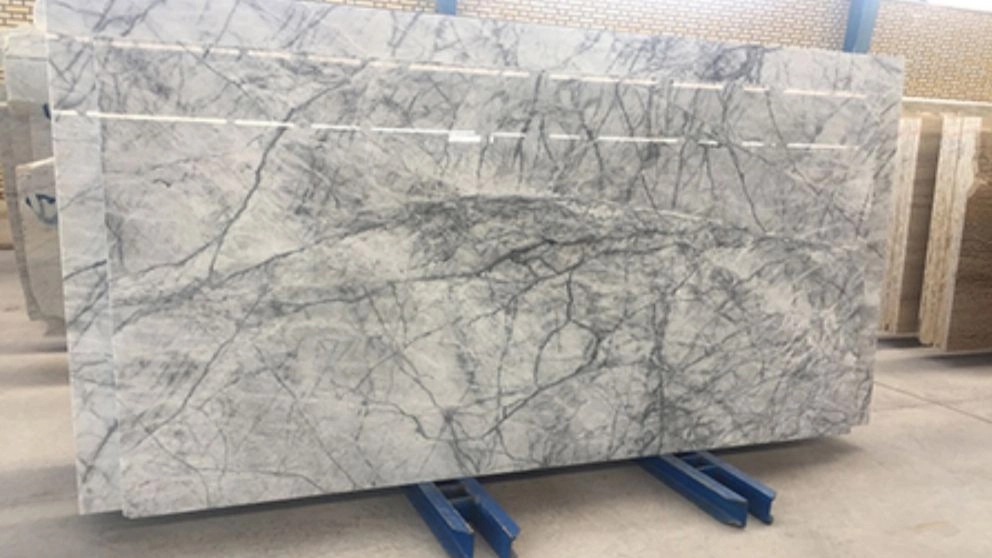
The use of porcelain
In Iran, the use of this stone has been common for a long time, especially in tropical regions due to its bright color that protects the facade from heat. The use and as a result the mining of this stone has decreased.
In recent years, the amount of porcelain stone used in building construction, especially in the facade, was very wide, but due to the inefficiency of this stone in the facade and lack of suitable color variety, by It was replaced by travertine and other similar products, and because of this, its production has fallen drastically over the past years.