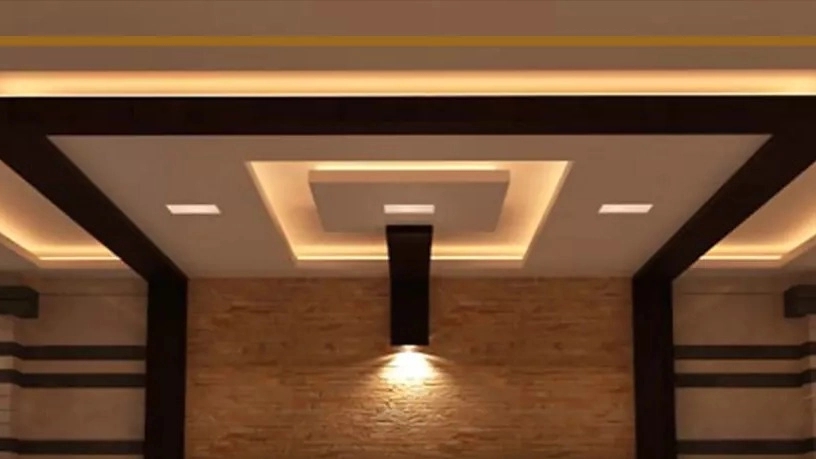


⚫️ Applications of false ceiling in structures
The application of this is in two parts, beautiful and technical. False ceilings have a great effect on the environment in terms of beauty, and they can be used to cover installations and wiring and eliminate defects. False ceilings are connected to the main ceiling and the surrounding walls, and the main structure of the building bears its load. False ceilings are used to insulate the ceiling against sound and heat and even to implement lighting.
False ceilings reduce the height of the space, for this purpose and not shrinking the space, it is not necessarily implemented wall to wall.
Another attractive feature of false ceilings is the possibility of lighting and a pleasant decorative space can be displayed. Sometimes, false ceilings are used in an emphatic way, for example, they are implemented in a specific part such as the kitchen, which is a very interesting and attractive idea. False ceilings are not only for covering rooms and dry spaces, but also for space. Wet and semi-wet areas can also be used, such as toilets, bathrooms, swimming pools, etc.
The roofs that are used in humid and semi-humid areas are basically waterproof and have high resistance against water and moisture penetration. The material of these roofs in wet environments is made of PVC.
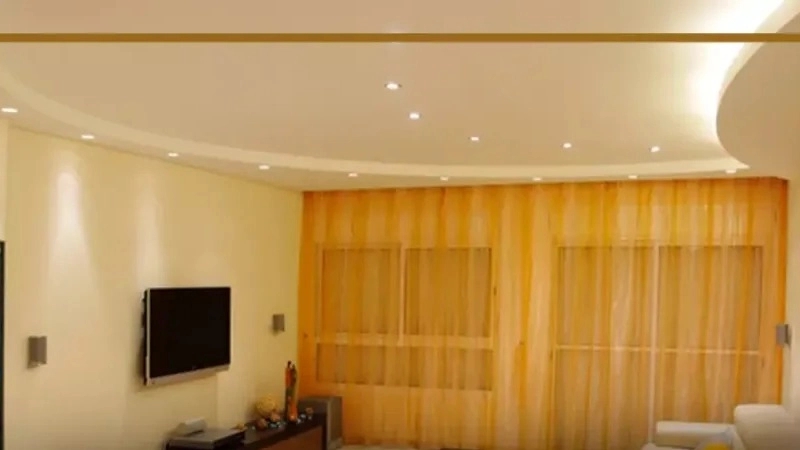
⚫️ Materials
False ceilings are made with very light materials. These materials are made of iron, plaster, wood, metal, talc, composite aluminum, coated metal plates and a combination of these materials.
⚫️ Benefits of using false ceiling
Longevity!
It has a very high variety of colors and designs
< font color="#4c5c84" size="3">All parts are replaceable.
High running speed
light and low load to the building
easy access to facilities
Efficient and reasonable cost for maintenance
washable
⚫️ Types of false ceilings in structures
PVC false ceiling Kenaf false ceiling Aluminum false ceiling Acoustic false ceiling Wooden false ceiling Combined false ceiling Glass false ceiling False ceiling image