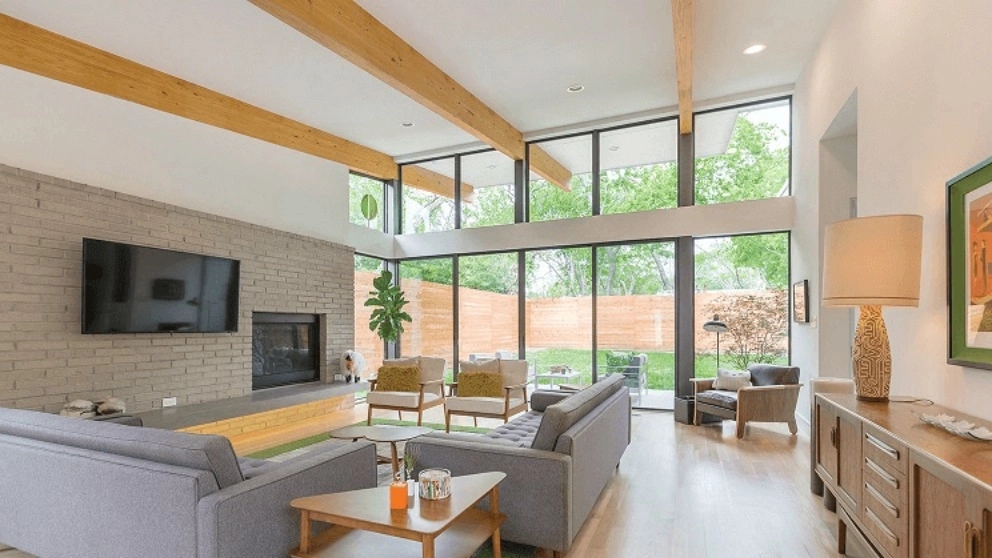
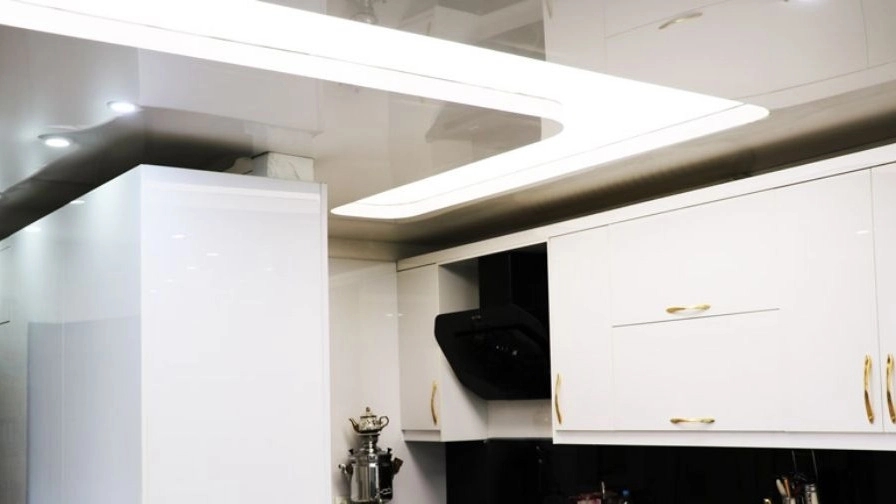


What is a false ceiling?
It is a roof that is used as a secondary and covering roof under the main and structural roof of the building and is connected and installed to the main roof and the surrounding walls by using welding connections or screws, rivets and nails.
False ceilings have their own implementation details according to the type and material. However, the general method of implementing all types of false ceilings is done in two stages, and in the first stage, the relevant metal profiles are connected to the main ceiling and walls with the help of welding or screws, rivets and nails, and then the main components of the false ceiling are placed on the These profiles are installed.
Due to the fact that the false ceiling is a non-structural component connected to the main structure, its connections must be done correctly so that it has a coordinated and integrated movement with the structure and does not get damaged against the incoming forces, especially the earthquake.
⚫️ The functions and benefits of false ceiling
Creating a cover for the main roof and hiding its defects and imperfections
Creating visual beauty and decorating the interior
A hidden place for the passage of mechanical and electrical installation pipes, as well as the channel of coolers
The ability to place all kinds of lighting equipment inside them, to create the desired lights
Reducing the building's energy consumption due to its heat insulation
Sound insulation and, as a result, no sound exchange between floors
sound absorbing or acoustic; Of course, mostly acoustic false ceiling and perforated aluminum false ceiling
Easy to replace, repair and wash, except for Rabbits and Kenaf false ceilings
ability to accept color; Of course, most false ceilings are Rabbits and Kenaf
⚫️ Types of false ceilings used
There are different types of false ceiling in Iran, some of the most commonly used ones are mentioned below:
Rabbits false ceiling
Kenaf false ceiling
Wooden false ceiling
PVC false ceiling
Aluminum false ceiling
Talqi false ceiling
Acoustic false ceiling
Illustrated false ceiling
MDF false ceiling
False glass ceiling
iGlass false ceiling
⚫️ Rabits false ceiling
Rabbits false ceiling is one of the oldest and most widely used ceilings in Iran. To implement it, first, rebars are welded to the desired places of the roof in the form of a network and in the form of desired geometric shapes. Then, the sheets of rabits are connected to these rebars with welding or wire, and finally, the rabits are covered with plaster mortar and shaped.
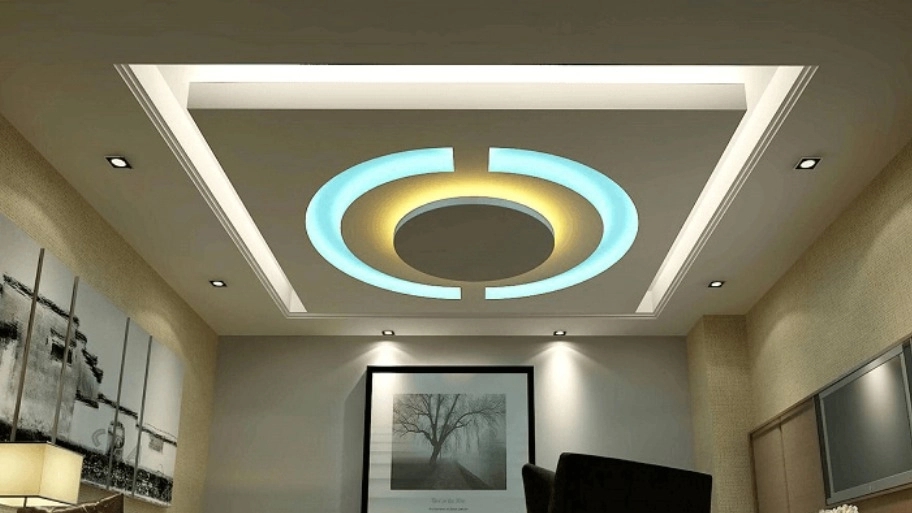
⚫️ Benefits of Robitz ceiling:
Possibility of desired and varied shaping
Materials available
Color acceptability
⚫️ False ceiling
Kenaf false ceiling has recently found more use than other ceilings due to its lightness, beauty and the presence of executive teams. Kenaf roof is available in the market in two fixed (integral) and movable (mesh) types, which we briefly mention:
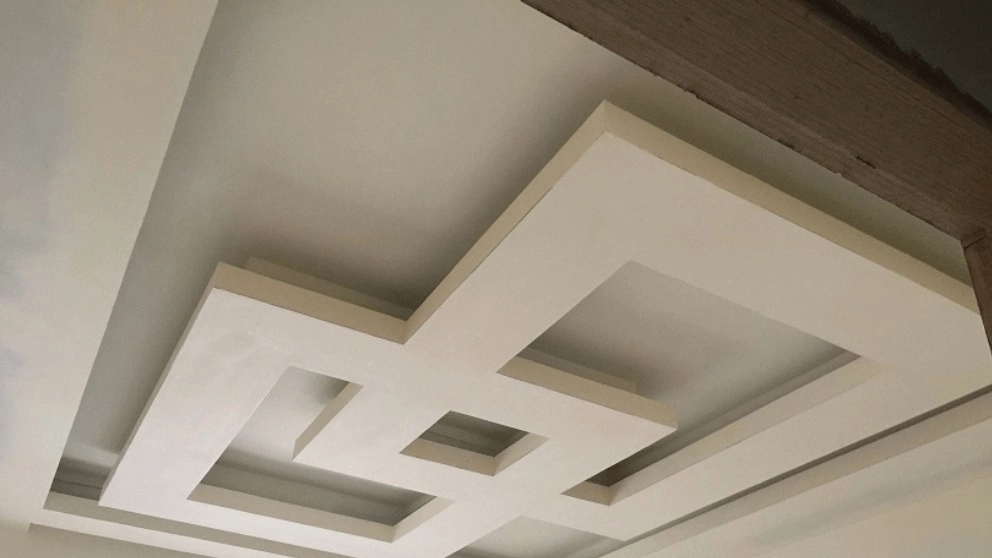
⚫️ Fixed Cannabi ceiling
First, for the foundation of the work, the frames, which are often made of light steel or galvanized, are connected to the main roof with the help of bolts and nuts, and then the prefabricated gypsum or cement panels are attached integrally with screws or rivets. These frames connect and fix.
The fixed Kenaf roof is available in two types: simple and decorative. The simple type is in the form of regular geometric shapes, square and rectangular, and the patterned type is in different shapes, including arc and crescent.
⚫️ Removable Cannabi Ceiling
Work infrastructure is similar to fixed type; with the difference that after the installation of the galvanized frames, the prefabricated gypsum panels are placed inside the mesh shield frames; so that if necessary, especially when you need to access the installation pipes and the cooler channel, you can access the back of the work and inside the false ceiling.
⚫️ The benefits of false ceiling
Style
< p>BeautyColor acceptability
speed of proper execution of work if there is a professional team
ability to access inside the roof, especially in the roof Animated Kenaf
The ability to move the roof relatively easily to change the design and decoration of the interior space