
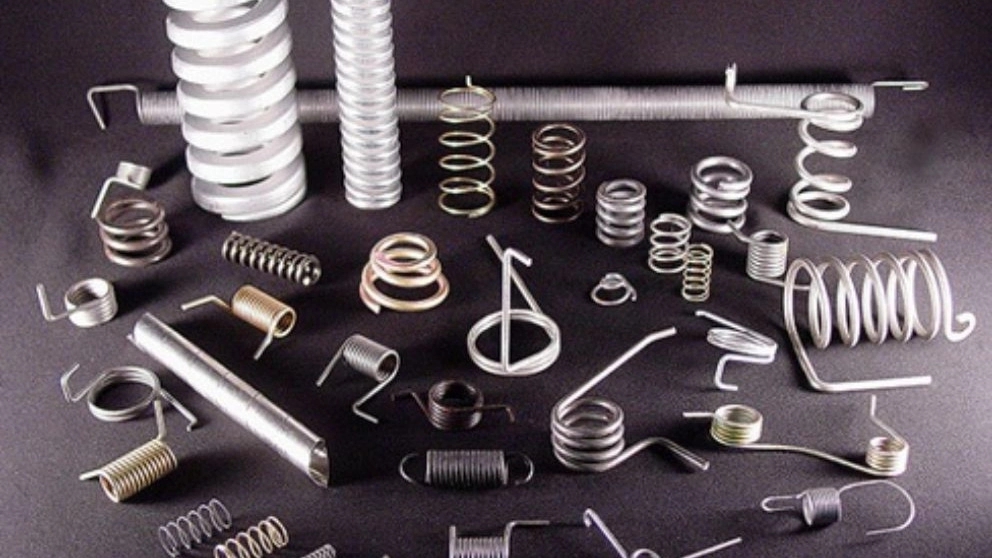
Mechanical springs are practically everywhere. From mattresses and consumer products to industrial machinery, spring industry products are evident everywhere. These springs store mechanical energy and provide tension and compression in various applications. While ordinary people know what a spring is and what it looks like, most of them are still not familiar with the types of springs and the production of different springs.
Changes in the spring industry
As mentioned earlier, the specific manufacturing process of some springs differs based on the type of spring being created. Springs may be made with coils or without coils, and the presence of coils and the use of springs determine the types of manufacturing processes. Coiled springs, also known as coil or spiral springs, It is what people usually think of as a spring. These go through a spring winding process, usually a coil or wire forming machine, resulting in a spiral shape.
Extension springs
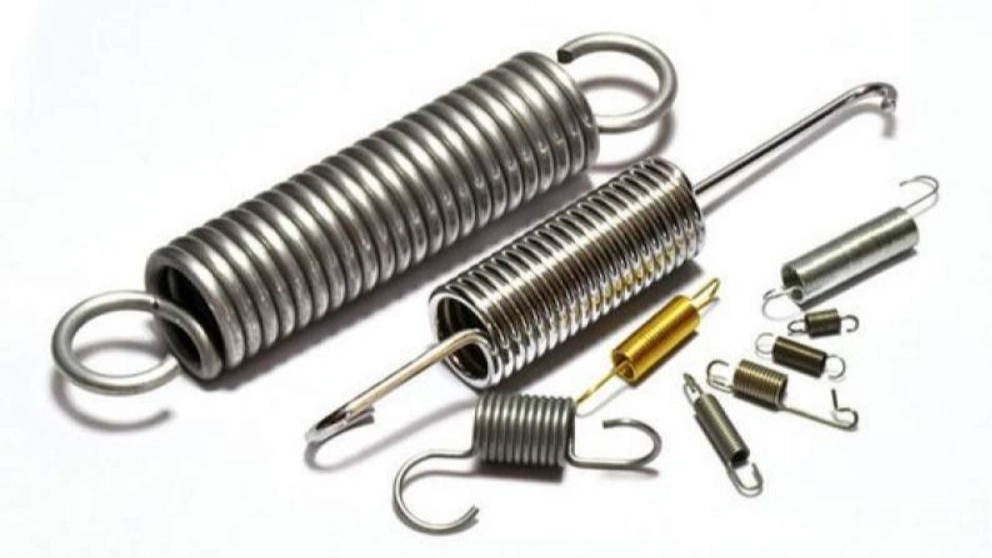
Extension spring is a type of spiral spring with coils that touch each other. When force is applied to stretch the spring, these coils are separated, but the spring produces a return force against the force of spring tension. Extension springs are primarily formed using a winding machine, but may also pass through a wire forming machine, especially if it has a loop end configuration.
Compressive springs
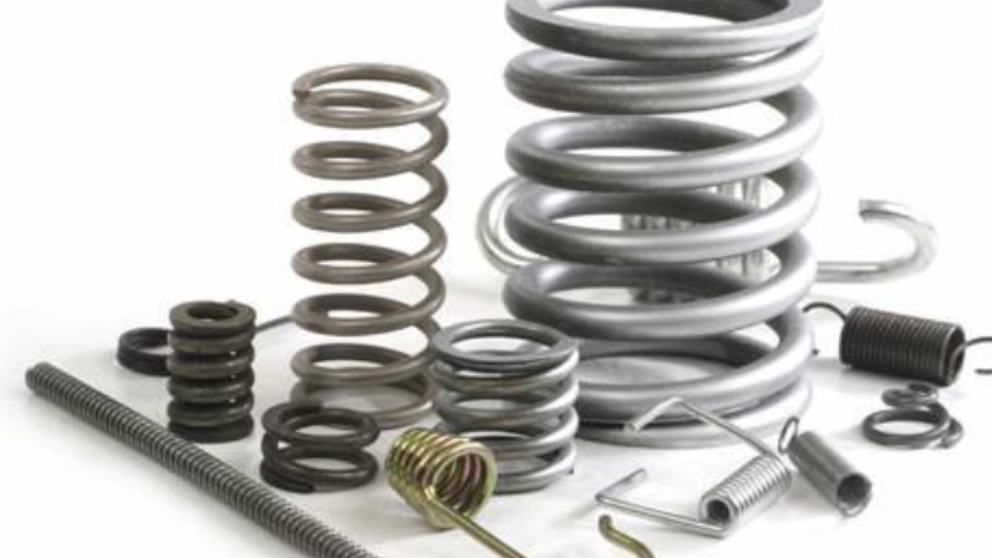
Unlike tension springs with coils that are in contact with each other at rest, in the spring industry, compression springs have coils that are separated from each other at rest and are compressed when force is applied to them. become These types of springs are pushed back against the incoming force. The compression spring manufacturing process primarily uses a spring winding machine, although springs may be used in certain cases.
Torsion springs
A torsion spring is a unique spring whose two ends are extended by a coil. As force is applied to its end, the coil coils into a tighter spiral and is pushed back against the applied force. Common examples are the springs in power trailers or truck doors. Like extension springs, the production process of torsion springs usually involves coiling or forming machines.