
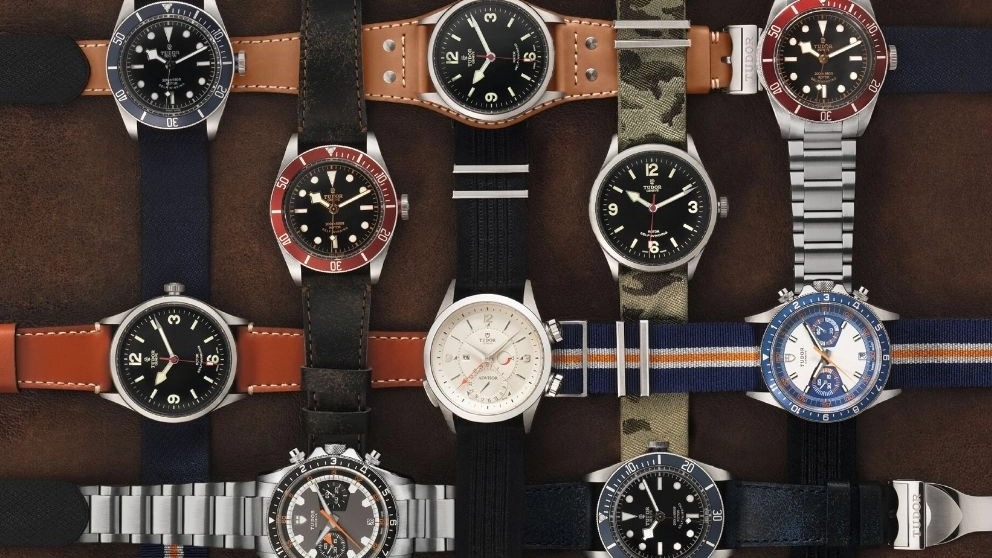

The body of the clock
One of the most prominent features of any watch is its body material. In addition to enhancing the beauty of the watch, the watch case also affects other things. Different materials that are used in making the body of the watch have different resistance and durability and also strongly affect the weight of the watch.
Stainless steel
Stainless steel became common since the 1930s and became the most common and popular material used in watch bodies to the point where it could take the place of gold. Stainless steel is more economical and corrosion resistant as well as light weight. These features have made stainless steel a more useful and desirable material for making watches. Instead, at the time when gold was used in the manufacture of watches, watches were more indicative of wealth and status, and their practical aspect was less considered.
Titanium
Titanium entered the world of watches much later than stainless steel. The first watch in which titanium was used was made by Citizen in 1970. Like stainless steel, titanium is durable and anti-corrosion. Titanium is as strong and durable as stainless steel, but weighs about half as much as steel. This feature has made titanium a convenient and durable option. However, it has not been as popular and popular as stainless steel, partly because titanium is more expensive.
Ceramic
You may think of cookware when you hear the word ceramic, but the ceramic used in making watches is very different from what you've seen in cookware and is more resistant. Ceramic watches are extremely strong, which makes them impossible to scratch and show signs of wear very late.
In addition, ceramic watches can keep their happy colors for a long time, as the UV rays do not affect the ceramic. In addition to these features, ceramic is very light in weight, almost the same weight as aluminum. These watches are very suitable for people with sensitive skin, because ceramic is a hypoallergenic material. Unfortunately, although ceramic is scratch resistant, it is a very fragile material. If these watches fall to the ground from a great height, there is a possibility of breaking them. Also, these watches have a higher price, because making and molding ceramic is a difficult task.
The type of glass on the screen
The face of the watch is covered by a glass to prevent dust, water and other particles from entering the watch. This glass, which is also known as crystal, is made of various materials and each of these materials has different characteristics and prices. The three main types of glass are: sapphire, mineral and acrylic.
Acrylic Crystal
This crystal looks more like plastic than glass. Acrylic (also called plexiglass) is very light, durable and affordable.
Since these glasses are similar to plastic, they do not show much resistance to scratches. However, these glasses can be polished to remove minor scratches. Although acrylic crystal is cheap and widely used, its lack of scratch resistance means that it is mostly used in low-quality watches or children's watches.
Mineral crystal
The name of these crystals may sound a bit strange, but mineral crystal is ordinary glass that has been subjected to heat or chemicals to make it resistant to scratching and shattering.
Mineral glass is more resistant than ordinary glass, but not as good as sapphire and will eventually get scratched. But on the other hand, these crystals have a much cheaper price and the cost of replacing them will not exceed 100 dollars, so it is a good option for watches that are in the low or ordinary category.
Clock engine type
The watch caliber or engine is not visible from the outside, unlike the others mentioned so far. But not being seen does not mean that it is less important. In fact, it is the watch engine that drives the hands and other features such as the calendar and chronograph. Like the other features mentioned, the watch engine has different types. Each of these three main types of engines (quartz, mechanical and automatic) have their own advantages and disadvantages.
Quartz engine
In 1969, Seiko introduced the world's first watch with a quartz movement, causing the mechanical watch market to stagnate. There is a battery inside the quartz watch that sends an electrical signal to the quartz crystal. This electrical signal causes the quartz crystal to oscillate up to 32,768 times per second, creating a precise frequency. The clock circuit measures these oscillations and converts them into seconds and moves the hands of the clock.
Since the frequency of quartz crystal oscillations are very precise, they make quartz watches highly accurate. Because these clocks have fewer moving parts and are battery-powered, they require less maintenance, are easier to use, and are cheaper than other clock engines. This has made these engines very suitable for ordinary or practical watches.
Waterproof
This feature may seem very simple and easy to understand, but the numbers associated with it can be misleading. Just because a watch is said to be water resistant to a depth of 100 meters does not necessarily mean that you can use it to a depth of 100 meters.
Waterproof
A waterproof watch can withstand splashes of raindrops but should not be submerged in water.
3 bar (pressure measurement unit)/ 3 atmospheres/ 30 meters/ 100 feet
A watch that is waterproof to a depth of 30 meters actually only resists splashing. You can wear this watch in the bathroom, but it is recommended that you only do so if your watch is new, as the waterproof gaskets and seals wear out and weaken over time, making splashes on older watches more likely. be more dangerous
5 bar/ 5 atmospheres/ 50 meters/ 165 feet
Watches that are water resistant to a depth of 50 meters can be worn in the bath or while swimming, but you should not use these watches in deeper water.
10 bar/10 atmospheres/100 meters/330 feet
These watches are suitable for swimming or shallow diving, but you should not use it for deep diving.
20 times/ 20 feet/ 200 meters/ 660 feet
These watches are suitable for swimming, scuba diving and other water sports.
More than 30 bar / 30 atmospheres / 300 meters / 990 feet
Watches that are waterproof to a depth of 300 meters are suitable for all the activities mentioned above and can be used even in saturation diving.